Motorola Moto Watch Preview: 13-Day Battery vs. Wear OS Trade-off

Team Gimmie

Team Gimmie

1/7/2026

Motorola Moto Watch Preview: 13-Day Battery vs. Wear OS Trade-off

The Motorola Moto Watch and the 13-Day Dream: High Stakes and Hard Trade-offs

Let's talk about the dirty little secret of the smartwatch industry. We have these incredible, high-resolution screens on our wrists that can monitor our heart rhythms and translate languages in real time, but most of them have the stamina of a toddler after a sugar crash. If you own an Apple Watch or a Google Pixel Watch, you know the nightly ritual: the frantic search for that proprietary charging puck before you hit the pillow.

That is why Motorola’s announcement at CES 2026 has caused such a stir. They are promising a Moto Watch with a staggering 13-day battery life. In a market where 24 to 36 hours is considered standard, 13 days isn't just an upgrade—it is a different category of existence. But as with all things in tech that seem too good to be true, there is a catch. To get that marathon battery, Motorola had to strip away the very things many people think define a smartwatch.

The Marathon Runner of Wearables

First, let’s give credit where it’s due: the battery claims here are monstrous. Motorola states that the 47mm version of the new Moto Watch can go nearly two weeks on a single charge. Even if you are a power user who insists on keeping the always-on OLED display active, they are still claiming a full seven days of juice.

Think about what that actually looks like in your daily life. It means you can go on a week-long camping trip or a business tour across Europe without ever packing a charger. It means you can actually use the sleep-tracking features consistently because you don't have to charge the device overnight just to make it through the next work day. For anyone who suffers from low-battery anxiety, this is the ultimate peace of mind. Motorola is positioning this as a tool for people who want their technology to serve them, rather than the other way around.

The Catch: What You Lose to Gain 13 Days

Now, we have to talk about the trade-off. You don’t get 13 days of battery life by magic; you get it through aggressive efficiency. This Moto Watch does not run Google’s Wear OS. Instead, it uses a proprietary open-source operating system.

Here is what that means for you in plain English: you are losing the ecosystem. If you are used to browsing the Google Play Store on your wrist to download specialized hiking maps, Spotify controllers, or smart home shortcuts, you are going to be disappointed. There is no massive library of third-party apps here. You likely won’t be summoning a Google Assistant to answer complex questions or using a deep integration of apps like Uber or Starbucks.

This is the central gamble. Motorola is betting that a large segment of the population is tired of having a tiny, battery-draining smartphone strapped to their arm. They are betting you want a device that does the basics—notifications, music control, and health tracking—extremely well, without the bloat. It’s a leaner, meaner approach, but if you rely on specific third-party apps to get through your day, this catch might be a dealbreaker.

Professional Grade Health Tracking on a Budget

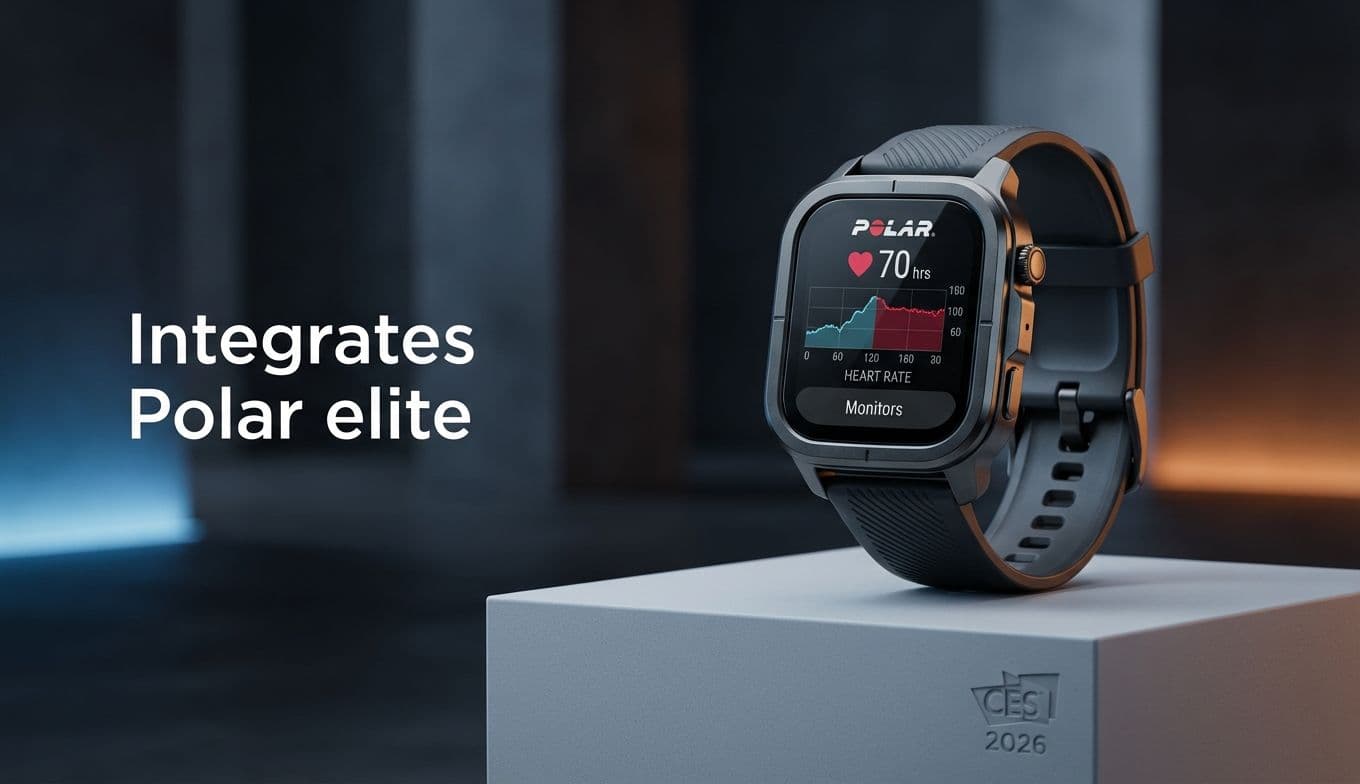
While the software might be simplified, the hardware inside is anything but basic. Motorola has made a brilliant move by partnering with Polar to handle the health and fitness side of the device.

For the uninitiated, Polar is the gold standard in the fitness world. Their algorithms for heart rate variability and training load are what professional athletes have used for decades. Typically, if you want high-end Polar-powered metrics, you have to look at dedicated sports watches like the Polar Vantage or Grit series, which often retail between $400 and $600.

By baking Polar’s expertise into the Moto Watch, Motorola is offering elite-level data—like recovery insights and advanced cardio load—at what is expected to be a much more accessible price point. Combined with dual-frequency GPS (which provides much better accuracy in cities with tall buildings or under heavy tree cover), this watch is actually a more competent fitness tool than many of its more expensive, app-heavy rivals. It’s not just counting your steps; it’s actually telling you if your workout was productive or if you’re overtraining.

Who is This Watch For?

Because this watch takes such a specific path, it’s not a one-size-fits-all recommendation.

The Practical Minimalist: If you find yourself annoyed by constant pings and the need to manage apps on your watch, you will love this. It’s for the person who wants a beautiful, circular timepiece that shows their texts, controls their music, and stays alive for two weeks. It’s a tool, not a toy.

The Weekend Warrior: If your Saturdays involve six-hour hikes or long bike rides, the dual-frequency GPS and Polar integration are huge wins. You’re getting the data accuracy of a professional-grade sports watch without the $500 price tag. This is a massive value play for the fitness-conscious buyer on a budget.

The Frequent Traveler: If you live out of a suitcase, the "no charger required" lifestyle is a game-changer. Being able to cross three time zones and still have 80 percent battery remaining is a luxury that Apple and Google users simply don't have yet.

Final Verdict: Mark Your Calendars

The Motorola Moto Watch is a bold statement. It’s a rejection of the idea that a smartwatch needs to do everything your phone does. By focusing on longevity and high-quality fitness data, Motorola has created something that feels remarkably focused.

Is the lack of an app store a problem? For some, absolutely. But for many others, the "catch" of limited apps will be a small price to pay for a watch that doesn't die every 24 hours.

If you’ve been holding off on a smartwatch because you didn't want another device to babysit at the charging station, this might be the one. The Moto Watch is set to hit the shelves on January 22nd. If you’re looking for a gift that solves a real-world problem—or if you're just ready to break up with your charging cable—that is the date to keep an eye on. We’ll see then if Motorola’s big gamble on simplicity pays off in the long run.

#Moto Watch battery life#smartwatch without Wear OS#Polar fitness tracking algorithms#dual-frequency GPS smartwatch#best battery life smartwatch 2026