Microsoft Surface Price Increase: Why Base Models Now Cost $1,499

Microsoft Surface Price Increase: Why Base Models Now Cost $1,499

Team GimmieTeam Gimmie
Published on April 14, 2026

The $500 Surprise: Microsoft’s Surface Prices Hit a New Reality

If you have been eyeing Microsoft’s sleek Surface Pro or Surface Laptop, you might want to take a seat before checking your cart. Recent market shifts have painted a grim picture for anyone hoping to snag one of these premium devices this season. A global RAM shortage—a phrase that sounds more like a sci-fi plot point than a supply chain update—has hit Microsoft’s flagship line where it hurts most: the entry-level price point.

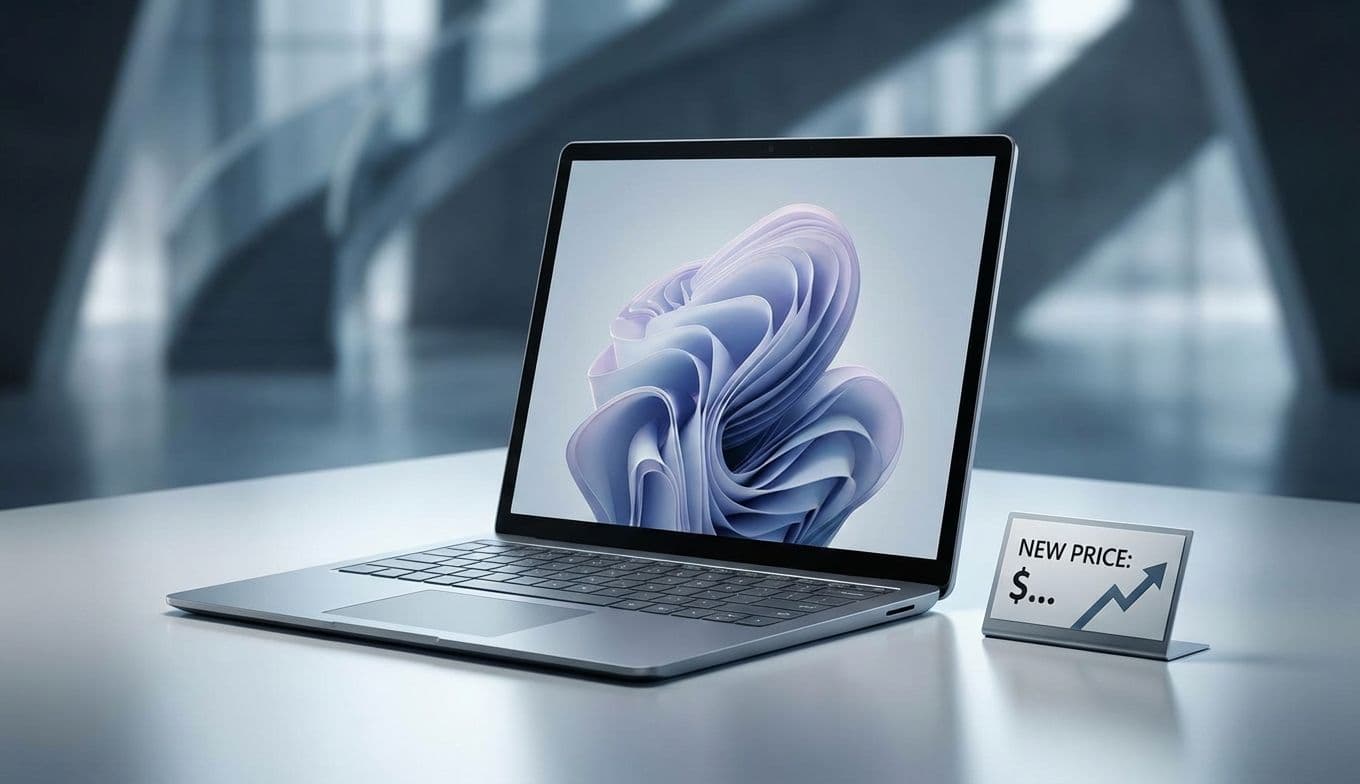
The reality check is significant. The 13-inch Surface Pro 11 and the 13.8-inch Surface Laptop 7, which previously started at a relatively accessible $999, have seen their base prices jump to a staggering $1,499. That is a $500 increase overnight. While it is easy to blame corporate greed, the technical reality is that the cheaper, low-memory configurations are being phased out because the cost of sourcing RAM has skyrocketed. If you were budgeting for a graduation gift or a new work machine, your math just changed.

The New Baseline: What $1,499 Actually Gets You

To understand this price hike, we have to look under the hood. Microsoft is not just charging $500 more for the exact same machine you could buy last year; they are effectively killing off the budget-tier configurations that relied on 8GB of RAM.

At the new $1,499 starting price, you are typically looking at a Surface Pro 11 or Surface Laptop 7 equipped with 16GB of RAM and a 512GB SSD. Last year, Microsoft began phasing out the $999 models (which often carried a meager 256GB of storage) in favor of the $1,199 versions. Now, that middle ground has vanished too.

The shift to a 16GB RAM minimum is a double-edged sword. On one hand, 8GB of RAM is increasingly insufficient for modern multitasking and AI-driven Windows features. On the other hand, forcing every buyer into a $1,500 premium tier removes the choice for students or casual users who just need a reliable, portable machine for web browsing and word processing. You are getting a more capable machine, but you are paying a heavy premium for power you might not strictly need.

Surface vs. The World: A Tougher Value Proposition

The Surface line has always positioned itself as the gold standard for Windows hardware, but at $1,499, the competition looks much more attractive. When a device crosses the $1,500 threshold, it is no longer competing with mid-range laptops; it is going head-to-head with the best in the industry.

Consider the MacBook Air M3. You can pick up a 13-inch MacBook Air with an M3 chip, 16GB of unified memory, and 512GB of SSD storage for approximately $1,299 to $1,499 depending on current retail sales. Apple still offers an entry-level 8GB model for $1,099, giving budget-conscious buyers a way into the ecosystem that Microsoft has now effectively blocked off.

In the Windows world, the Dell XPS 13 remains a fierce rival. A similarly spec'd XPS 13 with 16GB of RAM and a high-resolution display often sits around $1,299. That $200 gap might not seem like much on a corporate expense account, but for a parent buying a college laptop, it represents a significant chunk of the textbook budget. The Surface Pro’s unique selling point—the detachable form factor and the excellent Surface Pen—remains unmatched, but you have to ask yourself if that flexibility is worth several hundred dollars more than a traditional, high-end ultrabook.

Smart Alternatives for Gift-Givers and Professionals

If the $1,499 sticker shock has you rethinking your purchase, you do not have to abandon the Windows ecosystem entirely. There are several ways to get the Surface experience without the "RAMageddon" tax.

One of the best-kept secrets in tech is the Microsoft Certified Refurbished store. Unlike buying a used device from a random marketplace, Microsoft’s certified program includes a full inspection, a standard one-year warranty, and the same support you would get with a brand-new device. You can often find previous-generation Surface Pro 9 or Laptop 5 models here for under $900 with respectable specs. For a student or a home office, these machines are still incredibly capable.

If you are set on a new device but cannot stomach the $1,500 price tag, look toward the HP Spectre x360 or the Lenovo Yoga 9i. These 2-in-1 devices offer similar premium build quality, stylus support, and often include the keyboard in the box—something Microsoft still charges extra for.

The Verdict: Buy Now or Wait?

Navigating a price hike of this magnitude requires a strategic approach. Here is how to decide your next move:

Buy Now If:

  • You are a creative professional who genuinely needs 16GB of RAM for video editing or heavy multitasking.
  • You are deep in the Microsoft ecosystem and rely on the specific Surface Pro form factor for your daily workflow.
  • You can find a bundle deal at a major retailer that includes the Signature Keyboard (which usually costs an extra $180).

Wait or Look Elsewhere If:

  • You are a casual user who primarily uses a laptop for email, streaming, and documents.
  • You are on a strict $1,000 budget. At this price point, the current Surface flagship line is simply no longer an option.
  • You can wait until the back-to-school season or major holiday sales when retailers might offer aggressive discounts to move inventory despite the chip costs.

The Takeaway

Microsoft’s Surface line remains a pinnacle of industrial design, and for many, it is the ultimate Windows experience. However, the recent price surge is a harsh reminder that supply chain realities eventually trickle down to the consumer. A $500 jump is not a minor adjustment; it is a repositioning of the brand.

If you are a buyer or a gift-giver, the days of the impulse Surface purchase are over. It is time to be more diligent. Check the specs, compare the competition, and consider the refurbished route. The Surface might still be the right choice for you, but in 2026, you need to make sure you are getting every bit of value out of that $1,500 investment.