Metroid Prime 1-3: A Visual Retrospective Review & Deal Alert

Metroid Prime 1-3: A Visual Retrospective Review & Deal Alert

Team GimmieTeam Gimmie
Published on February 18, 2026

THE SEARCH FOR SAMUS: REVISITING TALLON IV

There is a specific kind of silence that only exists in a Metroid game. It is the sound of Samus Aran’s boots hitting the metallic floor of a derelict space station, punctuated only by the low hum of her power suit and the distant, alien shriek of something lurking in the shadows. For over twenty years, the Metroid Prime trilogy has defined atmospheric storytelling in gaming. Now, as we collectively hold our breath for the arrival of Metroid Prime 4: Beyond in December 2026, there is a renewed hunger to understand how this universe was built.

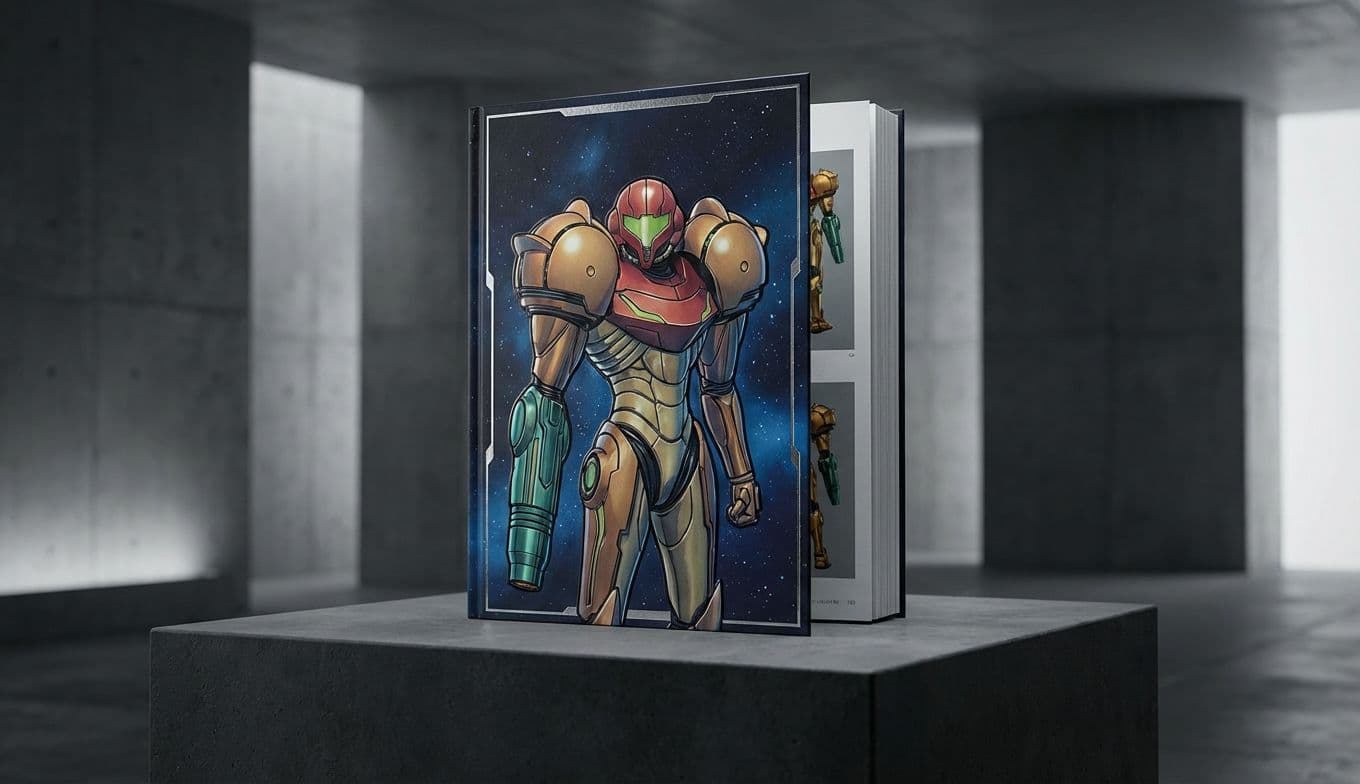
I have seen plenty of video game art books that feel like afterthoughts—glossy collections of promotional renders you have already seen on a dozen loading screens. Piggyback’s Metroid Prime 1–3: A Visual Retrospective is the rare exception. It is not just a companion piece; it is a meticulously curated museum of one of gaming’s most influential eras. Whether you are a long-time bounty hunter or a newcomer curious about the hype, this volume is currently seeing a rare price drop that makes it hard to ignore.

A PREMIUM OBJECT IN A DIGITAL AGE

Before you even crack the spine, the physical presence of this book demands respect. In an era where everything is moving toward digital-only, there is something deeply satisfying about a substantial, heavy hardcover. Piggyback did not cut corners here. The book is bound in a canvas-like cloth that feels more like a historical archive than a piece of fan merchandise.

The cover features a striking red embossed silhouette of Samus Aran. Running your fingers over the texture of the cloth and the recessed lines of the suit, you get the sense that this was designed for people who appreciate the tactile nature of a physical library. It is stitch-bound, meaning it actually stays open on your coffee table without the spine cracking—a small detail, perhaps, but one that matters when you are trying to study a two-page spread of a sprawling alien landscape.

SENSORY OVERLOAD: THE ART OF THE PRIME TRILOGY

The real magic, of course, happens across the 210 pages inside. This isn't just a gallery; it is a visual journey through the evolution of Samus’s journey. You can practically feel the temperature drop when looking at the concept art for the Phendrana Drifts. The artists captured the biting chill of the ice through jagged, crystalline structures and muted blues that contrast sharply with the oppressive, sulfurous oranges of the Magmoor Caverns.

The creature designs are where the "visual" in visual retrospective really shines. You’ll find early sketches of the Metroid Prime itself—a nightmarish blend of translucent membranes and pulsing, brain-like cores that look even more unsettling on the page than they did on a GameCube controller. The biomechanical horror of Meta Ridley is showcased in terrifying detail, revealing the jagged fusion of organic muscle and cold, unyielding machinery.

Perhaps most fascinating are the designs that never made the cut. Seeing the "lost" versions of Samus’s suits or discarded enemy concepts provides a glimpse into an alternate reality of what the series could have been. It demonstrates the sheer volume of creativity that Retro Studios poured into every corner of the Phazon-infested galaxy.

THE HUMAN COST OF MASTERPIECES

While the art is the draw, the commentary is what makes this book indispensable. Piggyback worked closely with Nintendo and Retro Studios to provide context that you simply won't find on a wiki page. It is refreshing to see a book that doesn't just offer corporate-approved praise, but actually touches on the "blood, sweat, and tears" aspect of game development.

The book discusses the intense crunch and burnout that hit Retro Studios during the development of Metroid Prime 2: Echoes. It humanizes the development process, reminding us that these masterpieces are the result of exhausted humans pushing the limits of technology and their own endurance.

The margin notes from series producer Kensuke Tanabe are a highlight. He offers a candid, almost conversational look at the design debates that happened two decades ago. These notes reveal the "why" behind the "what," explaining why certain gameplay mechanics were prioritized or how specific boss fights were balanced. It is like having a developer commentary track running through the entire history of the franchise.

QUICK TAKE: WHO SHOULD GRAB THIS DEAL?

If you are wondering if this belongs on your shelf or would make a good gift, here is the breakdown:

BEST FOR:

  • Die-hard Metroid fans who live for the lore of Tallon IV and Aether.
  • Art students and aspiring game designers who want to see the iterative process of world-building.
  • Collectors who value high-quality physical media and premium bookbinding.
  • Gift-givers looking for a substantial, impressive physical object for a Nintendo enthusiast.

KEY HIGHLIGHTS:

  • 210 pages of high-fidelity concept art and rare sketches.
  • Behind-the-scenes stories regarding the infamous Retro Studios development crunch.
  • Exclusive margin notes from legendary producer Kensuke Tanabe.
  • Premium canvas-cloth hardcover with embossed detailing.

THE VERDICT AND THE DEAL

Right now, we are seeing the first significant price drop on this retrospective. Originally retailing for $49.99, you can currently find the hardcover edition for $41.08 at Amazon and Walmart. While an 18% discount might seem modest to some, for a niche, high-quality art book like this, it is a rare opportunity to save nearly $10 on a volume that is likely to become a collector's item once it goes out of print. If you prefer to support independent booksellers, you can also find it at Bookshop for $46.59.

At $41.08, you are paying for more than just a book; you are paying for a deep-dive education into one of the most celebrated trilogies in gaming history. It is a beautiful, heavy, and honest look at the art and the people behind the visor. As we wait for Samus to return in Metroid Prime 4, there is no better way to prepare for the future than by getting lost in the incredible visual history of her past.