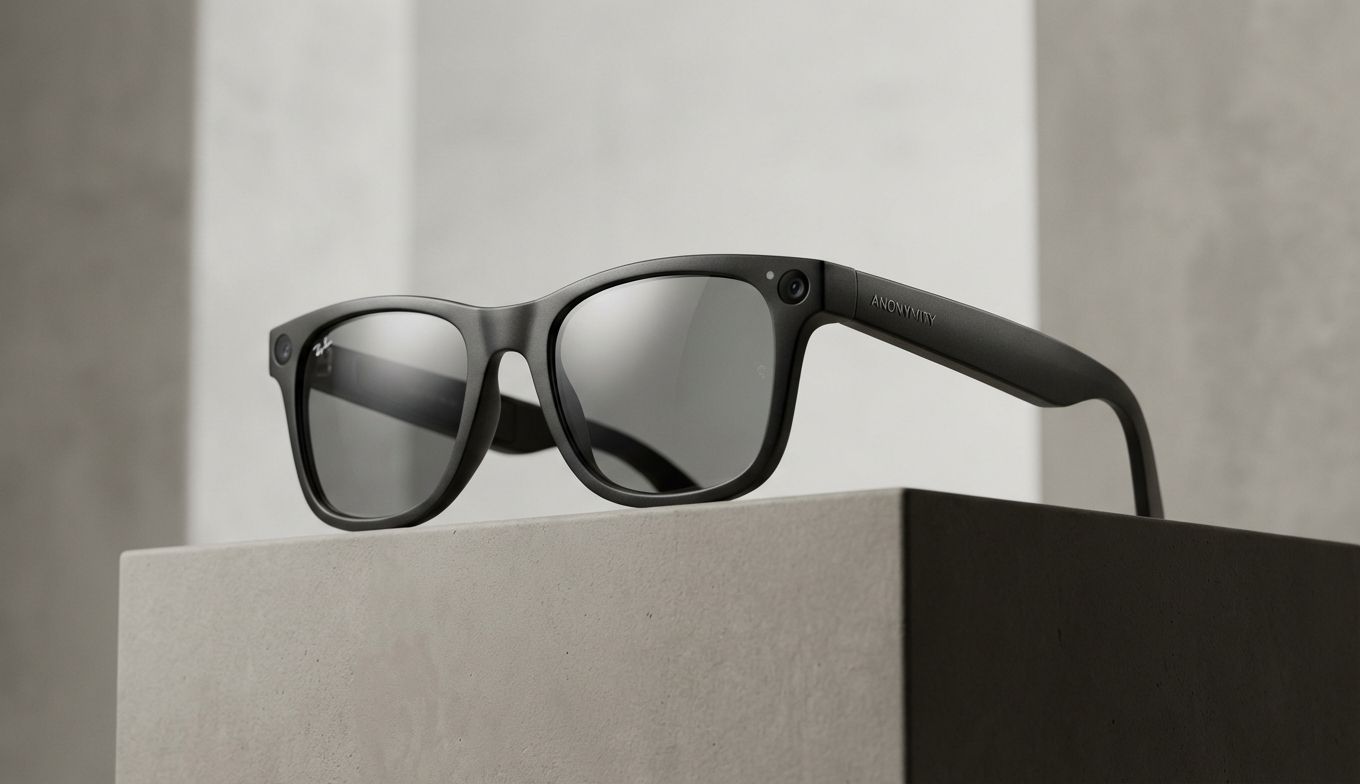
Meta Ray-Ban Smart Glasses Privacy Review: The Cost of Anonymity
 Team Gimmie
THE STRANGER WHO KNOWS TOO MUCH
Imagine you are standing in line at your local coffee shop, minding your own business and waiting for a morning latte. The person behind you, a complete stranger wearing a stylish pair of black-rimmed glasses, taps you on the shoulder. Hey, Marcus, they say with a casual grin. I saw your LinkedIn post about the new marketing campaign—really bold move.
You freeze. You have never met this person. You haven't introduced yourself. You are not wearing a name tag. But they are. Or rather, their glasses are.
This isn't a scene from a dystopian thriller set in 2050. This is the reality of Meta’s latest Ray-Ban smart glasses equipped with the Name Tag feature. By integrating real-time facial recognition into a consumer wearable, Meta hasn't just updated a gadget; they have effectively ended the era of public anonymity. As we navigate this new landscape, it is time to stop asking if we can build this technology and start asking if we actually want to live with the consequences.
INNOVATION AT THE COST OF ANONYMITY
On paper, the engineering behind the Meta smart glasses is undeniably impressive. These aren't the clunky, dork-inducing headsets of the past. They are sleek, lightweight, and almost indistinguishable from a standard pair of Ray-Ban Wayfarers. Tucked inside the frame is a 12MP camera, an array of five microphones, and a sophisticated heads-up display (HUD) that projects information directly into your field of vision in the right lens.
The convenience is seductive. You can check your text messages while walking the dog, follow turn-by-turn directions without looking down at a phone, or live-stream your view of a concert directly to Instagram. For the tech-obsessed, it feels like living in the future. It is a world where information is ambient, hovering just at the edge of your consciousness.
But the Name Tag feature shifts the device from a personal assistant to a surveillance tool. By using facial recognition to cross-reference the people you see against massive social media databases, these glasses turn every stranger on the street into a searchable profile. The appeal is obvious: never forget a name again, or quickly identify a business contact at a crowded networking event. However, that convenience comes at a staggering cost to the social fabric of our communities.
THE SILICON VALLEY BLIND SPOT
There is a recurring theme in the development of these glasses that should give every consumer pause. Reports have surfaced suggesting that during the development of the Name Tag feature, Meta’s internal stance was that they would not let morality get in the way of a product launch. This isn't just a corporate soundbite; it’s a window into a philosophy that prioritizes market dominance over the fundamental right to privacy.
When we talk about eroding privacy, we aren't just talking about data points on a server. We are talking about the loss of the public sphere. Traditionally, when you walk out your front door, you have the right to be a face in the crowd. You can go about your day without every passerby having access to your full name, your employer, and your social history.
Meta’s glasses strip that away. If someone wearing these glasses looks at you, they aren't just seeing you; they are querying you. This creates a power imbalance where the wearer holds all the cards and the subject has no way to opt-out. It transforms our streets, parks, and cafes into a permanent, live-action database.
A WARNING FOR GIFT GIVERS
If you are currently looking for a gift for the tech lover in your life, you might think these glasses are the ultimate "wow" factor. But before you hit the checkout button, you need to consider the social and ethical weight of what you are handing over.
Gifting these glasses isn't like giving someone a new Apple Watch or a pair of noise-canceling headphones. It’s giving them a device that requires them to navigate a minefield of consent and social awkwardness every time they leave the house. Is your friend prepared to explain to a date why their glasses just pinged with their social media history? Is your parent ready for the backlash when a stranger realizes they are being recorded and identified in real-time?
For most people, this product is a social liability. If the person you’re buying for is a hardcore tech maximalist who believes that privacy is a 20th-century relic, then they might enjoy being on the "bleeding edge." But for the average person—and certainly for anyone who values their reputation as a respectful member of society—these glasses are more trouble than they’re worth.
BETTER WAYS TO SPEND YOUR MONEY
If you love the idea of smart eyewear but want to avoid the ethical baggage of facial recognition and intrusive cameras, there are much better alternatives on the market.
If you want the style without the surveillance: Buy the classic Ray-Ban Wayfarers. They are timeless, they don't require a charging cable, and they won't make people uncomfortable at a dinner party. You save hundreds of dollars and maintain your social standing.
If you want the audio features without the camera: Look at the Bose Frames or the Amazon Echo Frames. These provide excellent open-ear audio for music and calls, and they include voice assistants for basic tasks. Crucially, they lack the cameras and facial recognition features that turn the Meta glasses into a privacy nightmare.
If you must have the Meta tech but want to be responsible: You can purchase the Ray-Ban Meta glasses and strictly disable the AI and facial recognition features. However, be warned: the mere presence of the camera lens is often enough to make people around you feel guarded.
THE VERDICT: STEER CLEAR FOR NOW
The Meta smart glasses are a feat of miniaturization, but they are a failure of social responsibility. Innovation should solve problems, not create a more paranoid and surveilled world. Right now, the Name Tag feature feels less like a helpful tool and more like a tool for doxxing strangers in real-time.
As a guide for those looking to make smart, ethical purchases, my recommendation is a firm "no" for the general consumer. We are currently in the Wild West phase of wearable AI, and the rules of the road haven't been written yet. Until there are clear protections for those who don't wish to be "tagged" in public, and until Meta demonstrates a commitment to ethics that matches their commitment to engineering, these glasses belong on the shelf, not on your face.
The future of technology should be one that empowers us, not one that turns us into data points for whoever happens to be looking our way. For now, keep your privacy, and keep your money.
