Mercedes EQS Steer-by-Wire & Yoke: The Future of Driving

Mercedes EQS Steer-by-Wire & Yoke: The Future of Driving

Team GimmieTeam Gimmie
Published on April 4, 2026

The End of the Mechanical Connection: Mercedes Just Redefined the Driving Experience

For over a century, the connection between a driver and the road has been defined by a physical, mechanical link. You turn a wheel, a shaft rotates, gears move, and the tires respond. It is tactile, predictable, and fundamentally unchanged since the days of the Model T. But Mercedes-Benz just decided that a hundred years of tradition is long enough. In the refreshed EQS sedan, the German automaker is severing that physical bond entirely.

This isn’t just a new feature; it is a total philosophical shift. By introducing steer-by-wire technology alongside a futuristic steering yoke, Mercedes is betting that the future of luxury isn’t about mechanical purity—it is about digital precision. For the tech-obsessed driver or the person looking for the ultimate high-tech status gift in 2026, this is the new gold standard. But for everyone else, it might feel like learning to drive all over again.

The Tech Behind the Magic

Steer-by-wire is a concept borrowed directly from the aerospace industry. In modern jets, pilots don’t pull cables to move wing flaps; they send electronic signals to actuators. Mercedes is now doing the same for the pavement. When you turn that new rectangular yoke, sensors read your intent and tell electric motors at the wheels exactly what to do.

Why does this matter? Because without a physical column between you and the wheels, the car can reinvent how it feels on the fly. At parking lot speeds, a tiny flick of the wrist can provide a full turn. On the highway, the steering can become heavy and stable. It removes the vibrations of a rough road while keeping the precision of a scalpel.

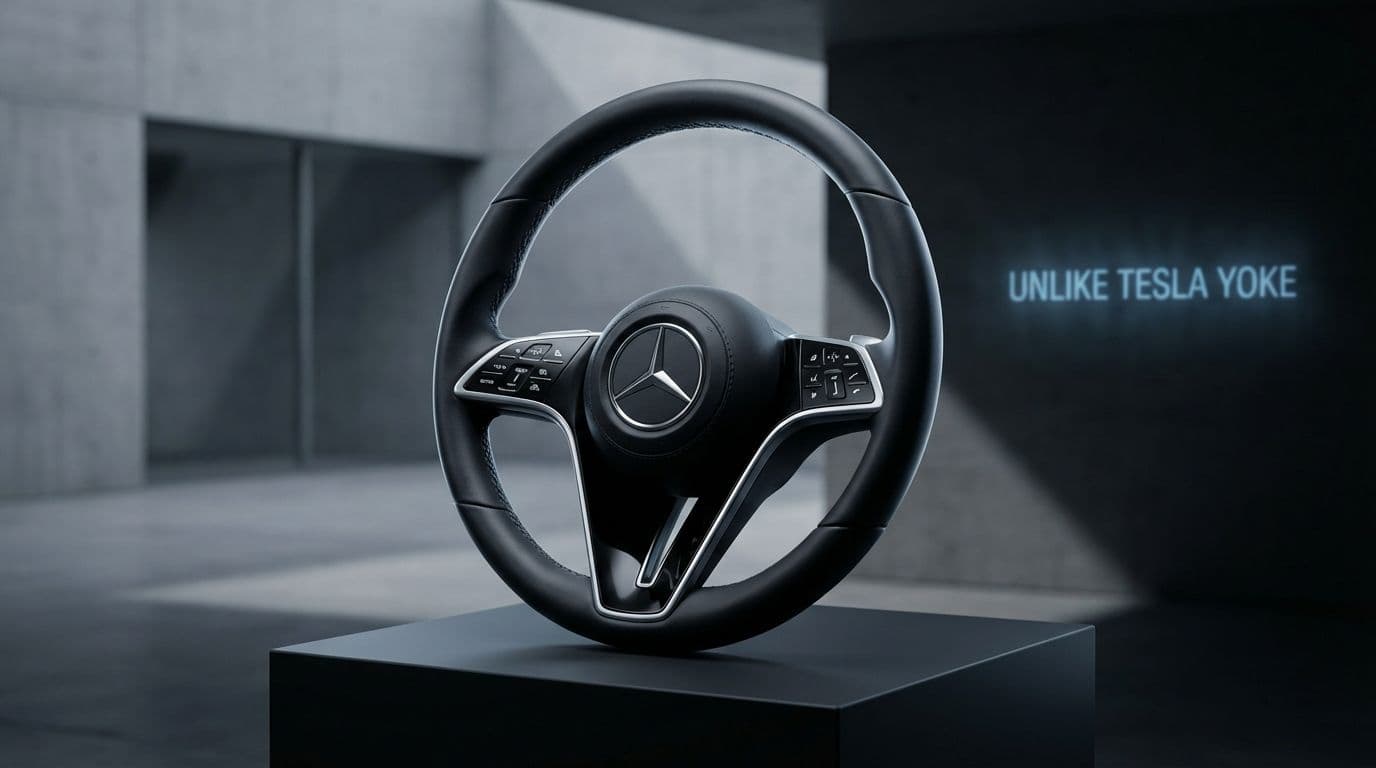
However, Mercedes isn't the first to play in this sandbox, and they have some ghosts to exorcise. Tesla famously introduced a yoke steering wheel to a mix of awe and frustration. The problem? Tesla kept the traditional mechanical steering ratio, meaning drivers had to do awkward hand-over-hand maneuvers on a wheel that didn’t have a top. Lexus also teased a similar system with their One Motion Grip. Mercedes is hoping that by combining the yoke with true steer-by-wire, they’ve finally solved the puzzle that stumped Elon Musk.

A Polarizing Luxury Status Symbol

Let’s be honest: the yoke isn’t just about ergonomics. It’s a statement. It looks like it was ripped out of a Star Wars cockpit or a high-end flight simulator. For the person who already has the latest iPhone, the newest smart home hub, and a garage full of gadgets, the EQS with a yoke is the ultimate conversation starter. It signals to everyone who sits in the passenger seat that this isn't your grandfather’s S-Class.

If you are considering this as a gift for a partner or a treat for yourself, you are buying into the vanguard of automotive design. It provides a completely unobstructed view of the massive "Hyperscreen" dashboard, making the cabin feel more like a lounge than a cockpit. It is sleek, it is intimidating, and it is undeniably "next."

The Digital Divide: Pros and Cons

Before you rush to the dealership to secure the most expensive gift of the year, it is worth weighing the reality of living with a car that thinks for you.

The Upside:

  • Variable Steering Ratios: No more hand-over-hand turning in tight parking garages. The car adjusts how much the wheels turn based on your speed.
  • Interior Aesthetics: The yoke opens up the cabin, providing a better view of the digital displays and a more spacious feel.
  • Vibration Reduction: Harsh road feedback and "kickback" from potholes are filtered out by the electronic system, leading to a smoother luxury ride.
  • Customization: In theory, the steering "weight" could be adjusted via software updates to suit your personal preference.

The Downside:

  • The Learning Curve: After a lifetime of round wheels, the yoke requires new muscle memory. You can’t just "let the wheel slide" back to center after a turn.
  • Lack of Physical Feedback: Some purists argue that removing the mechanical link makes the car feel like a video game, stripping away the soul of the driving experience.
  • Complexity: More sensors and actuators mean more potential points of failure, even if Mercedes has built in multiple redundancies.

Is it the Ultimate High-Tech Gift?

If you are shopping for the early adopter who lives for the "wow" factor, the answer is a resounding yes. The refreshed EQS is likely the most advanced piece of consumer technology on four wheels right now. It is a status symbol that says the owner is comfortable living on the cutting edge.

However, if the recipient of this gift is someone who values the "classic" luxury feel—the heavy thud of a door and the predictable weight of a round leather wheel—this might be a bridge too far. This car demands that you adapt to it, rather than the other way around.

The Verdict: A Bold Leap Forward

Mercedes-Benz isn't playing it safe, and in a world where many electric vehicles are starting to feel like interchangeable appliances, that’s refreshing. Steer-by-wire is the future; it allows for better safety systems, more flexible interior designs, and a driving experience that can be tuned like a piece of software.

The yoke, however, remains the great divider. It is a bold, polarizing choice that will define the EQS for years to come. If you’re ready to embrace the future and leave the 20th century in the rearview mirror, there is no better way to do it. Just be prepared for a few weeks of awkward turns while your brain catches up to the 2026 version of driving. It’s a brave new world—keep both hands on the yoke.