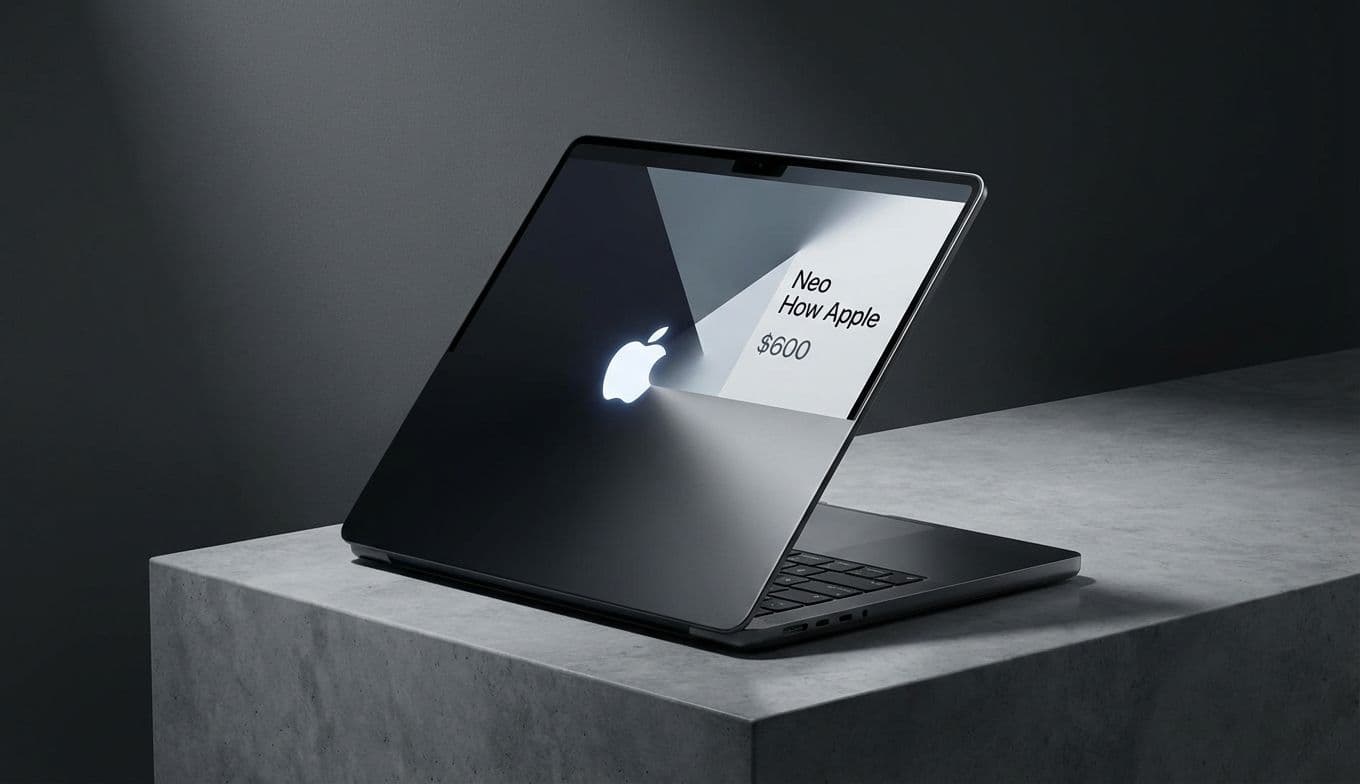
MacBook Neo ($600): How Apple is Disrupting Budget PCs

MacBook Neo ($600): How Apple is Disrupting Budget PCs

Team GimmieTeam Gimmie
Published on March 13, 2026

The $600 MacBook Neo is a Wake-Up Call the PC Industry Ignored

Apple just fundamentally changed the math of buying a computer by launching the MacBook Neo at a $600 price point. For years, the tech industry has operated under a comfortable, if frustrating, hierarchy: if you wanted to spend less than $700, you bought a Windows laptop and accepted a list of inevitable compromises. You expected plastic cases, dim screens, and battery life that barely survived a morning lecture.

With the arrival of the Neo, that hierarchy has been demolished. While PC manufacturers have had since early 2025 to prepare for these rumors, they seem to have been caught completely flat-footed. What was once dismissed as a niche experiment is now a strategic strike at the heart of the mainstream market. This isn't just another product launch; it is a signal that the floor for what we consider a quality laptop has been permanently raised.

The Shock of the Unprepared

The reaction from the Windows ecosystem has been telling. One Asus executive recently described the Neo’s entry-level pricing as a shock to the entire market. It is an admission of a deeper problem: PC makers missed the warning signs. Throughout 2025, the supply chain was screaming that Apple was optimizing its internal silicon specifically to hit this price bracket, yet the response from competitors was more of the same—incremental updates to plastic-chassis machines that rely on off-the-shelf components.

This lack of agility has left a vacuum that Apple is now filling with surgical precision. For a decade, Apple commanded the premium space, leaving the sub-$700 market to a crowded field of Windows OEMs and Chromebooks. By descending into this territory, Apple isn't just offering a cheaper laptop; they are offering their brand prestige and ecosystem at a price that makes the traditional budget PC look like a poor investment.

Why the Neo Wins: Silicon and Substance

The primary reason PC makers are struggling to compete isn't just the price tag; it is the hardware efficiency. The MacBook Neo leverages iPhone-derived chip architecture to do things a $600 Windows machine simply cannot. While budget PCs are often bulky because they need significant cooling for power-hungry processors, the Neo runs cool and silent.

The battery life is the real differentiator. Because the Neo uses highly efficient Apple Silicon, it delivers the kind of all-day longevity that was previously reserved for $1,200 machines. In a head-to-head comparison, most $600 Windows laptops struggle to hit eight hours of real-world use. The Neo is pushing double that. For a student or a remote worker spending the day in a coffee shop, that isn't just a spec—it is a life-changing feature.

Furthermore, Apple has refused to play the budget materials game. While the competition is still largely stuck in the world of silver-painted plastic, the Neo maintains an aluminum enclosure. It feels like a tool rather than a toy. When you combine that with a haptic trackpad—which uses magnets to simulate a click rather than the clunky, mechanical diving-board style trackpads found on cheap PCs—the gap in perceived quality becomes a canyon.

The Ultimate Gift-Giver’s Dilemma

If you are looking for a gift for a graduate or a family member this year, the decision-making process just got a lot simpler—and much harder for the competition. For years, recommending a budget laptop was a minefield of caveats. You had to tell people to check the screen brightness, ensure the hinge wasn't flimsy, and warn them that the fans might get loud.

The MacBook Neo removes those caveats. It represents a no-compromise gift. You aren't just giving someone a computer; you are giving them entry into an ecosystem. If the recipient already uses an iPhone or an iPad, the integration of iMessage, iCloud, and AirDrop at this price point is an unbeatable value proposition. It turns the laptop into an extension of the phone they already love, rather than a separate, frustrating piece of hardware they have to manage.

How to Spot the Value: Neo vs. The Field

When you are evaluating the Neo against a similarly priced Windows machine, don't get distracted by raw numbers like RAM or storage capacity alone. Instead, look at the tactile experience and longevity:

Build Materials: Most PCs at this price point use plastic frames that flex when you type. The Neo’s aluminum body is designed to survive a backpack for four years of college.

Trackpad Technology: Mechanical trackpads on budget PCs often fail or become unresponsive over time. The Neo’s haptic trackpad has no moving parts to break and provides a consistent click across the entire surface.

The Silence Factor: Most $600 laptops require aggressive fans to stay cool under pressure. Because the Neo is built on mobile-first architecture, it handles everyday tasks without making a sound.

Display Quality: This is where PC makers often cut corners to save money, using panels with poor color accuracy. Apple has maintained a standard of display quality that makes the Neo viable for photo editing and media consumption in a way its peers are not.

The Road Ahead for the PC Market

Is the Windows laptop dead? Of course not. But the era of the lazy budget PC is over. For consumers, this competitive pressure is the best thing that could have happened. To survive, PC manufacturers will have to stop competing on price alone and start innovating on build quality and power efficiency. We need to see Windows machines that offer aluminum builds and haptic trackpads at $600, or they will simply lose this generation of buyers to the Apple ecosystem.

The MacBook Neo isn't just a new product; it’s a standard. It proves that affordability doesn't have to mean a compromise in quality. Whether you’re buying it for yourself or as a gift, the Neo is a reminder that the best technology should be accessible, durable, and a joy to use. The ball is now firmly in the PC makers' court, and for the first time in a long time, they’re the ones playing catch-up.