M5 MacBook Air Review: Is the $1,199 Price Tag Worth It?

M5 MacBook Air Review: Is the $1,199 Price Tag Worth It?

Team GimmieTeam Gimmie
Published on March 15, 2026

The $1,199 Question: Is the M5 MacBook Air Still a Bargain?

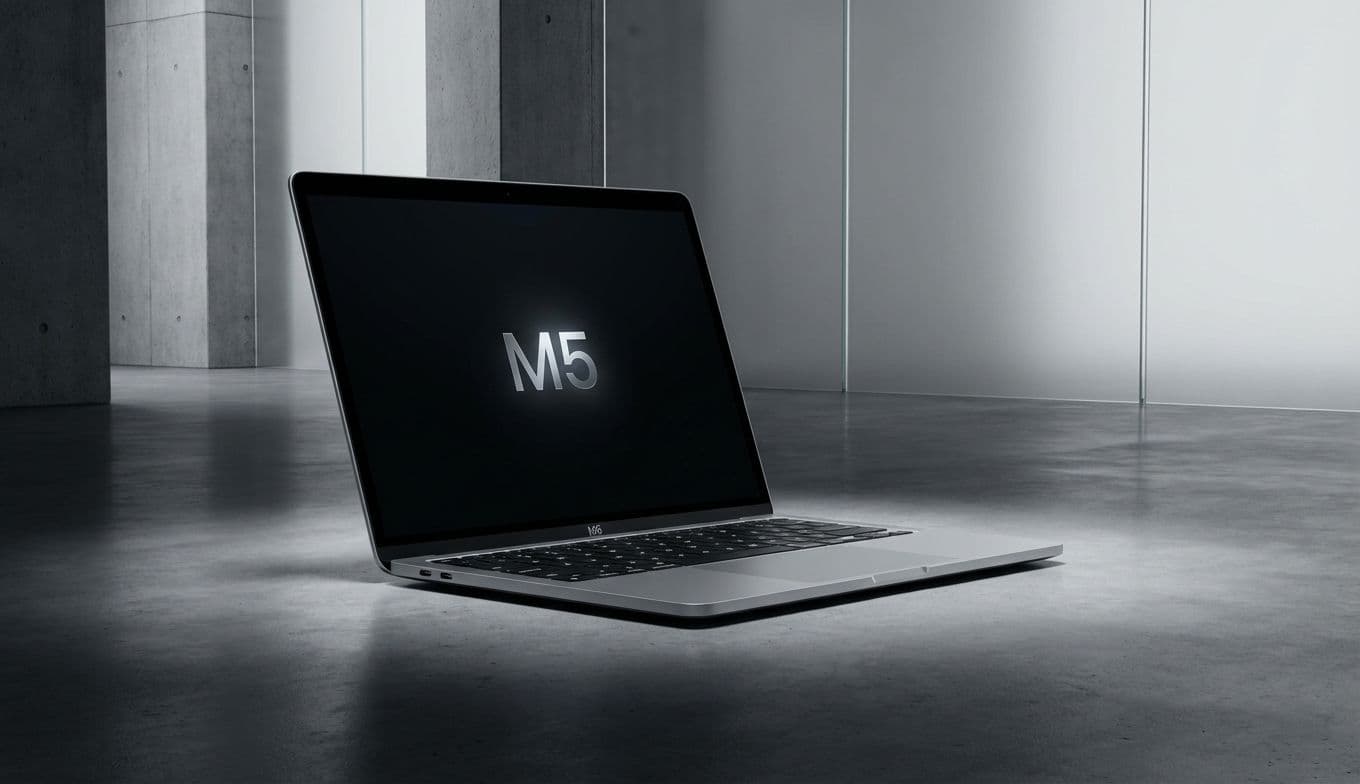
Apple just did something it rarely does with its most popular laptop: it raised the entry price. After years of the MacBook Air sitting comfortably at the thousand-dollar mark, the new M5 model has landed with a $100 price hike. While Apple is softening the blow by finally ditching the cramped 256GB base storage for a more respectable 512GB, we have to ask if this is a genuine leap forward or just a clever way to tax our loyalty.

As someone who spends more time testing hinges and benchmarking chips than I probably should, I’ve learned that a higher price tag doesn't always equal a better experience. The MacBook Air has always been the gold standard for the average person—the student, the writer, the coffee-shop warrior. But with a new price point and the arrival of the more budget-friendly MacBook Neo, the M5 Air is no longer the default choice. It has to earn its place in your bag.

The M5 Upgrade: A Spec vs. Spend Breakdown

To understand if that extra $100 is burning a hole in your pocket for no reason, we need to look at what has actually changed. The transition from the M4 to the M5 isn't just about a number; it’s about where Apple is placing its bets for the next three years of computing.

M4 MacBook Air (2025) Starting Price: $1,099 Base Storage: 256GB Connectivity: Wi-Fi 6E Chip: M4 (Focus on efficiency)

M5 MacBook Air (2026) Starting Price: $1,199 Base Storage: 512GB Connectivity: Wi-Fi 7 Chip: M5 (Focus on AI-processing and sustained speeds)

On paper, the value seems to balance out. If you were to upgrade the storage on an M4 model to 512GB, you’d typically pay an extra $200. By making 512GB the standard, Apple is technically giving you a discount on storage while raising the floor of the entry price. Throw in Wi-Fi 7—which is overkill for most home routers today but will be essential by 2028—and the M5 starts to look like a long-term investment rather than a yearly itch.

Performance Meets Reality

The M5 chip is fast. In everyday use, you’ll notice it most when opening 40 Chrome tabs at once or rendering a quick 4K video for social media. It handles heat slightly better than the M4, meaning it stays silent longer under pressure. However, let’s be honest: if you are just checking emails and watching Netflix, you won't feel the difference between an M4 and an M5.

The real star here is the efficiency. The M5 is built on a refined 3-nanometer process that squeezes every last drop out of the battery. We’re looking at a solid 18 to 20 hours of real-world use. In an era where we’re all tethered to chargers, the Air remains the king of the "unplugged" lifestyle.

Who Should Buy the M5 Air (And Who Should Hard Pass)

This is where we get into the "trusted advisor" territory. Not everyone needs this machine, and for some, buying it would be a waste of money.

The Ideal Buyer: The Four-Year Upgrader If you are currently rocking an Intel-based Mac or even an original M1 MacBook Air, the M5 is a revelation. The redesigned chassis, the MagSafe charging, the Liquid Retina display, and the massive jump in processing power make this a transformative upgrade. It will feel like moving from a bicycle to a jet engine.

The Heavy Student: The Creative Major For students who need to do more than just write term papers—think light CAD work, Adobe Creative Suite, or coding—the M5’s improved neural engine is a legitimate asset. It’s a Pro-level experience in a frame that won’t break your back between classes.

The Hard Pass: Current M3 and M4 Owners If you bought a MacBook in the last 24 months, close your browser tab. There is absolutely no reason to spend $1,199 on the M5. The performance gains are incremental, and your current machine is still in the top 1% of portable computers globally. Save your money for a better monitor or a pair of high-end headphones.

The Hard Pass: The Budget Browser If your laptop never leaves your living room and mostly serves as a portal for YouTube and Google Docs, look toward the new MacBook Neo. It’s $500 cheaper, and while it lacks the M5’s polish and Wi-Fi 7 speeds, it does 90% of what most people actually do on a computer.

Strategic Spending: How to Beat the Price Hike

If you’ve decided the M5 is the one, don’t just pay the $1,199 sticker price and call it a day. March is a fascinating time in the tech cycle. With major events like the Oscars happening this weekend, we’re seeing a ripple effect of sales across the industry.

While Apple rarely discounts its brand-new hardware directly, third-party retailers often bundle these launches with gift cards or trade-in bonuses. Speaking of trade-ins, Apple’s own program is currently offering surprisingly aggressive values for M1 and M2 models. Trading in an old M2 could bring the cost of the M5 down to a much more palatable $700 or $800.

Also, keep an eye on the broader ecosystem. As we’ve seen with recent deals on the Pixel Watch 4 and streaming bundles for Hulu and Disney+, the tech world is currently in a "value" phase. If you can save $60 on a new smartwatch or grab a year of streaming for half price, that extra $100 for the MacBook storage upgrade feels a lot less painful in your total tech budget for the year.

The Verdict: A Refined Classic at a Premium

The MacBook Air M5 is a victim of its own success. It is so good that Apple felt comfortable raising the price, knowing that for many, there is simply no substitute for the Air’s build quality and battery life.

The move to a 512GB base storage is a long-overdue win for consumers, and Wi-Fi 7 ensures this laptop won’t feel like a relic in three years. However, the $1,199 entry point changes the conversation. The Air is no longer the "cheap" Mac; it is the "premium" everyday Mac.

If you value longevity and need a machine that can handle a bit of everything without breaking a sweat, the M5 Air remains the best laptop on the market. Just make sure you aren't buying more power than you actually need—because in 2026, the "just right" Mac finally has some serious competition.