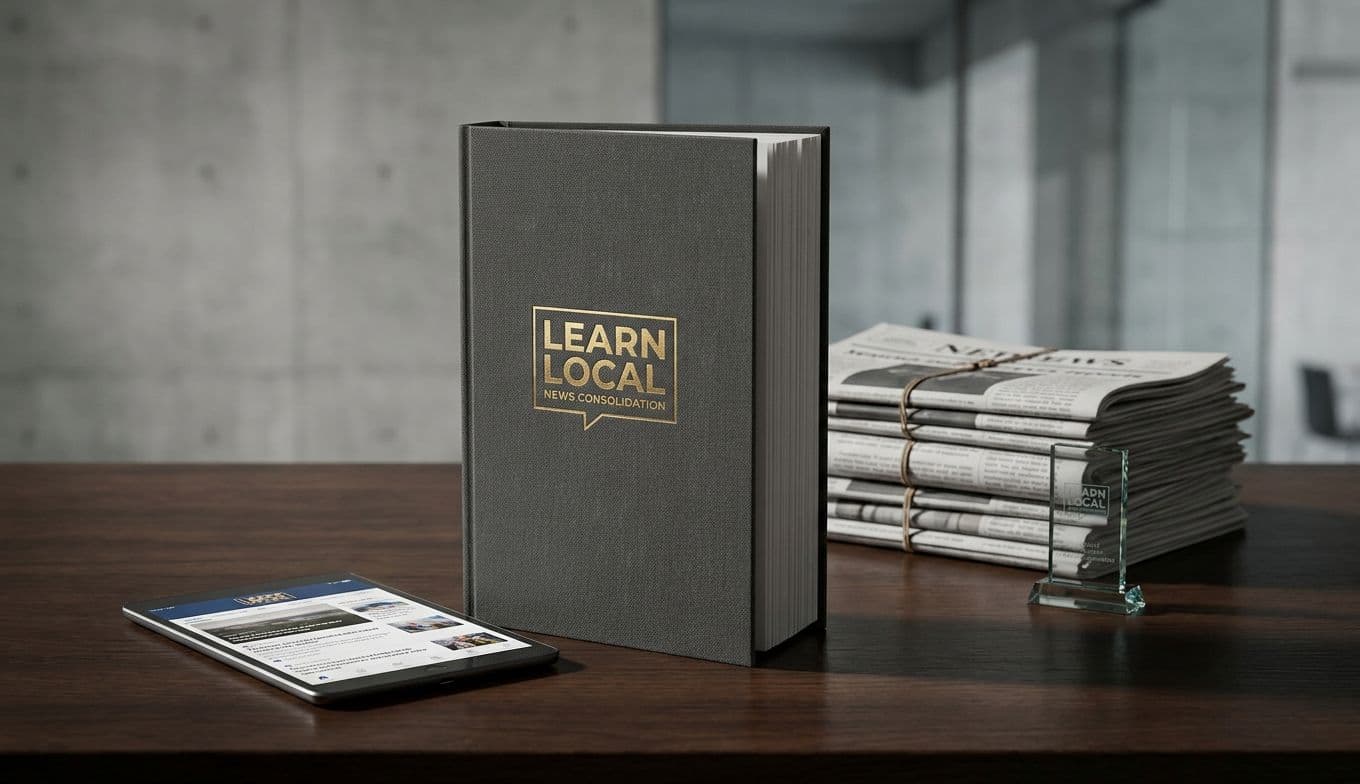
Local News Consolidation: Reclaiming Information Sovereignty
Team GimmieTHE NEW GATEKEEPERS: NAVIGATING LOCAL NEWS CONSOLIDATION AND RECLAIMING INFORMATION SOVEREIGNTY
In 2004, the Federal Communications Commission established a vital firewall for American democracy. It was a straightforward regulation: no single company could broadcast to more than 39 percent of all television households in the United States. The logic was sound—preventing any one entity from monopolizing the airwaves ensured a diversity of voices and protected the unique character of local communities. However, by early 2025, that firewall began to dissolve. With the return of Donald Trump to the White House and the appointment of Brendan Carr as FCC chairman, the media landscape has shifted into a period of aggressive deregulation. We are now seeing the rapid consolidation of local news, where the "local" element is increasingly being replaced by standardized, corporate-driven narratives.
THE DEATH OF LOCAL FLAVOR AND THE RISE OF THE UNIFORM SCRIPT
When media ownership consolidates, the first thing to vanish is the nuance of the neighborhood. For decades, local TV news was the primary source for the stories that actually touched our daily lives—school board decisions, municipal zoning, and community-specific challenges. Under the current trajectory of deregulation, these stations are being swallowed by massive conglomerates like Nexstar and Tegna.
The result is a phenomenon often described as a "Trumpian turn" in local media. This doesn't just mean a shift in political leanings; it represents a move toward centralized editorial control. Instead of a newsroom in Ohio deciding what matters to Ohioans, scripts are often written at corporate headquarters and sent out as "must-run" segments to dozens of stations simultaneously. This uniformity erodes the primary value of local news: its ability to act as a watchdog for its specific community. When every city receives the same nationalized talking points under the guise of local reporting, the consumer loses their most direct link to the truth of their own environment.
RECLAIMING INFORMATION SOVEREIGNTY
As the filters on our traditional information channels tighten, the responsibility for maintaining a clear-eyed view of the world shifts back to us. We have moved from being passive viewers to active curators. Reclaiming "Information Sovereignty" means intentionally building a personal tech stack that bypasses corporate-controlled filters and restores a sense of perspective.

How do we give the gift of an unfiltered perspective? It starts by looking at the tools we use to consume the world around us. Whether you are shopping for yourself or looking for a meaningful gift for someone who values independent thought, the goal should be to provide access to a wide array of high-quality, primary-source information.
THE TECH STACK FOR AN UNFILTERED PERSPECTIVE
To combat the homogenization of broadcast news, we need hardware and software that encourage deep, varied reading and listening.
Direct Access via E-Readers and Tablets: The most effective way to bypass a centralized broadcast narrative is to return to long-form, high-quality journalism. Devices like the Kindle Scribe or an iPad Pro are excellent tools for this, provided they are paired with a diverse "information diet." Instead of relying on what a local station chooses to air, a subscription to a range of publications—from The New York Times for national depth to The Wall Street Journal for economic analysis—allows a reader to triangulate the truth. For a truly impactful gift, pair a high-quality tablet with a year-long digital subscription to a non-partisan investigative outlet like ProPublica.
Smart Hubs as Custom News Desks: While devices like the Amazon Echo Show or Google Nest Hub are often seen as kitchen timers or photo frames, they can be powerful tools for information sovereignty. By digging into the settings, you can customize "Flash Briefings" to pull from a dozen different global news organizations—BBC, Reuters, and independent podcasts. This prevents the "echo chamber" effect of a single corporate-owned TV station and provides a broader context for local events.
The Radio and the Value of Localism: Radio remains one of the last bastions of true "Localism." Unlike broadcast television, which is under intense pressure to consolidate, many local radio stations and public radio affiliates still maintain a direct, unscripted connection to their communities. A high-quality digital or HD radio, such as the Sangean HDR-16, is a practical tool for maintaining this connection. In moments of crisis or local elections, these devices often provide more granular, community-focused information than a corporate-owned TV station running syndicated national segments.
THE SKEPTICS LIBRARY: TOOLS FOR CRITICAL INQUIRY
Sometimes the best tech for navigating a complicated media world isn't digital at all. If you are looking to empower someone with the ability to spot bias and understand the architecture of the modern information age, consider the gift of foundational knowledge.
One essential title is The Information: A History, a Theory, a Flood by James Gleick. It provides a profound look at how information has shaped human history and how we can learn to manage the current "flood" without drowning in it. Another critical read for the current era is The Death of Truth: Notes on Falsehood in the Age of Trump by Michiko Kakutani. This book offers a sharp analysis of how language and facts are being manipulated in the modern political landscape, providing readers with a mental toolkit to identify and resist propaganda. Pairing these books with a high-quality reading light or a focused workspace accessory creates a "Skeptic’s Toolkit" that delivers far more value than any standard gadget.
OWNING YOUR PERSPECTIVE IN A CONSOLIDATED WORLD
The consolidation of local news is a systemic shift, but it does not have to be a personal one. While we may have less control over who owns the broadcast towers in our cities, we have total control over the devices and sources we bring into our homes.
Choosing a gift in this climate is an opportunity to support someone's intellectual independence. By prioritizing tools that offer a variety of viewpoints, foster localism, and encourage critical thinking, we are doing more than just giving a product. We are helping our friends and family maintain their sovereignty in a world where the "local" truth is increasingly hard to find. The most valuable gift you can give in 2026 is the ability to see through the noise and decide for oneself what is real.