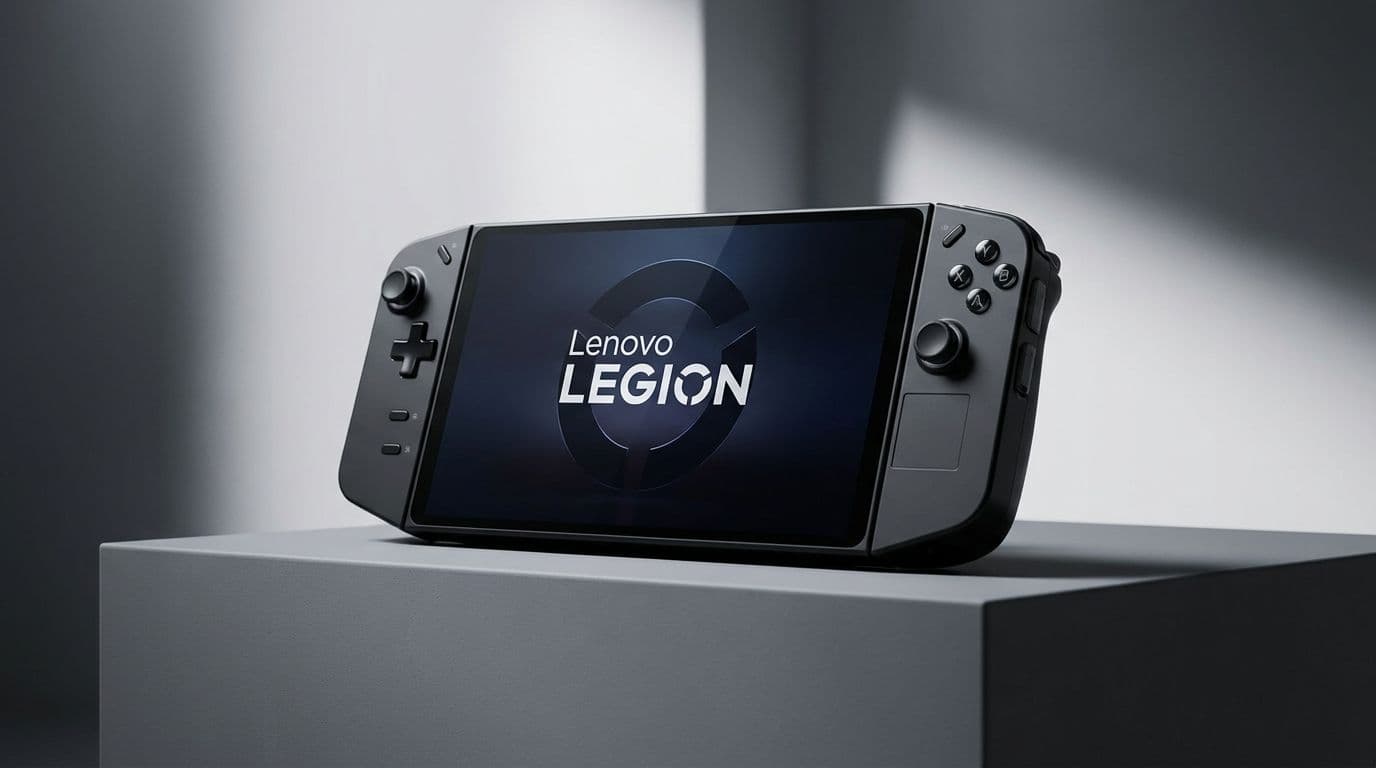
Lenovo Legion Go S Price Hike: The RAMageddon Crisis Explained

Lenovo Legion Go S Price Hike: The RAMageddon Crisis Explained

Team GimmieTeam Gimmie
Published on April 21, 2026

Why the Lenovo Legion Go S Just Became the Worst Deal in Gaming

Imagine walking into your favorite electronics store to buy a gadget you’ve been eyeing for months. You did the research, read the reviews, and saved up exactly $830. But when you reach the shelf, the price tag says $1,579. You’d probably assume it was a typo or a cruel joke. Unfortunately, for anyone shopping for the Lenovo Legion Go S right now, this isn't a glitch—it’s the new, painful reality of the handheld gaming market.

We are currently living through a phenomenon the industry is calling RAMageddon. While we’ve been distracted by the sheer joy of playing Triple-A games on the bus, a perfect storm of rising component costs and memory shortages has been brewing. The result is a market where prices are no longer stable, and some manufacturers are making decisions that feel less like business adjustments and more like a total abandonment of their customers.

The RAMageddon Trap

To understand why your favorite handheld is suddenly priced like a high-end work station, you have to understand RAMageddon. Most of these handheld PCs rely on extremely fast, high-density LPDDR5X memory. Over the last several months, the cost of these specific chips has skyrocketed due to supply constraints and a massive pivot by manufacturers to prioritize AI-ready hardware.

When these memory prices spike, hardware makers face a choice: eat the cost and lower their profit margins, discontinue the product, or pass the bill to you. While brands like Valve and Asus have mostly held the line, Lenovo has taken a different path. They aren't just passing the bill to you; they’re handing you the bill for the entire table. By nearly doubling the price of the Legion Go S, Lenovo is effectively signaling that they’ve given up on being a competitive consumer option, turning what was once a value-heavy handheld into a luxury item that almost no one should buy.

The Legion Go S Price Watch: A Race to the Top

To see how extreme this situation has become, we need to look at the numbers. In the world of tech, prices usually go down over time as components become easier to manufacture. In the world of RAMageddon, the opposite is happening. Let’s look at the launch prices versus where these devices sit today.

Lenovo Legion Go S (SteamOS / Z1 Extreme) Launch Price: $829.99 Current Street Price: $1,579.99 The Verdict: A staggering 90 percent increase. This is, without hyperbole, the worst deal in gaming right now.

Asus ROG Ally X Launch Price: $799.00 - $999.00 (depending on configuration) Current Street Price: $999.00 The Verdict: While it sits at the high end of the market, Asus has managed to keep the pricing stable despite the rising cost of components.

MSI Claw 8 AI Plus Launch Price: $1,049.00 Current Street Price: $1,049.00 The Verdict: High, but predictable. MSI is banking on their new Intel-based architecture to justify the premium, but they haven't gouged the early adopters.

Steam Deck OLED (512GB) Launch Price: $549.00 Current Street Price: $549.00 The Verdict: The gold standard for value. Valve’s ability to subsidize hardware costs through game sales on Steam makes them nearly immune to the pricing volatility affecting companies like Lenovo.

Why is Lenovo the Outlier?

You might wonder why Lenovo is seeing a $750 price hike while the Steam Deck remains the same price. It comes down to business models. Valve doesn’t need to make a massive profit on a Steam Deck because they know you’ll spend hundreds of dollars on their game store over the next five years.

Lenovo doesn't have a game store. They are a hardware company, and if the hardware becomes more expensive to build, they have no safety net. However, the scale of this increase suggests something more than just "expensive parts." When a price nearly doubles, it’s often a sign that a company is trying to recoup losses on a slow-selling product line or is preparing to clear the deck for a replacement by making the current model intentionally unattractive. Whatever the internal reason, the consumer is the one who suffers.

Better Ways to Spend Your Money

If you have $1,500 burning a hole in your pocket, the Lenovo Legion Go S is arguably the least efficient way to spend it. At that price point, you are no longer in the "handheld gaming" budget; you are in the "high-end gaming laptop" territory. For $1,500, you can buy a laptop with a dedicated RTX 4070 GPU that will outperform any handheld on the market by a factor of three.

If you are set on a handheld, the Asus ROG Ally X remains a fantastic alternative. It offers a similar Windows-based experience to the Lenovo, a beautiful screen, and much better software support for nearly $600 less than the current price of the Legion Go S.

For the vast majority of players, the Steam Deck OLED remains the champion. It is the most refined experience, has the best battery life in its class, and Valve has shown a commitment to keeping their prices fair even when the supply chain gets rocky.

The Gift Giver’s Rule of Thumb

If you’re shopping for a gamer this season, it’s easy to get overwhelmed by specs, processor names, and "Z1 Extreme" marketing. To keep things simple, use this rule of thumb: If a handheld gaming PC costs more than a high-end gaming laptop or a flagship console plus a 4K television, walk away.

Handhelds are meant to be secondary devices—the thing you use to play Elden Ring in bed or Hades 2 on a flight. They are built on mobile architecture that has a shelf life. Paying $1,579 for technology that will be eclipsed by a $500 console in two years is a bad investment.

The Bottom Line

The handheld market is exciting because it’s experimental, but the Lenovo Legion Go S is a cautionary tale of what happens when that experimentation meets a volatile supply chain. We are seeing a "price-gouging" moment that erodes the trust of the community.

Innovation should make gaming more accessible, not less. Until the dust settles on RAMageddon and Lenovo decides to return to reality, your best move is to look elsewhere. Stick with the brands that are respecting your wallet, like Valve or Asus. Don't let a manufacturer's supply chain woes become your financial burden. In the current market, being a savvy gamer means knowing when a "deal" has turned into a trap.