Lego Smart Brick Review: Revolution or Gimmick?

Team Gimmie

Team Gimmie

1/7/2026

Lego Smart Brick Review: Revolution or Gimmick?

The Lego Smart Brick: Is It a Toy Revolution or Just Another Gimmick?

Let's be honest: when Lego announced its new Smart Brick, I was immediately skeptical. My mind flashed back to those Lego Mario sets—toys that promised interactive fun but often felt like expensive, glorified paperweights once the novelty of the pre-programmed sound effects wore off. The thought of Lego, a brand that has defined unbounded creativity for generations, introducing something so prescribed felt like a potential misstep. I heard the whispers among the AFOL (Adult Fans of Lego) community: Is this the death of imagination? Is it just another gadget destined for the back of the closet?

But after spending a week building, coding, and occasionally crashing creations powered by the Smart Brick, I can tell you this: Lego has, for the most part, proven those doubts wrong. This isn't just a minor upgrade; it's a genuinely clever evolution that breathes new life into the classic plastic studs. It’s less of a toy and more of a modular brain for your existing collection.

The Guts of the Machine: What Makes It Smart?

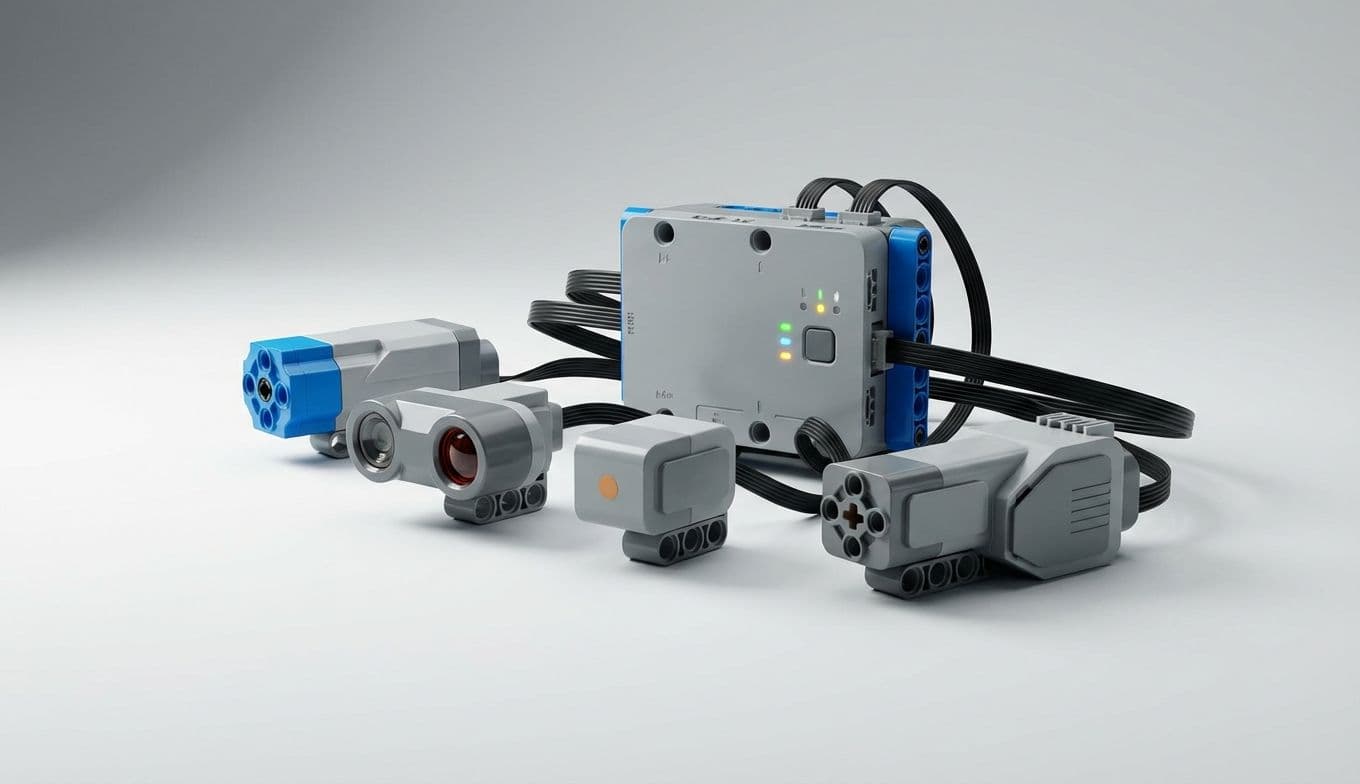
At its core, the Smart Brick is a self-contained computer designed to integrate seamlessly with standard Lego builds. While it looks like a slightly oversized 3x3 brick, the internal hardware is where the real value lies. Unlike the simplified tech in previous lines, the Smart Brick houses a 6-axis IMU (inertial measurement unit). For those of us who aren't engineers, that means it has an integrated gyroscope and accelerometer that can detect pitch, roll, yaw, and sudden impacts.

During my testing, I was impressed by the responsiveness of the built-in color sensor, which can distinguish between standard Lego shades to trigger specific actions, and the Bluetooth Low Energy (BLE) 5.0 radio, which kept a stable connection even from across the room.

The setup process is surprisingly intuitive. You pair the brick with the Lego Smart App—which, thankfully, doesn't require the latest $1,200 flagship phone. As long as your device (iOS or Android) was made within the last four or five years and supports Bluetooth 5.0, you’re good to go. While a tablet offers a better "canvas" for the block-based coding interface, I managed just fine on an older smartphone. The app provides a platform for designing interactive sequences and downloading "Play Modules," which are essentially community-made behaviors that you can flash onto the brick.

The Coding Curve: Who Is This For?

This is the question every parent or hobbyist asks before dropping a significant amount of money. Is the Smart Brick for the toddler who just discovered stacking? Absolutely not. This is aimed squarely at the older child (ages 8 and up), the budding engineer, and the adult fan who wants to automate their complex dioramas.

The brilliance of the Smart Brick is that it demystifies coding by making it tangible. When a child drags a block of code in the app to say "If tilted left, turn LED red," and their physical creation immediately responds, it creates a feedback loop that an iPad game simply can't match. It fosters logic and problem-solving because, in the world of physical building, things fall over. Gravity is a harsh debugger.

However, it is important to note the learning curve. While the entry-level "Play Modules" are plug-and-play, the custom programming requires patience. It’s a bridge between the physical world of construction and the digital world of logic. Some of the more complex conditional logic might require a parent to sit down for the first hour to help bridge the gap between "I want it to do this" and "Here is how you tell the brick to do that."

The Investment: Is It Worth the Price Tag?

Lego products, particularly those with silicon and sensors, carry a premium. The Smart Brick currently retails in the $150 to $180 range depending on the starter kit you choose. To put that in perspective, it is significantly more affordable and accessible than the LEGO Education Spike Prime kits (which can run $300+) or the now-retired Mindstorms sets.

So, is it worth it? For the right builder, yes. A standard $60 Lego set provides a few hours of building and then usually settles into a display piece or gets dismantled into the "big bin." The Smart Brick offers a gateway to infinite replayability. Every new build presents a fresh opportunity for interaction. It encourages kids (and adults) to take apart their old sets to see how they can be motorized or "digitized."

If you’re on a budget, I’d suggest looking for the Smart Brick "Expansion Hubs" rather than the massive 2,000-piece sets. You get the same "brain," but you can use the bricks you already own to keep the cost down.

Quick Summary: The Smart Brick at a Glance

Pros:

  • High-quality sensors (IMU and color) that actually work.
  • Compatible with almost any Bluetooth-enabled device from the last 5 years.
  • Infinite replayability; it scales with the builder's skill level.
  • Massive library of community-made "Play Modules."

Cons:

  • High initial investment compared to standard bricks.
  • The app can be a battery drain on older smartphones.
  • Requires some adult guidance for the initial coding setup.

The Verdict: A Smart Move

My initial skepticism has been replaced by genuine enthusiasm. The Lego Smart Brick isn't just another tech toy; it's a thoughtful integration of digital capabilities into the timeless joy of building. It respects the user's creativity by offering a platform rather than a script. It successfully sidesteps the pitfalls of being too predictable or overly complex.

If you have a child who loves to tinker, or if you’re a hobbyist looking to add some intelligence to your latest MOC (My Own Creation), the Smart Brick is a seriously compelling option. It’s an investment in a different kind of play—one where the only limit isn't the number of bricks you have, but how you choose to program them.

#Lego programmable brick#Lego Smart App#Lego coding for kids#AFOL tech toys#Lego Smart Brick vs Mindstorms