Keychron V5 & Q1 Ultra 8K Review: Wireless Mechanical Keyboards

Keychron V5 & Q1 Ultra 8K Review: Wireless Mechanical Keyboards

Team GimmieTeam Gimmie
Published on April 19, 2026

The Wireless Mechanical Paradox Finally Has a Solution

For years, the mechanical keyboard community has been trapped in a bit of a paradox. On one hand, you have the tactile bliss and auditory satisfaction of a high-end board—the kind of typing experience that makes even the most mundane emails feel significant. On the other hand, you have the cables. For the purists, a wire is a small price to pay for zero latency. But for the rest of us, it’s a desk-cluttering relic.

The alternative has traditionally been wireless mechanical boards, but they brought their own brand of misery: battery anxiety. We’ve all been there, frantically digging for a USB-C cable or a pair of AAAs right in the middle of a deadline because the keyboard suddenly decided to go dark. Keychron has spent years building a reputation as the go-to brand for enthusiasts and beginners alike, and with their new Ultra 8K lineup, they’ve finally addressed the battery-performance gap that has plagued the industry.

I’ve been putting two of their newest models—the V5 Ultra 8K and the Q1 Ultra 8K—through the wringer. This isn’t just a minor refresh. It’s a significant evolution in how wireless keyboards handle power and speed, effectively eliminating the trade-offs we’ve simply learned to live with.

The V5 Ultra 8K: The Portable Workhorse

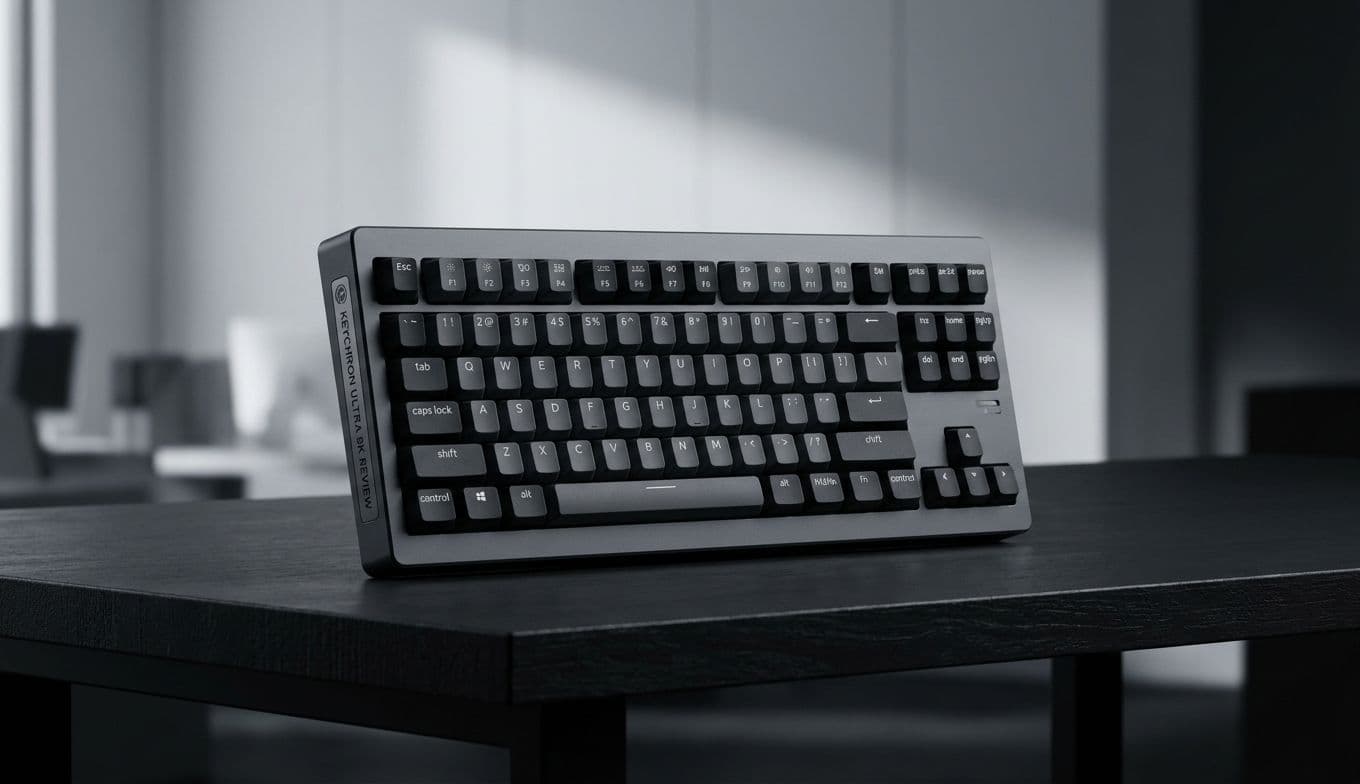
The Keychron V5 Ultra 8K is positioned as the accessible entry point, but calling it budget-friendly feels like an understatement given what it brings to the table. Priced at $119.99, it uses a near-full-size 1800 layout. For those unfamiliar with the jargon, this means you get a dedicated number pad, but the keys are tucked closer together, saving significant desk space without sacrificing the utility that spreadsheet power users and remote professionals need.

The most notable feature of the V5 is its construction. It’s built with a high-quality plastic case. While some might scoff at plastic over metal, there is a massive practical benefit here: weight. The V5 is light enough to be tossed into a backpack and carried to a coffee shop or a co-working space without feeling like you’re hauling a lead brick.

Under the hood, the V5 introduces the Ultra 8K internals, which means two things. First, it features an 8,000Hz polling rate. This refers to how often the keyboard communicates with your computer. While standard keyboards check in 1,000 times per second, this does it 8,000 times. For an average typist, this is admittedly overkill. However, for a gamer or someone who demands the absolute floor of input latency, it’s a top-tier spec. Second, it boasts a marathon battery life that transforms the experience from charging every few days to charging maybe once a quarter.

The Q1 Ultra 8K: The Heavyweight Anchor

If the V5 is the versatile traveler, the Q1 Ultra 8K is the permanent resident of a high-end desk setup. Priced at $229.99, it’s a premium investment, and you feel that the moment you pick it up. Unlike the V5, the Q1 is encased in CNC-machined aluminum. It is significantly heavier—an absolute tank of a keyboard that stays exactly where you put it.

This weight isn’t just for show; it fundamentally changes the acoustics and feel of the keyboard. The metal body provides a deeper, more resonant thud with every keystroke, which is a hallmark of the enthusiast experience. The Q1 uses a 75 percent layout, which is essentially a compact version that removes the number pad but keeps the dedicated function row and arrow keys.

Like its plastic sibling, the Q1 features the 8K polling rate and the upgraded wireless efficiency. However, the Q1 is clearly designed for the person who views their desk as a workstation and an art piece. It’s less about portability and more about the sheer physical presence of a high-performance tool. For the creative professional or the developer who spends eight to ten hours a day at the keys, the Q1 offers a level of stability and luxury that justifies the price hike.

Which Ultra Model Fits Your Life?

Choosing between these two boards—or any of the Ultra 8K line—comes down to how you move through your day. We’ve broken down who these keyboards are really for:

The Remote Professional: If you’re working from home and your job involves a heavy mix of communication and data entry, the V5 Ultra 8K is the winner. The inclusion of the number pad in a space-saving layout is a lifesaver for spreadsheets, while the extended battery life means you won’t have your keyboard die in the middle of a client call.

The Dedicated Student: If you’re moving between dorm rooms, libraries, and lecture halls, the plastic-cased V5 is your best friend. It gives you that premium mechanical feel that makes writing a 20-page paper slightly less painful, but it won't weigh down your bag.

The Competitive Gamer: This is the rare group that will actually feel the benefit of the 8,000Hz polling rate. If you play fast-paced titles where every millisecond of input lag counts, but you’re tired of the wire, the Ultra 8K series offers the best of both worlds.

The Enthusiast Investor: If you’re the person who watches keyboard build videos and cares about the sound of a spacebar, the Q1 Ultra 8K is the obvious choice. The metal construction and the ability to mod the board later make it a long-term investment rather than a temporary peripheral.

The Frustrated Wireless User: This is the broad category for anyone who has ever been burned by a dead wireless keyboard. Regardless of which model you choose, the Ultra 8K line’s primary value proposition is peace of mind. You simply stop thinking about the battery.

A Realistic Look at the 8K Hype

It’s important to be honest about the specs. While Keychron is leading with the 8K name, you shouldn't buy these keyboards just for the polling rate unless you are a high-level gamer. For the vast majority of human beings, our fingers simply don't move fast enough to notice the difference between 1,000Hz and 8,000Hz.

The real headline here is the combination of that high-end performance with a battery that refuses to quit. Usually, high-performance wireless devices are power-hungry. Keychron has managed to push the performance ceiling up while simultaneously extending the battery life into the months-long range. That is the true engineering feat.

Final Verdict

Keychron has successfully closed the gap between the convenience of wireless and the reliability of a wired connection. The V5 Ultra 8K and the Q1 Ultra 8K are not just tools for keyboard nerds; they are practical, high-value upgrades for anyone who values their time at a desk.

If you want a portable, functional workhorse that can handle a spreadsheet and a commute, get the V5. If you want a heavy, premium, stationary centerpiece for your home office that feels like a piece of high-end machinery, go with the Q1. Either way, you’re finally getting a mechanical keyboard that respects your time by staying out of the charging port and under your fingertips. Keychron didn't just add a faster chip; they solved the battery anxiety that has held wireless mechanical keyboards back for a decade.