JBL Open-Ear Earbuds 2026: Sense Pro vs. Sense Lite Comparison

Team Gimmie

Team Gimmie

1/5/2026

JBL Open-Ear Earbuds 2026: Sense Pro vs. Sense Lite Comparison

The End of the Noise-Canceling Bubble: Why We Are Finally Reconnecting With the World

For the better part of a decade, the goal of personal audio was simple: total isolation. We wanted to disappear into a vacuum of silence, drowning out the roar of the airplane engine or the chatter of a crowded office. But something is changing. We are starting to realize that being completely cut off from our environment isn't always a luxury—sometimes, it is a liability.

The rise of open-ear audio marks a significant shift in how we move through the world. We are trading the artificial silence of noise cancellation for situational awareness, and JBL is leading that charge. In March 2026, the company is significantly expanding its footprint in the US market by introducing two new models to its open-ear family: the Sense Pro and the Sense Lite. These join the original Sense that launched in 2024, signaling that the open-ear design is no longer a niche experiment—it is a legitimate third category alongside over-ear headphones and traditional in-ear buds.

The Open-Ear Logic: Comfort and Connection

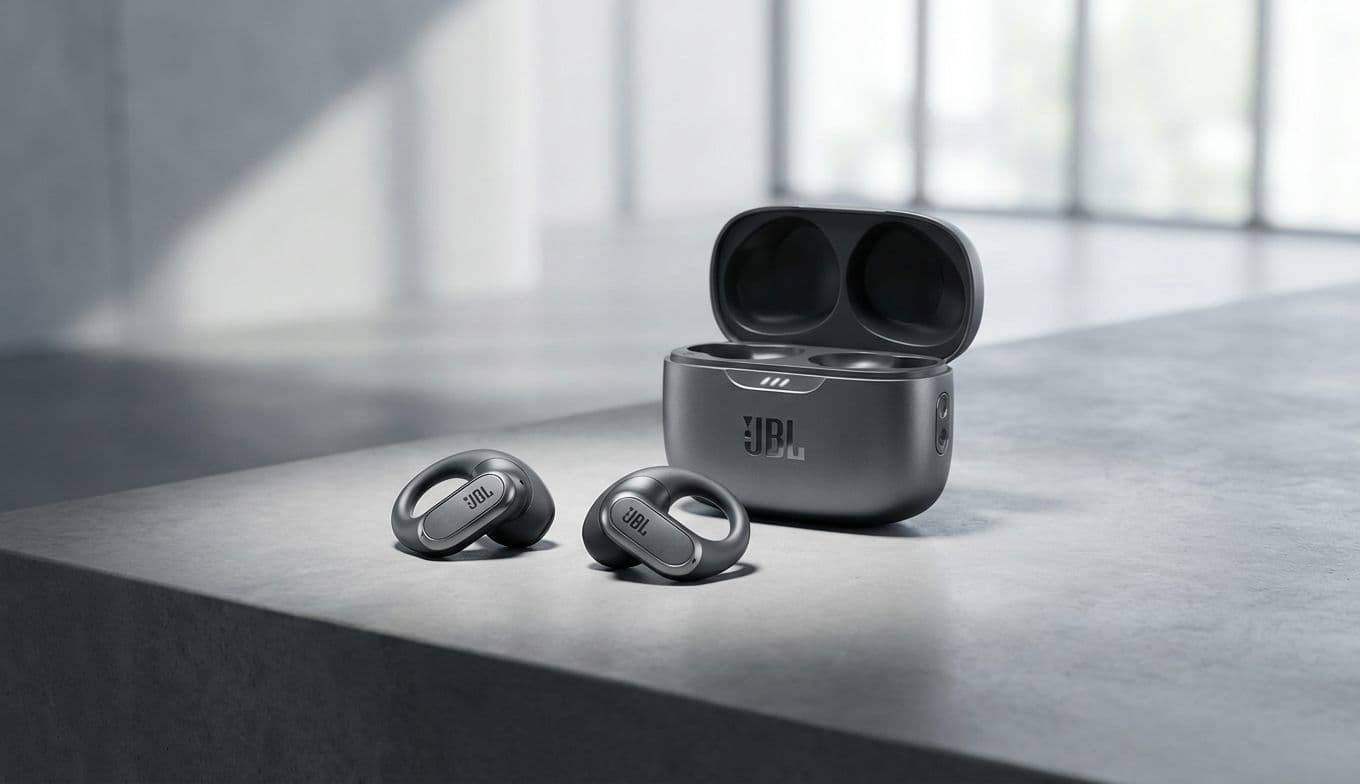
The core of this movement is JBL’s OpenSound technology. Unlike traditional earbuds that require a silicone tip to be jammed into your ear canal to create a seal, these sit just outside the ear. They use air conduction to direct sound into your ears while allowing ambient noise to pass through naturally.

There are three primary reasons this is gaining traction. First is safety. If you are running at dusk or cycling through a busy intersection, hearing a car tire on pavement or a distant siren is a literal lifesaver. Second is ear health and comfort. Many users suffer from ear fatigue or infections caused by the pressure and moisture buildup of traditional buds. Open-ear designs eliminate that pressure entirely. Finally, there is the social element. You can enjoy a podcast while still being able to hear a colleague ask a quick question or a flight attendant announce a gate change.

Choosing Your Sound: Sense Pro vs. Sense Lite

JBL isn’t just offering one-size-fits-all here. The 2026 lineup creates a clear hierarchy based on how much you value audio fidelity versus everyday utility. Both models share the essential DNA, including an adjustable ear hook that is a massive improvement over the rigid designs of the past, and integration with the JBL app for touch-control customization. However, the internal components tell a different story.

The Sense Lite is the utilitarian workhorse. It is designed for those who want the freedom of open-ear listening without the premium price tag. You still get the core OpenSound experience, Dual Connect for switching between your laptop and phone, and Fast Pair for Android users. It’s light, functional, and gets the job done.

The Sense Pro is the flagship designed for those who refuse to sacrifice audio quality for awareness. JBL has packed massive 16.2mm drivers into the Pro, which is significant. In the open-ear world, bass is usually the first casualty because there is no seal to trap low frequencies. The Pro combats this with an adaptive bass boost and hi-res audio support. It also introduces spatial sound, creating a wider soundstage that makes it feel like you are in the room with the music rather than just wearing a device. Furthermore, the Pro includes the JBL Voice Pickup Sensor, which uses bone conduction technology to isolate your voice from wind and background noise during calls—a crucial feature for anyone taking meetings on the go.

Finding Your Fit: A Persona-Based Guide

Because open-ear buds serve such a different purpose than noise-canceling ones, the right choice depends entirely on your lifestyle. Here is how to decide which model fits your routine.

The Outdoor Athlete If your mornings are spent on the pavement or the trail, situational awareness is your top priority. You need a secure fit that won't budge during a sprint and a design that lets you hear the world around you. The Recommendation: The Sense Lite. It provides the security of the adjustable hook and the safety of the open design without the added weight or cost of high-fidelity features you might not fully appreciate while huffing and puffing up a hill.

The Professional Multi-tasker You spend your day bouncing between Zoom calls, coffee shops, and short commutes. You need to stay reachable and aware of your surroundings, but you also want your music to sound rich during your focus hours. The Recommendation: The Sense Pro. The Voice Pickup Sensor is a game-changer for clear communication in unpredictable environments, and the spatial audio makes those long stretches of focus music feel less fatiguing.

The Casual Listener and Podcast Addict You primarily listen to spoken-word content or light background music while doing chores, walking the dog, or shopping. You want something that can stay on your ears for four hours straight without you even noticing they are there. The Recommendation: The Sense Lite. For podcasts and casual listening, the hi-res audio of the Pro is likely overkill. The Lite offers the same comfort and convenience at a much more palatable price point.

Budgeting for the Switch

While official US pricing for the March 2026 launch hasn’t been set in stone, we can look at JBL’s historical pricing cycles to get a clear picture for your budget.

Typically, JBL positions its Lite models in the accessible $100 to $130 range. This makes them a great entry point for people curious about the technology or a perfect "no-brainer" gift for a runner. The Sense Pro, with its advanced drivers and spatial audio tech, will likely sit in the $180 to $200 tier, competing directly with high-end offerings from Shokz and Bose. The original Sense will likely remain in the lineup as a mid-range value option, possibly seeing a price drop to around $150 once the new models arrive.

Final Thoughts: A Move Toward Awareness

JBL’s 2026 expansion is a clear signal that the audio industry is moving toward more thoughtful, less isolating technology. The Sense Pro and Sense Lite aren't just minor iterative updates; they represent a refinement of a category that is finally coming of age.

By offering a clear choice between a high-performance audio machine and a practical everyday tool, JBL is making it easier for consumers to find a pair of earbuds that fits their life, not just their ears. If you have been waiting for the right moment to step out of your noise-canceling bubble and back into the real world, March 2026 looks like the perfect time to make the jump.

#JBL Sense Pro vs Sense Lite#air conduction headphones#situational awareness audio#best earbuds for running 2026#JBL OpenSound technology