Isaac 0 Laundry Robot Review: Is the $8,000 Folder Worth It?
Team GimmieThe $8,000 Laundry Robot That Can’t Fold Your Bed Sheets
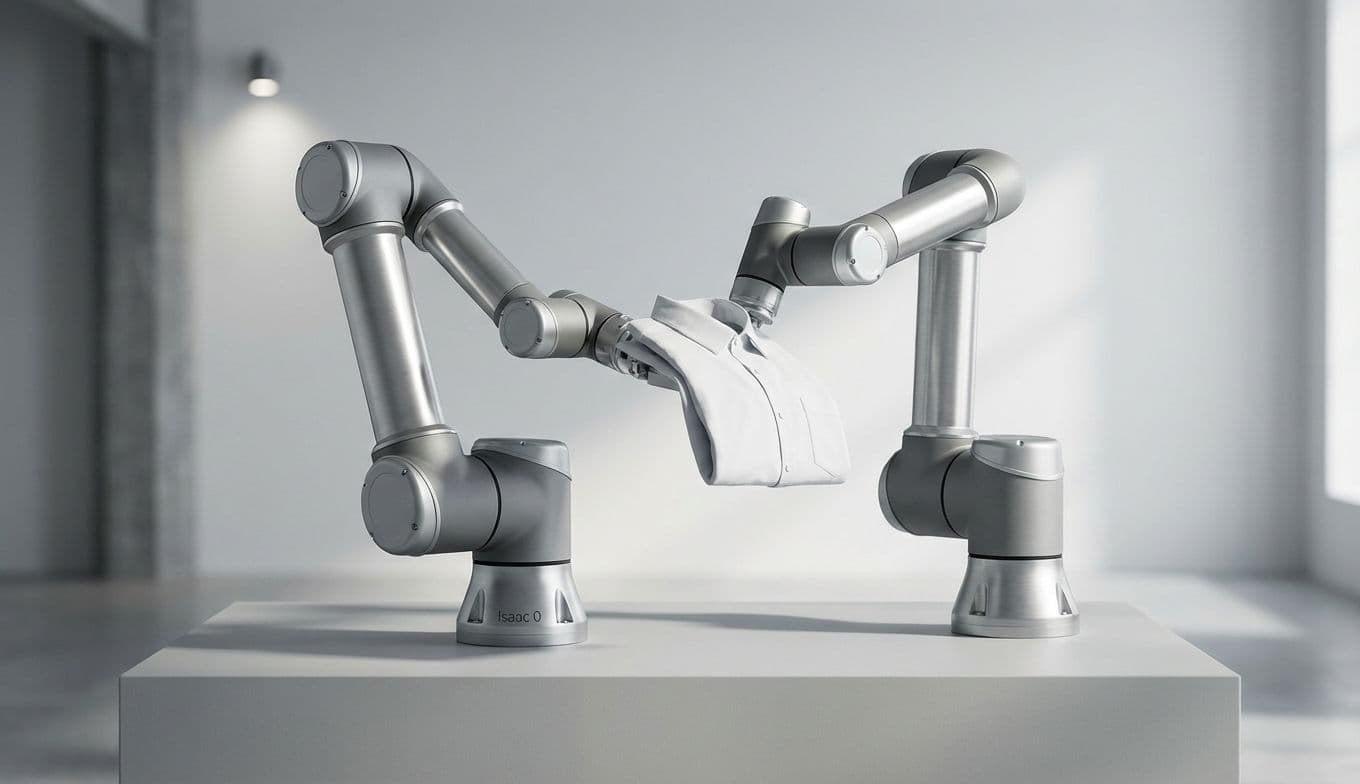
Imagine spending the price of a decent used car on a machine designed to solve your least favorite household chore, only for that machine to look at a pair of inside-out jeans and effectively quit. That is the reality of the Isaac 0, the first home robot from startup Weave Robotics. While the dream of a mechanical butler has been a staple of science fiction for decades, the Isaac 0 suggests that the future of automated housework is currently expensive, oddly specific, and surprisingly human-dependent.
Before you get too excited about never touching a pile of clean laundry again, there is a massive geographic catch: you have to live in the San Francisco Bay Area to even get on the list. For everyone else, this remains a high-priced curiosity from the heart of Silicon Valley. But even if you do live in the tech capital of the world, you might want to read the fine print before dropping a $250 deposit on an $7,999 machine.
The Reality of the Eight-Thousand-Dollar Fold
Let’s talk about the sticker shock. At $7,999, the Isaac 0 is a luxury item, plain and simple. For that price, you might expect a machine that whisks through a mountain of clothes in minutes. However, the reality is much more methodical—or glacial, depending on your perspective. Weave Robotics estimates it takes between 30 to 90 minutes for the Isaac 0 to fold a single load of laundry.
To put that in perspective, a human can usually fold a standard load in about 10 to 15 minutes while half-watching a sitcom. The Isaac 0 is stationary, meaning it doesn't move from room to room; it sits by a wall outlet and waits for you to bring the work to it. But the real kicker isn't the speed—it's the capability. This high-end piece of machinery cannot handle large blankets, bed sheets, or anything that is inside out. Considering that sheets and blankets are the most physically taxing items to fold, their exclusion feels like a glaring omission for a device at this price point. If you still have to stand there and flip your socks the right way out and manually wrestle with your King-size duvet, how much work is the robot actually saving you?
The Privacy Question: Who Is Watching Your Socks?

Perhaps the most startling detail about the Isaac 0 isn’t its price, but how it actually works. Weave Robotics admits that the machine is not fully autonomous. When the robot encounters a particularly tricky fold or a garment it doesn't recognize, it relies on teleoperators to step in and help.
In plain English, teleoperators are remote human workers who can see through the robot's cameras to guide its movements. While Weave says this is a temporary measure to improve the robot's artificial intelligence over time, it raises a significant privacy red flag. When you buy a laundry robot, you are essentially inviting a camera into your home that may be monitored by a stranger in a remote office. Do you really want a third party having a front-row seat to your unfolded undergarments? For $8,000, most consumers would expect a machine that can think for itself, not a high-tech puppet that requires a human handler to navigate a t-shirt.
The Math of Luxury: Robots vs. Reality
To understand just how steep this investment is, it helps to look at the alternatives. If you have $8,000 burning a hole in your pocket and you truly hate laundry, you could bypass the robot entirely and opt for a professional wash-and-fold service.
In most major cities, a high-quality laundry service costs about $1.50 to $2.00 per pound. A typical load of laundry weighs about 10 pounds, making it roughly $20 per load. At that rate, $8,000 would buy you 400 loads of professionally cleaned, dried, and perfectly folded laundry delivered to your door. If you do one load a week, that is nearly eight years of never having to touch a washing machine, let alone a folding board.
Unlike the Isaac 0, a professional service will fold your sheets, flip your jeans the right way out, and won’t require a permanent corner of your living room. When you ground the price of the Isaac 0 in real-world costs, the value proposition starts to crumble for anyone who isn't a dedicated tech enthusiast with a massive amount of disposable income.
Who is This Robot Actually For?
If the Isaac 0 isn’t a practical solution for the average household, who is buying it? Currently, this is a product for the extreme early adopter—the person who wants to live in the future today, regardless of the cost or the bugs. It’s for the Bay Area tech executive who wants a conversation piece in their smart home, or perhaps for niche commercial environments where the novelty of a folding robot provides more marketing value than actual labor savings.
It’s also a proof of concept. Weave Robotics is tackling one of the hardest problems in robotics: handling soft, unpredictable materials like fabric. While the Isaac 0 has significant limitations, it represents a step toward a world where household robots do more than just vacuum the floor. However, being a pioneer comes with a "pioneer tax," and in this case, that tax is $8,000 and a loss of privacy.
Final Verdict: Not Quite Ready for the Hamper
The Isaac 0 is an ambitious, fascinating piece of technology that highlights just how difficult it is to automate the mundane tasks of daily life. Weave Robotics deserves credit for getting a product to market in such a complex category, but for the vast majority of people, the Isaac 0 is a "wait and see" product.
Until the price comes down, the speed goes up, and the robot can handle a set of bed sheets without calling for human backup, it remains a luxury toy rather than a household essential. If you’re in the Bay Area and have the money to spare, you might enjoy being part of the beta test for the future of chores. For everyone else, a $20 plastic folding board and a good podcast remain a much more efficient—and private—way to get through the Sunday night laundry pile. The revolution is coming, but for now, you’re still better off doing it yourself.