Intel Panther Lake Handhelds: Ending AMD's Gaming Monopoly?

Team Gimmie

Team Gimmie

1/7/2026

Intel Panther Lake Handhelds: Ending AMD's Gaming Monopoly?

Intel’s Panther Lake: The End of AMD’s Handheld Monopoly?

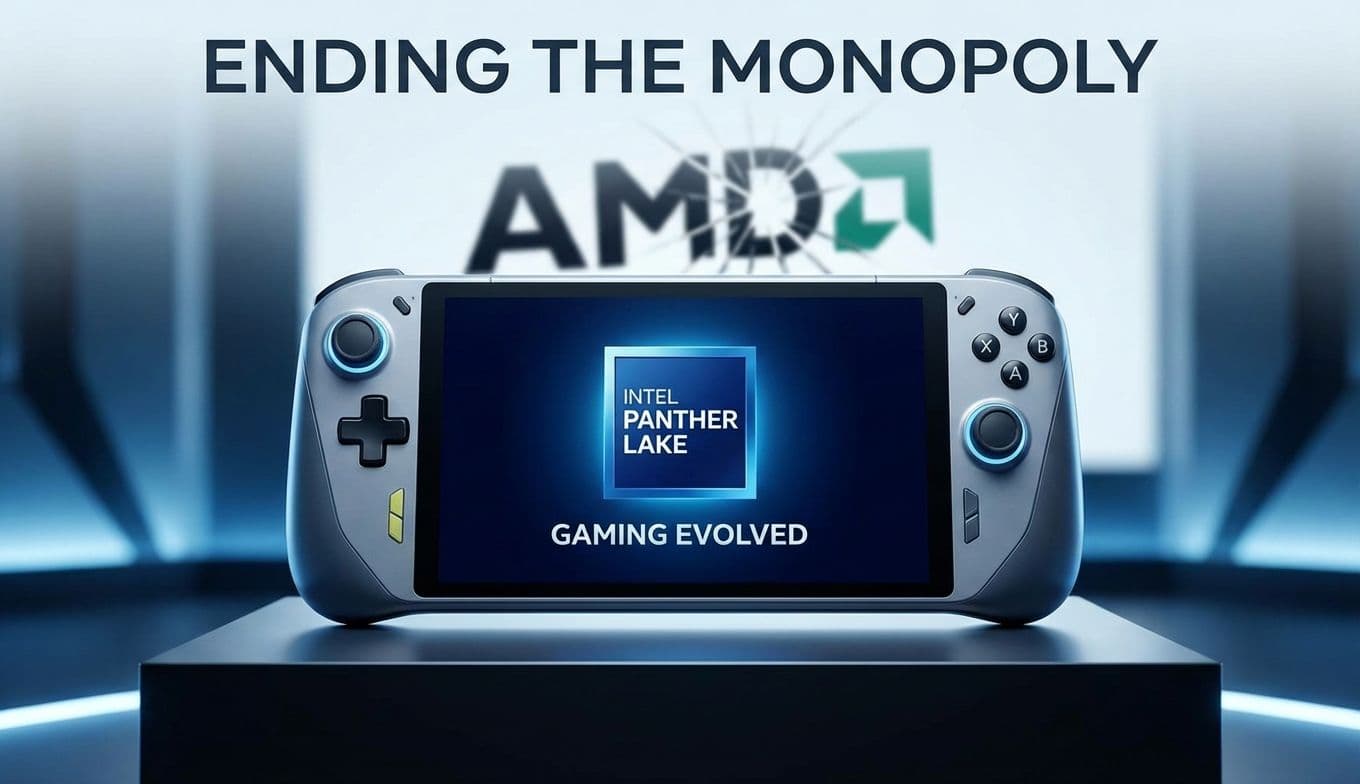
For the last few years, the handheld gaming market has been a one-sided conversation. If you wanted a device that could actually play Elden Ring or Cyberpunk 2077 in the palm of your hand, you were almost certainly buying a machine powered by AMD. From the Steam Deck to the ASUS ROG Ally and the Lenovo Legion Go, AMD has enjoyed a comfortable monopoly. But Intel is finally tired of watching from the sidelines.

The company is preparing to launch a specialized custom chip, codenamed Panther Lake, designed from the ground up to power the next generation of portable PCs. This isn't just another incremental update; it’s a strategic pivot. Intel’s goal is to prove that it can handle the unique thermal and battery constraints of a handheld—a challenge they haven’t quite mastered yet. If you’re a gamer or looking for a high-end tech gift, this news changes the calculus for what you should buy in 2026.

The Shadow of the MSI Claw

To understand why Panther Lake matters, we have to look at Intel’s recent history in this space, specifically the MSI Claw. When the Claw launched, it was supposed to be the first major Intel-powered challenger to the Steam Deck. Instead, it became a cautionary tale.

While the hardware was sleek, the Core Ultra processors inside were essentially laptop chips trying to pretend they were handheld chips. The result? Poor battery life, inconsistent frame rates, and driver issues that made some games unplayable at launch. AMD’s Z1 series chips simply felt more mature and optimized for the power-sipping requirements of a portable device.

Intel knows it can’t afford another MSI Claw situation. That’s why Panther Lake—and specifically the rumored Intel Core G3 variant—is such a big deal. Instead of just shrinking a laptop processor, Intel is building custom silicon with a focus on its new 18A manufacturing process. In plain English, this means the chip is designed to be more efficient, generating less heat and squeezing more life out of a battery while delivering more power than the integrated graphics we see today.

Custom Silicon: Why Panther Lake Changes the Game

Intel’s strategy here is a direct response to how Valve and AMD found success. By tailoring the silicon specifically for handhelds, Intel can optimize how the device handles power. When you're playing a demanding title on the go, the "performance-per-watt" ratio is the only metric that truly matters.

The industry whispers suggest that Panther Lake will offer a significant leap in graphical performance, potentially outclassing current AMD offerings. This would allow gamers to move past low settings and 720p resolutions, moving closer to a true 1080p high-fidelity experience on a seven-inch screen. For enthusiasts, this is the Holy Grail: a device that doesn't force you to choose between a pretty game and a playable frame rate.

But the hardware is only half the battle. Intel is also working heavily on its software and drivers. One of the biggest advantages of the Steam Deck is how "it just works." Intel is pouring resources into making sure that when a new game drops, their Panther Lake chips are ready for it on day one. For a gift-giver, this means less time spent troubleshooting and more time actually playing.

Navigating the 2026 Market: More Than Just a Processor

As Intel enters the ring, they aren't just fighting AMD. Qualcomm is also entering the fray with its Snapdragon chips, promising incredible battery life and integrated 5G. This creates a crowded, competitive market that is great for consumers but confusing for buyers. When you’re looking at these new devices, you have to look beyond the brand name on the box.

First, consider the ecosystem. While Intel-powered handhelds will run Windows—giving you access to Steam, Epic Games Store, and Game Pass—the user interface is what makes or breaks the experience. Look for manufacturers who have refined their software overlays. A powerful chip doesn't matter if the device is a nightmare to navigate without a mouse and keyboard.

Second, don’t ignore ergonomics for specs. You can have the most powerful Panther Lake chip in the world, but if the device is too heavy to hold for an hour or the buttons feel mushy, it will end up gathering dust on a shelf. Intel provides the brains, but brands like ASUS, Lenovo, and MSI provide the body. Pay attention to reviews regarding weight distribution and cooling fan noise.

Finally, remember that competition breeds better pricing. With Intel, AMD, and Qualcomm all fighting for space in your backpack, we are likely to see more aggressive pricing tiers. We may see budget-friendly Panther Lake devices that outperform today’s high-end handhelds, making PC gaming more accessible to students or casual players.

The 2026 Verdict: Buy Now or Wait?

If you are currently looking at a handheld gaming PC, you’re at a crossroads. Here is our breakdown of whether you should pull the trigger now or wait for the Intel revolution.

Buy Now if: You need a reliable device today. The current Steam Deck OLED and the ROG Ally X are refined, mature products with stable software. If you have a long trip coming up or a birthday this month, these are fantastic choices that will still be relevant for years.

Wait for Panther Lake if: You are a power user who wants the absolute best performance possible. If you’re the type of person who is frustrated by the graphical limitations of current handhelds, the jump to Intel’s custom 18A silicon in 2026 will likely be worth the wait.

The Gifting Outlook: If you’re planning a major tech gift for late 2026, keep your eyes on the Intel-powered releases. These devices are aimed at the "pro" gamer—the person who wants their handheld to replace their desktop or console entirely. It’s a premium experience for someone who values cutting-edge tech.

A New Era for Portable Power

Intel’s move into custom handheld chips signals that this isn't just a fad—handheld PC gaming is the new frontier. By moving away from the "one-size-fits-all" approach that hampered the MSI Claw and embracing custom engineering, Intel is finally positioning itself as a legitimate rival to AMD.

For us, this means better screens, longer battery life, and the ability to play our favorite PC games anywhere from a plane to a park bench without compromise. The next year will be a game of wait-and-see as we get the first benchmarks, but one thing is certain: the handheld monopoly is over, and the real competition is just beginning.

#handheld gaming PC#AMD vs Intel handheld#MSI Claw performance#Intel 18A process#portable gaming chips