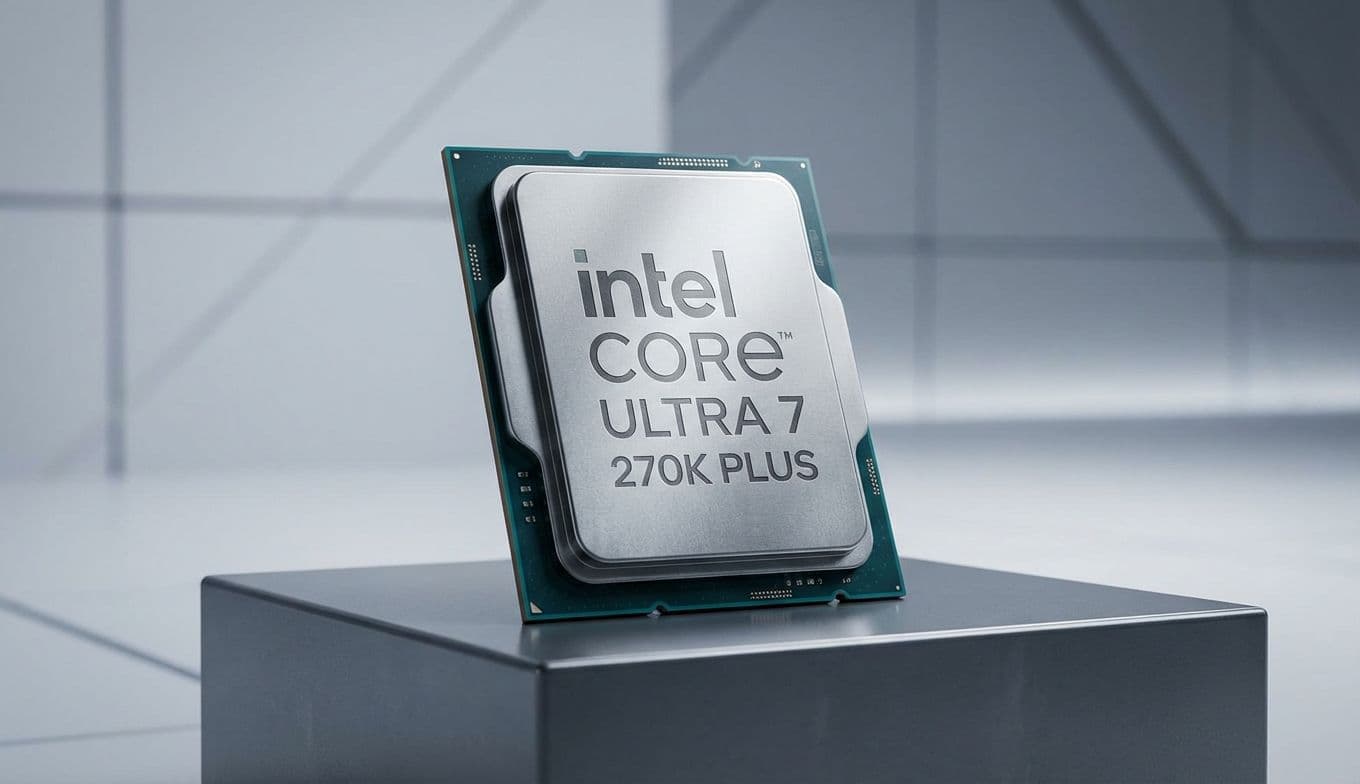
Intel Core Ultra 7 270K Plus: The Fastest Gaming Chip?

Intel Core Ultra 7 270K Plus: The Fastest Gaming Chip?

Team GimmieTeam Gimmie
Published on March 11, 2026

Intel’s New Fastest Ever Gaming Chips: Do They Actually Deliver?

Intel has a history of making us jump through hoops for their flagship desktop processors. If you followed the tech world over the last two years, you know the story wasn't pretty. The Raptor Lake chips ran hotter than a furnace and guzzled power like a thirsty trucker. Even worse, they had a nasty habit of crashing at the worst possible moments due to high-voltage instability. When the Arrow Lake generation arrived in late 2024 with the Core Ultra 9 285K, it was supposed to be a redemption arc. Instead, it was a gaming dud that frequently trailed behind older chips, requiring a flurry of Windows updates and BIOS patches just to stay relevant.

Now, Intel is back, shouting from the rooftops that they’ve finally fixed the formula. They are calling the new Intel Core Ultra 7 270K Plus and 250K Plus the fastest gaming desktop processors ever. Set to ship on March 26, these chips carry the weight of a brand trying to reclaim its dignity. But before you or the person you’re buying a gift for hits that pre-order button, there is a lot of fine print to navigate.

The Plus Factor: What Are These Chips?

The first question many enthusiasts are asking is what that Plus suffix actually means. Is this a brand-new architecture? Not exactly. Think of the 270K Plus and 250K Plus as a mid-cycle refresh of the Arrow Lake architecture. Intel is essentially taking the existing foundation, binning the silicon more aggressively for higher speeds, and refining the power delivery to squeeze out more performance without the crashing issues that plagued previous years.

Intel claims the 24-core Core Ultra 7 270K Plus, with its 5.5GHz turbo clock, can outperform the previous king, the i9-14900K. That is a bold claim, especially since the 14900K was a power-hungry monster. If Intel has managed to beat that performance while keeping the chip from melting your motherboard, they might actually have a winner. However, for gamers, the real hurdle isn’t Intel’s own past—it’s the competition from across the street.

The Benchmark to Beat: Intel vs. AMD

While Intel is busy competing with its own ghosts, AMD has been busy winning. Currently, the undisputed heavyweight champion of gaming is the AMD Ryzen 7 9800X3D. Thanks to its specialized 3D V-Cache technology, that chip provides a massive boost to frame rates in games like Simulation titles, RPGs, and competitive shooters.

For the Core Ultra 7 270K Plus to truly be the fastest ever, it doesn't just need to beat the old 14900K; it needs to trade blows with the 9800X3D. Intel’s marketing has been curiously quiet about direct comparisons to AMD’s latest X3D offerings. This suggests that while the 270K Plus will be a productivity powerhouse for video editing and 3D rendering, it might still find itself in a dogfight when it comes to pure gaming frame rates. If you’re building a PC specifically for gaming, the 9800X3D is still the benchmark these Intel chips have to prove they can topple.

The Gift-Givers Compatibility Checklist

If you are looking to buy one of these as a gift for the PC builder in your life, you need to be very careful. You cannot simply swap an old processor out for a new Core Ultra Plus chip. These processors are part of a new ecosystem, and compatibility is the biggest hurdle.

First and foremost is the Socket Requirement. These new chips require the LGA 1851 socket. If your gift recipient is currently using an Intel 12th, 13th, or 14th Gen processor, this new chip will not fit their current motherboard. They will need a new Z890 series motherboard to make this work. Buying just the chip without a compatible board is like buying someone a high-end engine that doesn't fit under their car's hood.

Second is the Memory. These chips have officially moved on from the older DDR4 RAM. They require DDR5 memory. If the person you are buying for is still holding onto older RAM sticks, they’ll need an upgrade there, too.

Finally, consider the Power Supply. While Intel claims better efficiency, these are still high-performance parts. A high-quality 850W or 1000W power supply is highly recommended to ensure the system stays stable during intense gaming sessions.

Thermal Warning: The Cooling Requirement

One thing hasn’t changed: Intel’s top-tier chips are demanding when it comes to heat. You cannot cool a Core Ultra 7 270K Plus with a basic fan that comes in the box. In fact, most standard air coolers will struggle to keep this chip from thermal throttling—a process where the chip slows itself down because it’s getting too hot.

If you are moving to the Core Ultra Plus series, you should consider a 360mm All-In-One (AIO) liquid cooler as the bare minimum. These coolers use a large three-fan radiator to dissipate heat effectively. For those who prefer air cooling, only the most massive, dual-tower heatsinks like those from Noctua or be quiet! will suffice. If you’re giving this as a gift, including a high-end cooler or a tube of premium thermal paste is a thoughtful (and necessary) addition.

Is It Worth the Upgrade?

The promise of fastest ever is alluring, especially for those chasing a 144Hz or 240Hz gaming experience. If Intel has truly learned from the Raptor Lake stability crisis and delivered a chip that is both fast and reliable, the 270K Plus could be the centerpiece of a magnificent gaming rig. It offers a great balance of gaming speed and multi-core power for people who also stream or edit video on the side.

However, my years of testing have taught me to be cautiously optimistic. We need to see independent benchmarks from third-party reviewers who don't have an Intel badge on their paycheck. We need to know how these chips perform under a sustained load of several hours, not just a quick thirty-second benchmark.

If you are a gamer or a gift-giver, my advice is to wait until the first week of April. By then, the reviews will be out, the stability will be tested, and we will know if Intel has finally crossed the finish line or if they’re still just trying to catch up to AMD. The race for the fastest gaming chip is closer than it’s been in a decade, and a little patience could save you a lot of technical headaches down the road.