How to Make Distilled Water at Home (Easy DIY Guide)
Team GimmieWHY YOUR HIGH-END APPLIANCES CRAVE DISTILLED WATER (AND HOW TO MAKE IT)
You have spent a small fortune curating your home. Perhaps it is a Breville Oracle Touch sitting on your kitchen counter, or a Dyson Purifier Humidifier keeping your bedroom air perfectly balanced. These are more than just appliances; they are investments in your lifestyle. But there is a silent assassin lurking in your pipes that is ready to cut their lifespan in half: tap water.
Most of us live in areas with hard water, which is packed with minerals like calcium and magnesium. While these are fine for a quick glass of water, they are devastating for precision machinery. Over time, those minerals crystallize into limescale, clogging the delicate internal heating elements of your espresso machine or leaving a white, chalky dust all over your furniture from your humidifier. Distilled water is the gold standard for appliance longevity because it is pure H2O, stripped of everything that causes buildup.
In this guide, we will look at how to protect your high-end gear by creating your own distilled water or choosing the right machine to do it for you.
THE SCIENCE OF PROTECTION: WHY PURITY MATTERS
When you boil tap water in a standard kettle, you eventually see a white crust form at the bottom. In a $2,000 espresso machine, that crust is forming inside copper boilers and tiny valves where you can’t see it—until the machine stops working.
Distillation is a simple process of evaporation and condensation. By turning water into steam and then cooling that steam back into a liquid, you leave 99.9% of the minerals, chemicals, and contaminants behind in the original pot. For owners of CPAP machines, using distilled water isn't just about the machine; it is about ensuring the air you breathe is free of mineral irritants. For luxury humidifiers, it prevents the dreaded white film from settling on your hardwood floors and electronics.
THE KITCHEN LAB: HOW TO DISTILL WATER ON YOUR STOVE
If you only need a small amount of distilled water for a weekly deep clean or a single appliance, you do not need to buy a separate machine. You likely have everything you need in your kitchen right now.

What You Will Need: A large stainless steel or aluminum pot (about 5 gallons works best). A glass bowl that will float inside the pot. A rounded or heavy-duty pot lid. Ice (and plenty of it).
The Step-by-Step Process:
-
Prepare the Pot: Fill your large pot about halfway with tap water. Place your glass bowl inside the water. It should float, but ensure it is not touching the bottom of the pot. If it sinks, you can place a small stainless steel baking rack at the bottom to prop the bowl up.
-
Create the Seal: Turn the pot lid upside down and place it on top of the pot. The curved, inverted shape of the lid is crucial—it will act as the funnel for your distilled water.
-
Start the Heat: Turn your burner to a medium-high heat. You want the water to get hot, but you do not want it to reach a violent, rolling boil. A steady simmer is perfect for generating clean steam.
-
The Cooling Phase: Once the water begins to steam, place your ice on top of the inverted lid. The temperature difference between the hot steam hitting the cold lid will cause the steam to condense into liquid water.
-
Collection: The droplets will run down the center of the inverted lid and drip directly into your floating glass bowl. This liquid is your distilled water.
-
Completion: Once you have enough water in the bowl, turn off the heat and let everything cool completely before removing the lid.
EDITORIAL NOTE: SAFETY FIRST When performing this DIY method, remember that steam can cause severe burns. Use oven mitts when handling the lid or the glass bowl. Additionally, never use a thin glass bowl that isn't heat-rated (like Pyrex), as the temperature shift from the boiling water to the cooling steam can cause standard glass to shatter.
BUY VS. DIY: IS A COUNTER-TOP DISTILLER WORTH IT?
The stove-top method is a great life hack, but it is time-consuming and requires constant supervision. If you find yourself needing distilled water daily for a humidifier or a high-end coffee routine, investing in a dedicated countertop distiller is a much smarter move.
For those who value convenience and reliability, the Megahome Countertop Water Distiller is widely considered the gold standard. It features a high-quality stainless steel interior and a glass collection carafe, ensuring that your water never touches plastic during the process. It is a set-it-and-forget-it appliance that can produce about a gallon of pure water in five hours.
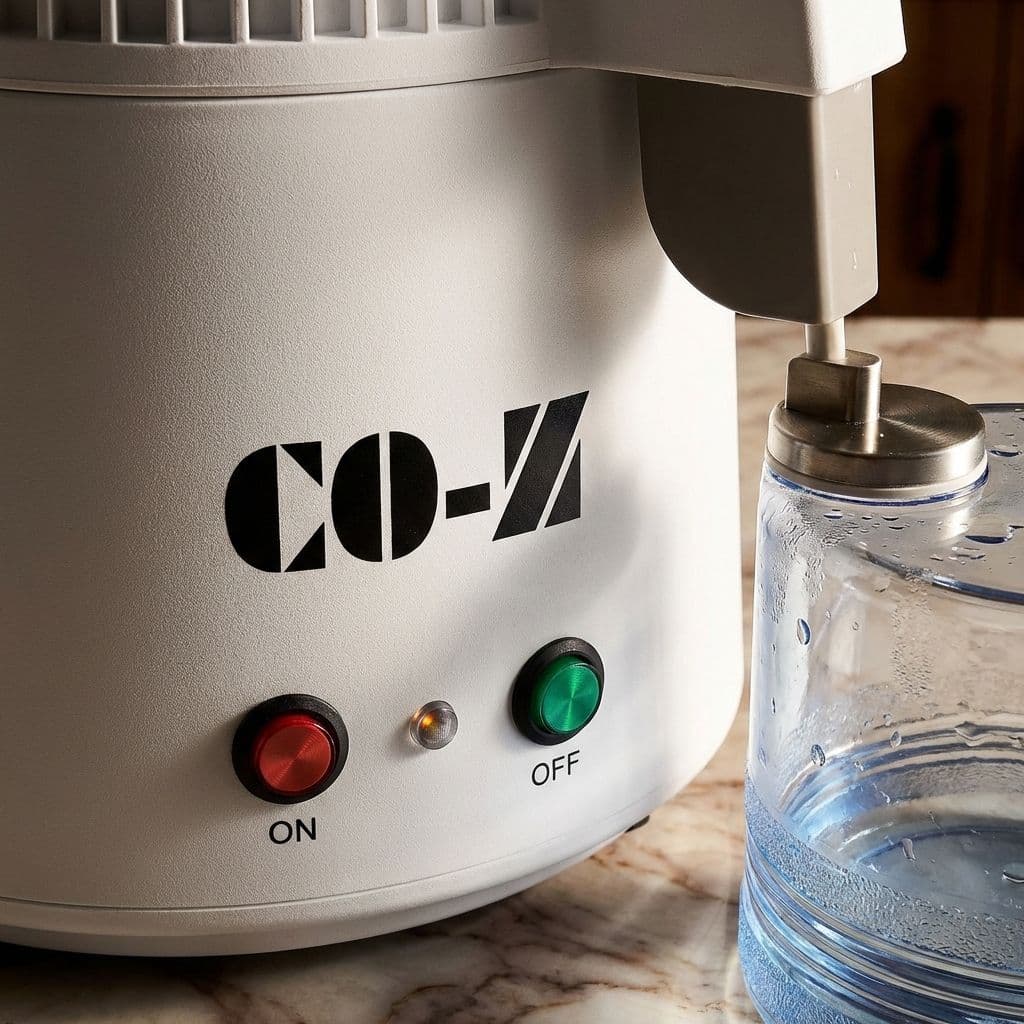
If you are looking for a more budget-friendly entry point, the CO-Z Distiller is a popular alternative. While it may not feel as premium as the Megahome, it effectively removes the same level of impurities.
Think of a dedicated distiller like an insurance policy for your other expensive appliances. By spending $100 to $200 on a distiller, you are potentially saving thousands of dollars in repair costs or early replacements for your espresso machines and home climate systems.
THE DRINKING DILEMMA: SHOULD YOU SIP THE PURE STUFF?
There is a long-standing debate about whether drinking distilled water is good for you. Some argue that it leaches minerals from your body, while others claim it is the only way to avoid tap water contaminants.
The reality is simpler: Distilled water is safe to drink, but it can taste flat because it lacks the minerals your palate is used to. From a health perspective, most of our minerals come from food, not water. However, if you plan to use distilled water as your primary source of hydration, we recommend using trace mineral drops. Products like ConTrace or similar electrolyte concentrates can be added back into your distilled water to improve the flavor and ensure you are getting a balanced mineral profile without the limescale-causing calcium.
A PRO-TIP FOR COFFEE LOVERS Professional baristas often use distilled water as a base and then add a precise mixture of magnesium and calcium (often via products like Third Wave Water) to create the perfect water profile for brewing. This gives you the best of both worlds: incredible-tasting coffee and a machine that stays as clean as the day you bought it.
PROTECTING YOUR GEAR FOR THE LONG HAUL
Taking care of your home goods is about more than just aesthetics; it is about performance. Whether you choose the DIY stove-top method or invest in a sleek countertop unit like the Megahome, using distilled water is one of the easiest ways to elevate your home maintenance game.
By eliminating mineral buildup before it starts, you ensure that your high-end espresso machine continues to pull the perfect shot and your humidifier continues to provide clean, mist-free air for years to come. In the world of luxury home care, purity isn't just a preference—it is a necessity.