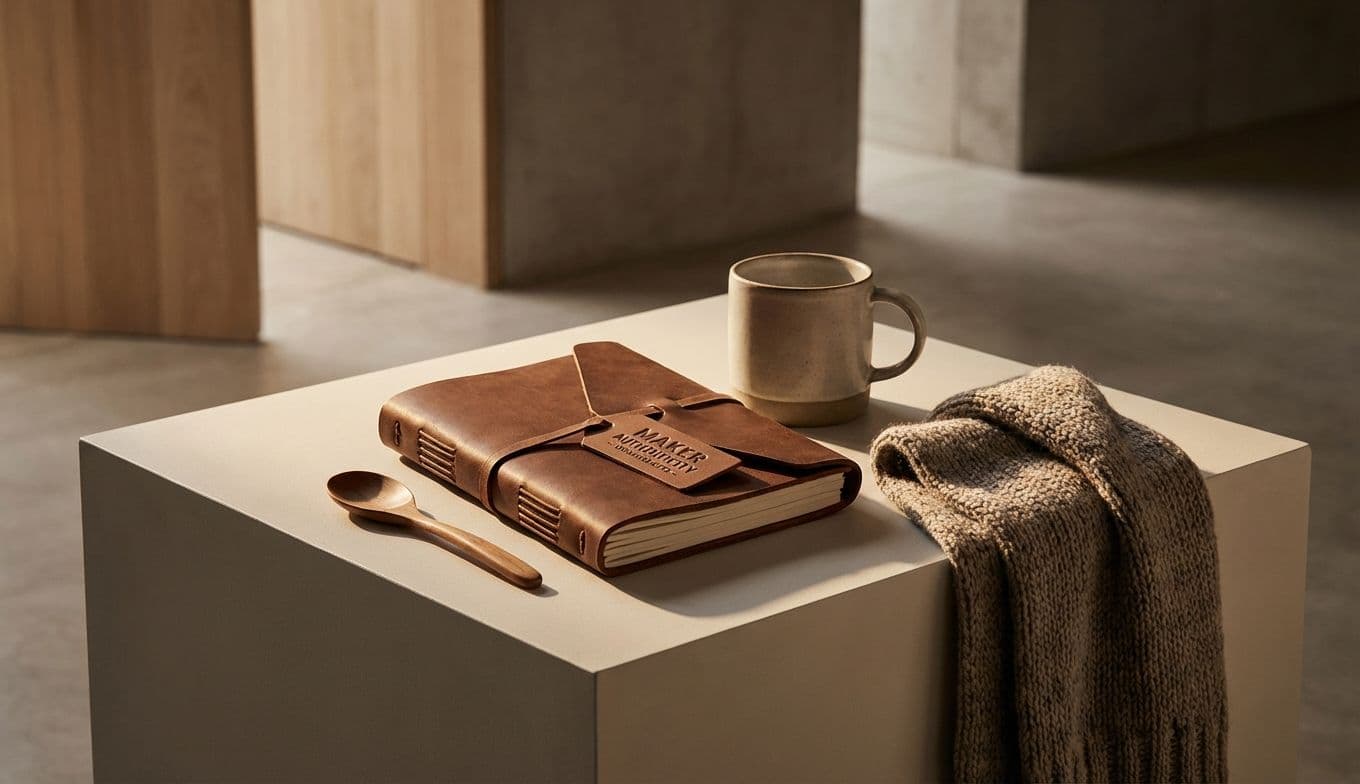
How to Find Authentic Human-Made Gifts & Spot AI Fakes

How to Find Authentic Human-Made Gifts & Spot AI Fakes

Team GimmieTeam Gimmie
Published on April 4, 2026

The Soul in the Machine: A Shopper’s Guide to Finding Authentic Human-Made Gifts

It is a phrase I have started to see more often in the comments sections of independent art shops and heard whispered in high-end craft fairs: This looks like AI. As someone who spends their days at Gimmie AI evaluating everything from the latest ergonomic kitchen tools to artisanal home decor, I have noticed a shift. The line between genuine innovation and clever algorithmic mimicry is blurring, and it is changing the way we shop for the people we care about.

The Verge recently highlighted this growing unease in an article titled, Really, you made this without AI? Prove it. It perfectly captures the new burden of proof placed on creators. When an algorithm can generate a flawless digital painting or a perfectly structured product description in seconds, the value of the human effort behind a gift is suddenly called into question. For a gift-giver, this is a crisis of intention. We do not just give an object; we give the story of its making.

The Burden of Proof in Your Shopping Cart

Think about the last time you went looking for a truly special anniversary gift or a milestone birthday present. Maybe you were looking for a custom watercolor portrait of a family home or a hand-thrown ceramic mug. In the past, you could trust your eyes. Today, a nagging skepticism has entered the marketplace.

At Gimmie AI, we believe the value of a gift is often found in its limitations. An AI can produce a thousand designs in the time it takes a potter at East Fork or Heath Ceramics to pull a single handle, but the AI cannot replicate the intentionality of that maker. The Verge article suggests we might need a Fair Trade logo for human-made content, and until that exists, the responsibility falls on us to be more discerning shoppers.

Spotting the Glitch: Technical Red Flags in the Digital Marketplace

To find the truly human, you have to learn to spot the tells of the artificial. When you are browsing platforms like Etsy or independent boutique sites, look for these specific red flags in product imagery and descriptions:

The Uncanny Symmetry: Look closely at product photos. If a hand-knit blanket from a supposed small maker looks mathematically symmetrical—where every stitch is identical with zero tension variance—it might be a digital render. Real textiles, like those from Faribault Mill, have subtle, organic shifts in the weave that reflect the physical loom process.

Impossible Lighting and Textures: AI struggles with the way light interacts with complex surfaces. Look for shadows that do not quite match the object or a hyper-glossy sheen on wooden or clay products that feels more like plastic than organic material.

The Word Salad Tell: AI-generated product descriptions often rely on a specific, hollow vocabulary. If you see words like delve, unleash, tapestry, or multifaceted used in a repetitive, flowery way without any specific mention of the maker's studio location, their specific materials, or their history, proceed with caution. A human maker will tell you about the specific clay body they used or why they chose a particular linen weight.

The Background Blur: Be wary of product shots where the background is a generic, ethereal blur that doesn't seem to have a floor or a wall. Authentic creators usually take photos in a real environment—a workshop, a kitchen table, or a sunlit studio.

Why the Human Touch Still Wins

When we curate recommendations here at Gimmie AI, we look for products that offer something an algorithm simply cannot: a physical history.

Take the world of high-end ceramics. A brand like East Fork is open about their process, their regional North Carolina clay, and the slight variations in their glazes. Those variations are not errors; they are the thumbprints of the process. When you give someone a piece like that, you are giving them a connection to a specific place and a specific group of people.

The same applies to custom textiles or leather goods. A leather wallet that has been hand-stitched with a saddle stitch is fundamentally different from a mass-produced or AI-mocked design. The hand-stitch is more durable and carries the weight of the artisan’s time. These are the details that turn a purchase into an heirloom.

The Savvy Shopper’s Checklist for Authenticity

If you want to ensure your gift supports a real human being and carries that authentic weight, follow these tactical steps:

  1. Vet the About Us Page. A real creator is usually visible. Look for photos of the artist in their workspace. If the About page is filled with generic stock photos or lacks a specific name and location, it is a sign that the brand might be a front for AI-generated designs or dropshipping.

  2. Check the Social Proof. Go to the brand’s Instagram or TikTok. Are there videos of the process? Seeing a woodworker actually turn a bowl on a lathe or an illustrator’s hand moving a physical pen across paper is the ultimate proof of life.

  3. Ask a Technical Question. Not sure if that custom poem or digital portrait is AI-generated? Message the seller and ask about their specific technique or if they can make a minor, non-standard adjustment. An AI-automated shop will often give a generic response or be unable to accommodate a nuanced human request.

  4. Price vs. Labor. If a shop claims to offer hand-painted oil portraits for thirty dollars with a two-day turnaround, the math does not work for a human. Respect the cost of labor; authenticity usually comes with a price tag that reflects the hours spent.

The Gimmie AI Commitment to Human-First Gifting

We are living in a time where the artificial is becoming the default. At Gimmie AI, our role is shifting from just finding the best products to protecting the value of the human-made. We prioritize makers who are transparent about their tools and who celebrate the imperfections of their craft.

The future of gifting is not about perfection; it is about connection. It is about knowing that the linen throw you bought was woven by someone who understands the history of the fiber, or that the earrings you chose were shaped by someone who spent years learning to manipulate silver.

In a world saturated with the synthetic, the most radical thing you can do is buy something that was made with a soul. We want to hear from you—who are the independent makers you trust? Which artists are doing work that could never be mimicked by a machine? Share your favorite creators with us, and let’s keep the human element at the heart of how we give.