
Homebridge 2.0 Matter Update: Unify Your Smart Home
Discover how the Homebridge 2.0 Matter update unifies your smart home. Learn to connect non-HomeKit gadgets to Apple Home easily. Read our top device guide!

By Team Gimmie
Updated August 27, 2026
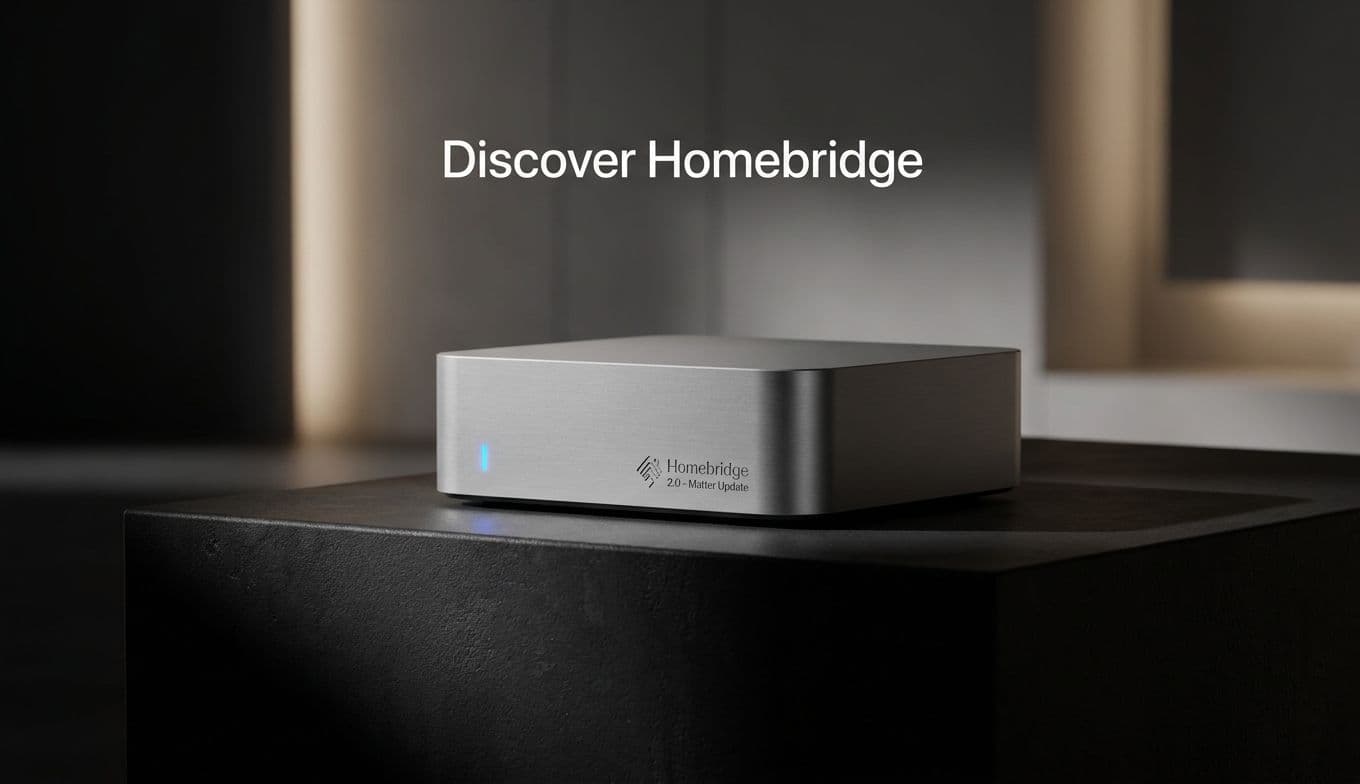
THE SMART HOME UNIFIER YOU DIDN’T KNOW YOU NEEDED
For years, the smart home landscape has been a fragmented mess. You have your Apple HomeKit devices, your Google Home gadgets, and your Amazon Alexa-enabled everything. Then there are the brands that stubbornly refuse to play nice with anyone, creating walled gardens of interconnectedness that are, frankly, exhausting. If you have ever found yourself juggling four different apps just to dim the lights and lock the front door, you know the frustration.
As of May 4, 2026, there is some very good news for the weary gadget owner. Homebridge 2.0 is officially here, and it finally speaks the language of Matter.
This isn’t just another minor software patch; it is a potential game-changer for anyone trying to wrangle their smart home into some semblance of order. Homebridge has long been the go-to solution for bridging the gap between non-HomeKit devices—like Ring cameras or Nest thermostats—and the Apple ecosystem. Think of it as a universal translator for your house. Now, with version 2.0, it is evolving to support Matter, the industry standard designed to make smart home devices from different brands work together seamlessly regardless of which "smart assistant" you prefer.
THE BRIDGE TO A SEAMLESS HOME
The implications here are significant, especially if you are an Apple user who has been eyeing devices that aren't officially HomeKit compatible. Homebridge 2.0 can now act as a Matter bridge. This means those Matter-certified devices you have been curious about can finally appear in your Apple Home app, controllable alongside your existing gear. It is precisely the kind of interoperability we have been waiting for, and seeing it come to fruition feels like a win for the consumer.
However, for many, the technical barrier has historically been a hurdle. In the past, running Homebridge required a Raspberry Pi. For the non-technical, a Raspberry Pi is essentially a tiny, affordable computer about the size of a credit card. You plug it into your router, and it runs in the background. While it sounds intimidating, it is a set-it-and-forget-it solution.
If that still sounds like too much "tech homework," there are now more user-friendly alternatives like HOOBS (HomeBridge Out of the Box). These are pre-packaged hubs that come with the software pre-installed. You just plug them in and follow a simple setup wizard. It removes the need for coding or command lines, making a unified home accessible to everyone.
