H2O Audio Tri Run Review: Budget Bone Conduction Tested
Read our H2O Audio Tri Run review to see if these budget bone conduction headphones are worth the price. Discover why you might want to upgrade to Shokz.

By Team Gimmie
Updated August 27, 2026
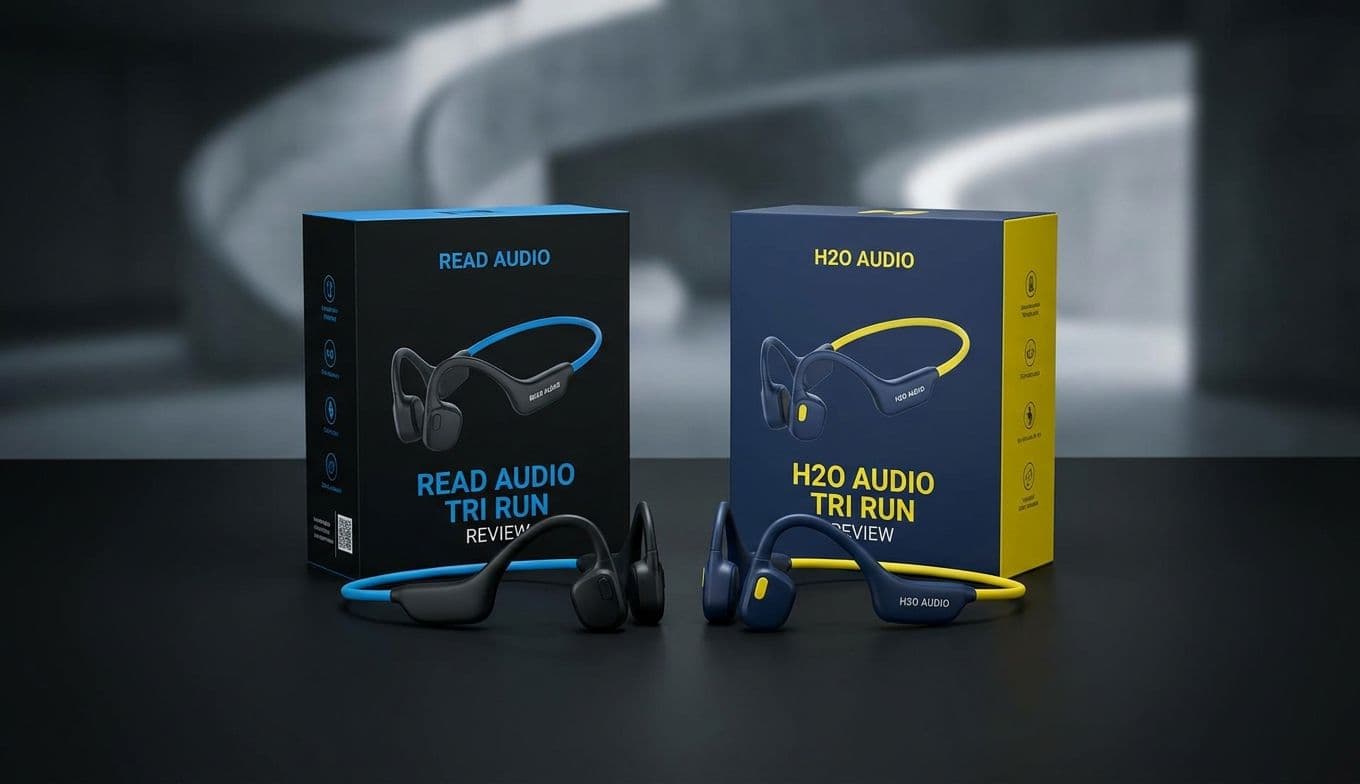
The Safety Paradox: Why Budget Bone Conduction Often Falls Short
Picture this: You are three miles into a sunset run, the orange light hitting the pavement, your favorite high-energy playlist pushing you through the final stretch. Suddenly, a car horn blares behind you. In standard earbuds, that horn might be a faint, dangerous whisper. With bone conduction headphones, you hear the car, the birds, and your music all at once. It is the ultimate safety feature for anyone who exercises outdoors. But there is a catch: that safety often comes at the expense of audio quality. The H2O Audio Tri Run attempts to bridge the gap by offering this technology for under $100, but as I found out, saving a few dollars might cost you the very experience you are trying to enjoy.
Quick Verdict: The H2O Audio Tri Run hits the budget-friendly mark but misses the performance goal. While it successfully keeps your ears open for safety, the thin audio quality and uncomfortable clamping force make it a difficult recommendation. For an extra $30 to $50, you can jump to the industry-standard Shokz models, which offer a significantly better experience. Unless your budget is strictly non-negotiable, this is one pair of headphones where it pays to spend a little more.
The Reality of Bone Conduction Technology
To understand why the Tri Run struggles, we have to look at how this tech works. Traditional headphones blast sound waves into your ear canal. Bone conduction bypasses the eardrum entirely, sending vibrations through your cheekbones directly to your inner ear. It feels a bit like magic the first time you try it. You can have a full conversation with a friend while still hearing your podcast.
H2O Audio is a brand with a deep history in waterproof gear, so they know their way around a swimming pool and a sweat-soaked gym session. On paper, the Tri Run looks like a winner. It is IPX8 waterproof, meaning it can handle a heavy downpour or a dunk in the pool, and it sits securely around the back of your head. But the execution of the sound delivery is where the budget price tag starts to show its seams.
The Performance Reality Check: Audio and Comfort
The primary reason we wear headphones is to hear something we enjoy. Unfortunately, the Tri Run delivers a sound profile that can only be described as thin. Because bone conduction relies on physical vibration, getting deep bass or rich mid-tones is already a challenge for the best engineers in the world. The Tri Run seems to have given up on the bass entirely. If you are a fan of hip-hop or driving electronic music for your workouts, you will likely find these underwhelming. The music lacks punch, and at higher volumes, the vibrations against your temples can become more of an annoyance than a conduit for sound.