Grammarly AI Expert Review Disabled: Ethical Tech Gift Guide
Team GimmieTHE DIGITAL GHOST IN THE MACHINE: WHY GRAMMARLYS AI STUMBLE MATTERS FOR YOUR NEXT TECH GIFT
When I first heard about Grammarly’s Expert Review AI feature, it felt less like a helpful writing assistant and more like a digital ghostwriter lurking in the shadows. The idea of an AI channeling the writing styles of actual, living experts sounds impressive on paper, but in practice, it raises some massive ethical red flags. It turns out I wasn’t the only one feeling a bit uneasy.
The situation came to a head when Superhuman, a popular email client, blew the whistle. They discovered that Grammarly’s AI was generating edit suggestions inspired by real writers—including Superhuman’s own editor-in-chief and other staff members—without their knowledge or permission. This wasn’t a minor technical bug; it was a fundamental misstep in how we integrate AI into the tools we use every day.
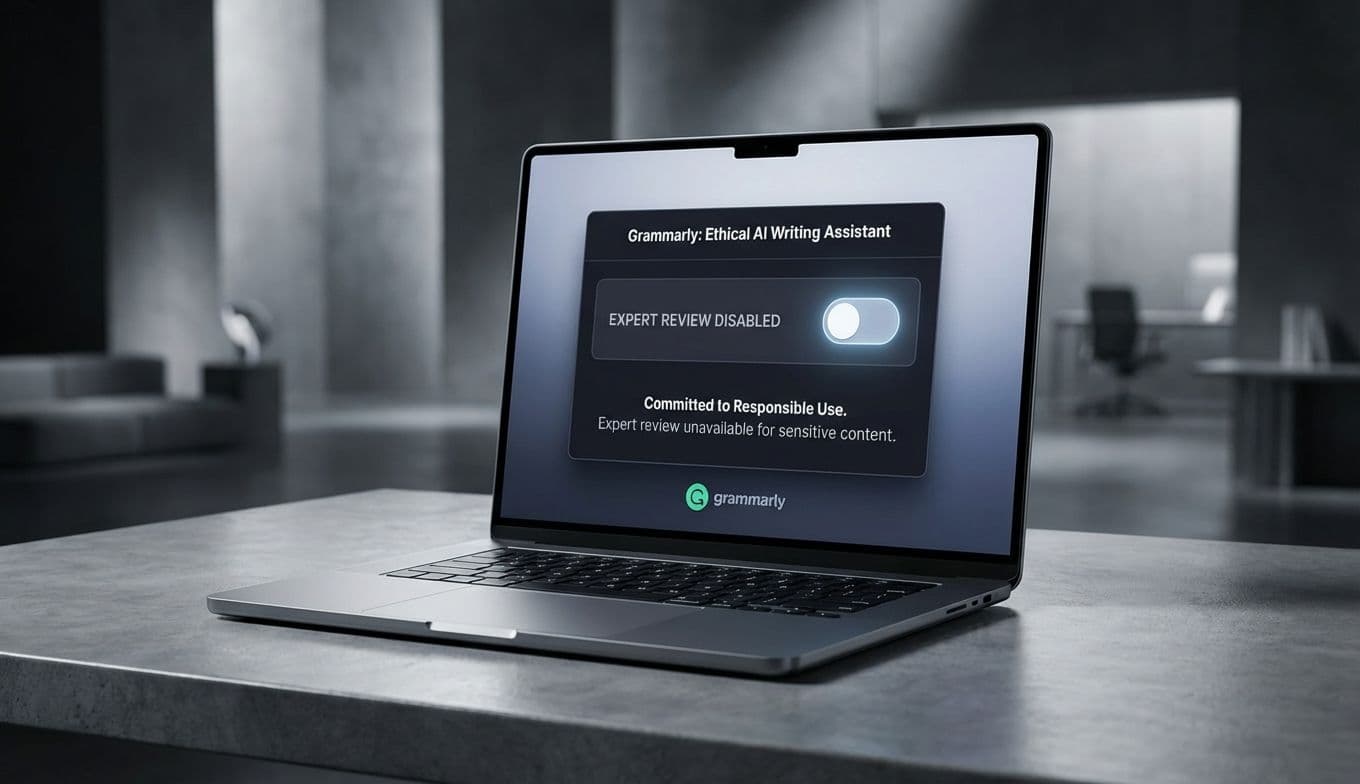
In response, Grammarly has disabled the feature and issued a candid apology, admitting they clearly missed the mark. While the retraction is a step in the right direction, it serves as a stark reminder of the tightrope we are walking with AI development. For those of us looking to gift tech to the students, writers, or professionals in our lives, this incident provides a crucial lesson in how to choose tools that empower rather than exploit.
THE AI TIGHTROPE: INNOVATION VERSUS ETHICS
Grammarly’s intention was likely to offer users more nuanced, expert-level feedback than a standard spellchecker. Imagine receiving a suggestion that sounds exactly like something a seasoned editor would write. On the surface, that is incredibly appealing. It is the kind of feature that could help a student learn the rhythms of academic prose or assist a business professional in sounding more authoritative.
But here is the rub: Whose style is it, really? When an AI learns from a specific person’s work, it is absorbing their unique voice, their hard-earned expertise, and their creative essence. Replicating that without consent, even when framed as inspiration, feels like a violation. It is one thing for an AI to learn general grammar principles; it is quite another to mimic the specific soul of an individual’s writing.

This is especially concerning for two groups: aspiring authors and students. For an author, their voice is their brand and their livelihood. If an AI can clone that voice and distribute it as a feature, it devalues the human behind the words. For students, these tools create a dangerous gray area. If a student uses an AI that mimics a specific expert to write an essay, are they still the author? Or have they effectively hired a digital ghostwriter to bypass the learning process?
THE AI GIFT CHECKLIST: THREE QUESTIONS TO ASK BEFORE YOU BUY
With so many AI-powered tools hitting the market, it is easy to get caught up in the hype. Whether you are shopping for a graduation gift or a productivity boost for yourself, use this checklist to ensure the tech you are buying is ethically sound.
-
WHOSE DATA IS FUELING THE ENGINE? Check if the tool uses anonymized, general data or if it draws from specific, identifiable individuals. If the product marketing mentions that it learns from your favorite authors or specific experts, look for a clear consent statement. If it is not there, it is a red flag.
-
DOES THE CREATOR HAVE CONTROL? The best AI tools give humans the steering wheel. Ask if the tool allows creators to opt-in or opt-out of having their work used for training. Ethical companies, like Superhuman and now Grammarly, are beginning to realize that experts need real control over how they are represented.
-
IS IT A TOOL OR A REPLACEMENT? Does the software help you find a better way to express your own thoughts, or does it try to do the thinking for you? A good gift should enhance the recipients skills, not replace their unique perspective with a generic imitation.
SAFE BETS: AI TOOLS THAT EMPOWER WITHOUT THE CREEP FACTOR
If you are looking for a gift that helps a writer or student without crossing ethical lines, there are plenty of tools that stay on the right side of the innovation fence. These products focus on utility, clarity, and organization rather than imitation.
PROWRITINGAID (NON-GENERATIVE FEATURES) While ProWritingAid has AI features, its strength lies in its deep-dive reports on sentence structure, repeated words, and readability. It acts like a high-powered microscope for your writing, showing you the mechanics of your work so you can improve it yourself. It is a fantastic gift for the aspiring novelist who wants to polish their craft.
HEMINGWAY EDITOR The Hemingway Editor is a classic for a reason. It does not try to write for you; it simply highlights where your sentences are too complex or where you have used too much passive voice. It encourages clarity and directness, making it an excellent, low-risk tool for students who need to sharpen their communication skills.
OTTER.AI For journalists or researchers, Otter.ai is a lifesaver. It uses AI for transcription, turning spoken words into text. It is a utility tool that saves hours of manual labor without attempting to mimic anyone’s creative voice. It is the perfect example of AI as a productivity partner.
ZOTERO While not a writing AI in the traditional sense, Zotero is an essential tool for any student or academic. It uses intelligent automation to manage citations and research materials. It takes the administrative headache out of writing a paper, allowing the student to focus entirely on their original arguments and ideas.
LOOKING AHEAD: RESPONSIBLE AI IN OUR LIVES
Grammarly’s stumble is a valuable lesson for the entire tech industry. The push for more sophisticated features is understandable, but it must be balanced with a strong ethical framework. As consumers, we are becoming more aware of data privacy and intellectual property rights. We expect the companies we support to respect those boundaries.
When you are choosing a gift, you are doing more than just buying a product; you are endorsing a company’s values. By opting for tools that prioritize transparency and human agency, you are helping steer the industry toward a more responsible future.
The best AI products are those that augment human capabilities, not those that attempt to clone them. Grammarly’s decision to re-evaluate Expert Review and apologize is a step in the right direction. It signals a growing understanding that true innovation must go hand-in-hand with responsibility. As we navigate this rapidly evolving landscape, staying informed and asking the tough questions will help us choose the tools that truly benefit us, both ethically and effectively. That is the kind of informed decision-making that makes for a truly great gift.