Google Project Mariner Shutdown: What It Means for Tech Gifts
Google's Project Mariner is shutting down. Learn why this AI experiment failed, how it impacts Gemini, and why hardware is a safer bet for tech gifts.

By Team Gimmie
Updated August 27, 2026
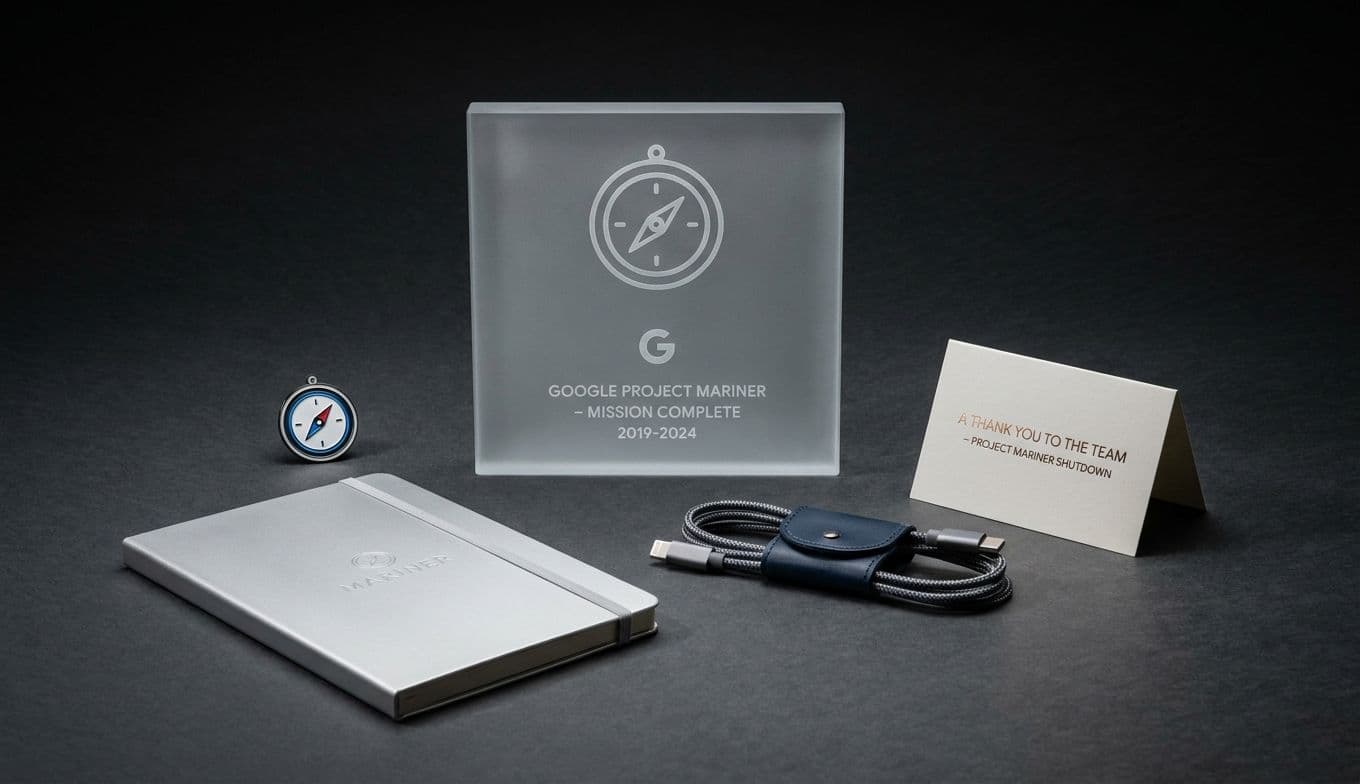
The Ghost in the Google Machine: What Project Mariner’s Death Teaches Us About Tech Gifts
As a product journalist who has watched more than a few tech dreams fizzle into expensive paperweights, I have to hand it to Google: Project Mariner’s departure is a masterclass in corporate understatement. A quiet note on a landing page, a polite "thanks for playing," and suddenly it is gone—its technology "voyaging" to other, presumably more successful, products. Mariner was supposed to be the ultimate digital butler, an AI assistant capable of handling ten tasks across the web simultaneously. Launched in late 2024, it was the shiny new toy everyone thought would change how we browse. Now, it is just code being stripped for parts.
The Hype vs. The Reality
When a project touted as a revolutionary leap gets shuttered after only eighteen months, we have to ask what actually happened. Was it too ambitious, or just another casualty of Google’s internal AI musical chairs? While Wired and The Verge report that Mariner’s bones are being moved into Gemini Agent, that is cold comfort for users who invested time into the platform.
This is the classic "demo-to-dust" pipeline. We see a flashy presentation, we get excited, and then the product vanishes before it even hits its stride. It serves as a stark reminder that in the AI era, software is often built on shifting sand. If a tool isn't immediately profitable or perfectly integrated, it is often discarded, leaving early adopters holding an empty bag.
Why Hardware Is the Safer Bet
For those looking to buy gifts or upgrade their own setup, this shutdown is a loud warning: don’t buy the promise, buy the product. If you want the Google experience without the risk of a service being killed off next Tuesday, look toward established hardware rather than experimental software.
The Pixel 8a, for instance, is a "safe" investment. It offers a proven track record of performance and a guarantee of seven years of security updates. You aren't buying a vague promise of "web-surfing intelligence"; you are buying a reliable camera, a solid screen, and a phone that works. Similarly, a Google Nest Audio or a Nest Hub (2nd Gen) provides tangible utility that does not vanish when an experimental server gets unplugged. These devices use AI to enhance clear, existing functions—like filtering background noise or managing a kitchen timer—rather than trying to reinvent the wheel with unproven code.