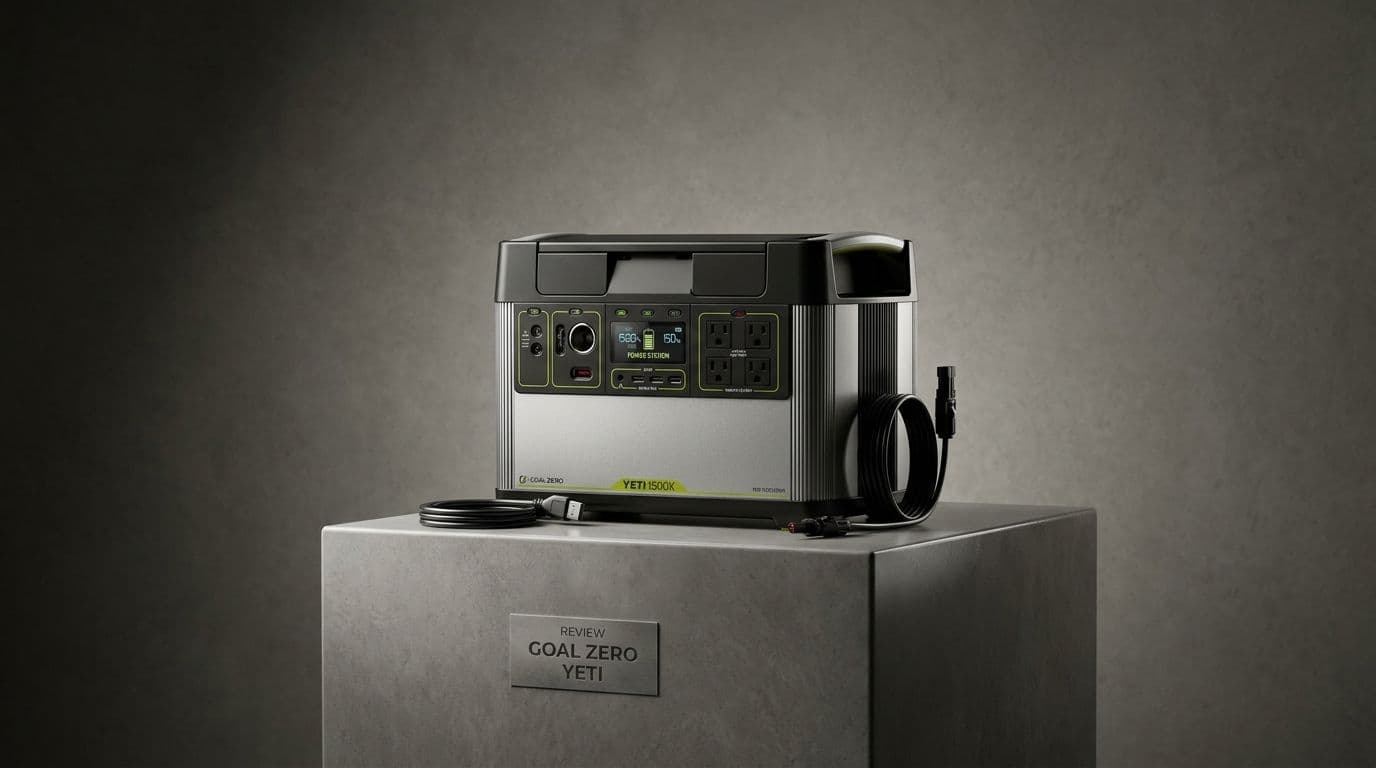
Goal Zero Yeti 1500 Review (2026): LiFePO4 Power Tested
Team GimmieGoal Zero Yeti 1500 Review: Professional Grade Power or Just a Premium Label?
We have officially moved past the era where portable power stations were niche luxuries for van-lifers. In 2026, they are as common in suburban garages as lawnmowers. But as the market floods with cheap alternatives, legacy brands like Goal Zero are under immense pressure to prove they still deserve a spot at the top. The Yeti 1500 has long been the middle-child workhorse of their lineup, but this latest iteration isn't just a minor refresh. It represents a fundamental shift in how Goal Zero builds its cores.
As someone who has tested dozens of these units—from the ultra-lightweight hikers to the massive home-backup monsters—I’ve learned that the spec sheet rarely tells the whole story. Real reliability is found in the chemistry, the thermal management, and the build quality. So, is the Yeti 1500 the gold standard for 2026, or are you just paying for the green-and-black logo? Let’s get into the details.
The Chemistry Upgrade: Why LiFePO4 Changes Everything
For years, Goal Zero stayed loyal to standard Lithium-ion (NMC) batteries while the rest of the industry moved toward Lithium Iron Phosphate (LiFePO4). With the 2026 Yeti 1500, they have finally made the jump, and it is the most important upgrade in the product’s history.
Why should you care about battery chemistry? It comes down to longevity and safety. This new unit is rated for over 3,000 charge cycles to 80% capacity. In plain English, that means you can drain this battery and recharge it every single day for over eight years before you notice any significant drop in performance. The previous NMC models would start to degrade after about 500 cycles. This is no longer a three-year gadget; it’s a decade-long investment.
Beyond the lifespan, LiFePO4 is significantly more stable. It is far less prone to thermal runaway (the fancy term for catching fire), which provides peace of mind when you’re tucking this unit into a crowded camper van or keeping it in your basement for emergency backup.
Hardware Specs: The Heavy Reality
Let’s talk numbers, because substantial is not a measurement. The Yeti 1500 weighs in at exactly 43 pounds and measures 15.3 x 10.1 x 10.4 inches. While it features the classic, robust Goal Zero carrying handles, it is a dense piece of equipment. You aren't going to carry this on a trail for a mile, but it’s perfectly manageable for moving from the garage to the trunk of your SUV.

The capacity sits at 1518Wh, paired with a 2000W AC inverter (capable of a 3500W surge). This is the sweet spot for portable power. It is enough to run a full-sized 12V portable fridge for over two days or a high-powered blender, microwave, or circular saw without tripping the internal breaker.
Charging speeds have also been modernized. Using the updated 600W AC wall charger, you can hit an 80% charge in about two hours. If you’re pushing the limits with solar, the unit supports up to 600W of input. On a clear day with a couple of high-efficiency panels, you can essentially run your entire campsite indefinitely while staying completely off the grid.
The Competition: Yeti vs. EcoFlow vs. Jackery
To understand if the Yeti 1500 is worth the $1,550 price tag, we have to look at its rivals. In 2026, the two biggest competitors are the EcoFlow Delta 2 Max and the Jackery Explorer 1500 Pro.
EcoFlow currently wins the speed race. The Delta 2 Max can charge from a wall outlet in about 80 minutes, which beats the Yeti by nearly an hour. However, the Yeti 1500 counters with a superior build quality. Goal Zero uses a heavy-duty, replaceable battery system and a much more intuitive interface.
Jackery remains the king of simplicity, but their 1500 Pro often lacks the sophisticated app integration and expansion ports found on the Yeti. When you look at price-per-watt-hour, the Yeti 1500 sits at roughly $1.02 per Wh. This is a premium price point compared to some budget brands that hover around $0.80 per Wh, but the build quality and the five-year warranty bridge that gap for users who value reliability over the lowest possible sticker price.
Cold Weather Performance and Limitations
If you plan on using your power station for winter camping or as a backup during a snowstorm, you need to be aware of the LiFePO4 Achilles' heel: the cold. Unlike the older lithium models, LiFePO4 batteries cannot be safely charged when internal temperatures drop below freezing (32°F).
Goal Zero has mitigated this by adding internal thermal management, but it’s not magic. If you leave the Yeti 1500 in the bed of your truck overnight in a Montana winter, it will provide power, but it won't take a charge from your solar panels until the battery warms up. If you are a heavy winter user, you’ll need to keep the unit inside your insulated space or use a heated blanket to bring the core temp up before plugging it in.
The other minor gripe remains the weight-to-power ratio. While LiFePO4 is safer, it is heavier than the old NMC tech. This unit is five pounds heavier than its predecessor. It’s a trade-off I’m willing to make for the 3,000-cycle life, but it’s something to keep in mind if you have physical mobility concerns.
Real-World Application: Who Should Buy the Yeti 1500?
This isn’t a device for everyone. If you just want to keep your phone and iPad charged during a beach day, buy a $100 power bank. The Yeti 1500 is for three specific types of users:
The Dedicated Overlander: If your vehicle is your basecamp, the Yeti 1500 is the perfect heart for your electrical system. It’s rugged enough to handle washboard roads and has the capacity to run your fridge, lights, and Starlink terminal all weekend without stress.
The Home Backup Strategist: For those living in areas with unreliable grids, this unit is a lifesaver. It won't power your central AC, but it will keep your internet router, laptop, and a few LED lamps running for days. In 2026, staying connected during an outage is often more important than keeping the lights on, and the Yeti 1500 excels here.
The Off-Grid Content Creator: If you are out in the field with drones, 8K cameras, and a MacBook Pro, you need clean, reliable power. The Yeti’s pure sine wave inverter ensures that your sensitive electronics won't be fried by "dirty" power, which is a common risk with cheaper, no-name units.
The Final Verdict: Is it Worth It?
The Goal Zero Yeti 1500 is no longer just a battery box; it is a sophisticated, long-term power solution. By finally embracing LiFePO4 chemistry and increasing the charging speeds, Goal Zero has addressed every major criticism of their previous generation.
Yes, you can find cheaper units. Yes, you can find slightly faster-charging units. But very few brands offer the same combination of durability, customer support, and ease of use. If you are looking for a "buy once, cry once" piece of gear that will still be providing reliable power in 2034, the Yeti 1500 is arguably the best in its class. It is a mature product for a user who values peace of mind over a bargain.