Gmail AI Inbox Hands-On: Revolutionizing Email or Just Hype?
Team Gimmie
1/12/2026

The Taming of the Inbox: A New Era for Your Digital Life
As a product reviewer, I’ve seen my fair share of revolutionary promises. Most of them end up being little more than a slightly faster way to do something we were already doing well enough. So, when I first heard that Google was reinventing the Gmail experience with an AI Inbox, my inner skeptic immediately went on the defensive. We’ve had tabs, we’ve had labels, and we’ve had Priority Inbox. Was this just another layer of digital paint on a crumbling wall of unread messages?
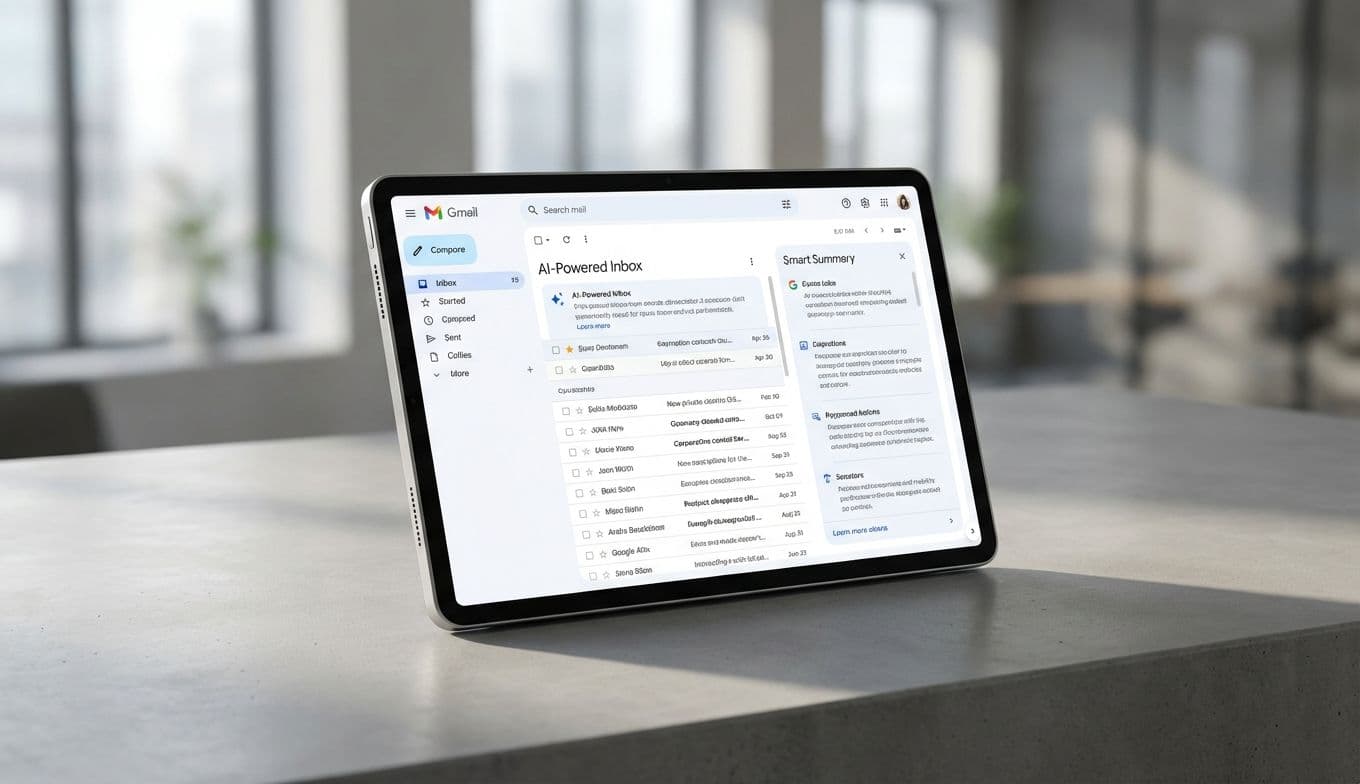
After spending some real time inside the early Trusted Tester version of this new interface, I’ve realized it isn't just a UI refresh. It is an attempt to fundamentally change the relationship we have with our communication. Instead of the relentless, chronological conveyor belt of every newsletter, receipt, and meeting invite, Google’s AI is trying to act as a chief of staff. It wants to sift through the noise and present you with what actually matters. Whether it succeeds depends entirely on how much you’re willing to trust an algorithm with your most precious resource: your time.
The Highs and Lows: A Trusted Tester's Diary
To understand if this works, you have to look past the marketing. In my testing, the AI showed flashes of genuine brilliance, but it also had moments of profound confusion. This is the reality of early-stage AI—it is remarkably smart until it is remarkably stupid.
Let’s look at a win. Last week, I was helping organize a multi-family camping trip. Over the course of three days, my inbox was flooded with twenty-four emails regarding campsite reservations, gear lists, food allergies, and carpool logistics. In a traditional inbox, these would have been scattered between work emails and Amazon shipping notifications. The AI Inbox, however, recognized the pattern. It didn’t just group them; it created a dedicated Topic called Camping Trip Logistics. Even better, it surfaced a single bullet point at the top: Action Required: Send deposit by Friday. It had scanned a long-winded email from a friend and pulled out the one detail that actually required my attention. That is the gift of time in its purest form.
However, the technology is still learning the nuances of human urgency. A few days later, I received an email from a potential client with the subject line: Quick question about your availability. It was a time-sensitive inquiry that could have led to a major contract. Because the email didn’t contain words like urgent or deadline, the AI tucked it away into a general Professional Inquiries topic. It didn’t flag it as an action item. If I hadn’t been manually checking, I might have missed a window of opportunity. This is the danger of the curated view—it assumes the AI knows your priorities as well as you do. Right now, it doesn’t.

The Gift of Time: Who Gains the Most?
At Gimmie AI, we believe the best technology isn't just a tool; it’s a gift. Specifically, it should be the gift of time—the ability to reclaim the minutes and hours we lose to digital busywork. Gmail’s AI Inbox is clearly designed with this philosophy in mind, but it isn't a one-size-fits-all solution.
The Overwhelmed Professional is the most obvious beneficiary. If your day-to-day involves project management, consulting, or any role where you’re the hub of a hundred different wheels, the AI’s ability to synthesize threads into actionable summaries is a massive relief. It changes the morning routine from a twenty-minute scan-and-triage session into a two-minute review of your Daily Priorities.
Then there is the Busy Parent. Managing a household in 2026 is essentially a high-stakes logistics job. Between school notifications, sports schedules, and medical appointments, the inbox becomes a source of anxiety. An AI that can pull the soccer practice change out of a five-paragraph school newsletter and put it front and center is more than just a feature; it’s a mental health upgrade.
However, if you are someone who thrives on absolute control—the Inbox Zero purists who have meticulously crafted filters for everything—you might find this intrusive. For you, the AI might feel like a meddlesome assistant who keeps reorganizing your desk when you aren’t looking.
What You Can Use Right Now
Google hasn’t given us a firm date for a wide public release, and since it’s currently limited to a small group of testers, you might be looking at your cluttered inbox with a sense of frustration. The good news is that you don’t have to wait for Google to give you the gift of time. There are already powerful AI-driven tools available today that can bridge the gap.
If you want a smarter interface right now, look at Spark. Their Smart Inbox feature does a fantastic job of separating real emails from people from the automated noise of notifications and newsletters. It provides a clean, prioritized view that feels very similar to the direction Google is heading.
If your problem is volume rather than organization, SaneBox is an essential tool. It doesn’t change your interface; it works in the background of your existing Gmail or Outlook account. It uses AI to learn your email habits and automatically moves unimportant messages into a SaneLater folder. It’s like having a bouncer for your inbox, ensuring that only the VIPs get through to your primary view.
Beyond the Inbox: The Era of Intentional Tech
As we watch this AI evolution unfold, it’s clear that we are moving toward a future of intentional technology. For decades, software has been passive—it waits for us to tell it what to do. The new Gmail experience represents a shift toward active software that understands our goals and anticipates our needs.
The true value of an AI-powered inbox isn’t just that it summarizes emails; it’s that it reduces the cognitive load of modern life. We are all suffering from decision fatigue, and the simple act of deciding which email to open first is a tax on our mental energy. By automating that triage, Google is attempting to lower that tax.
Is it revolutionary? Not quite yet. It’s still a work in progress, prone to the occasional hallucination or missed cue. But the trajectory is undeniable. We are moving away from the era of information management and into the era of insight management. For now, stay curious but stay cautious. Use the tools available today to reclaim your time, and keep an eye on your inbox. The future of how we communicate is arriving, one summarized thread at a time.