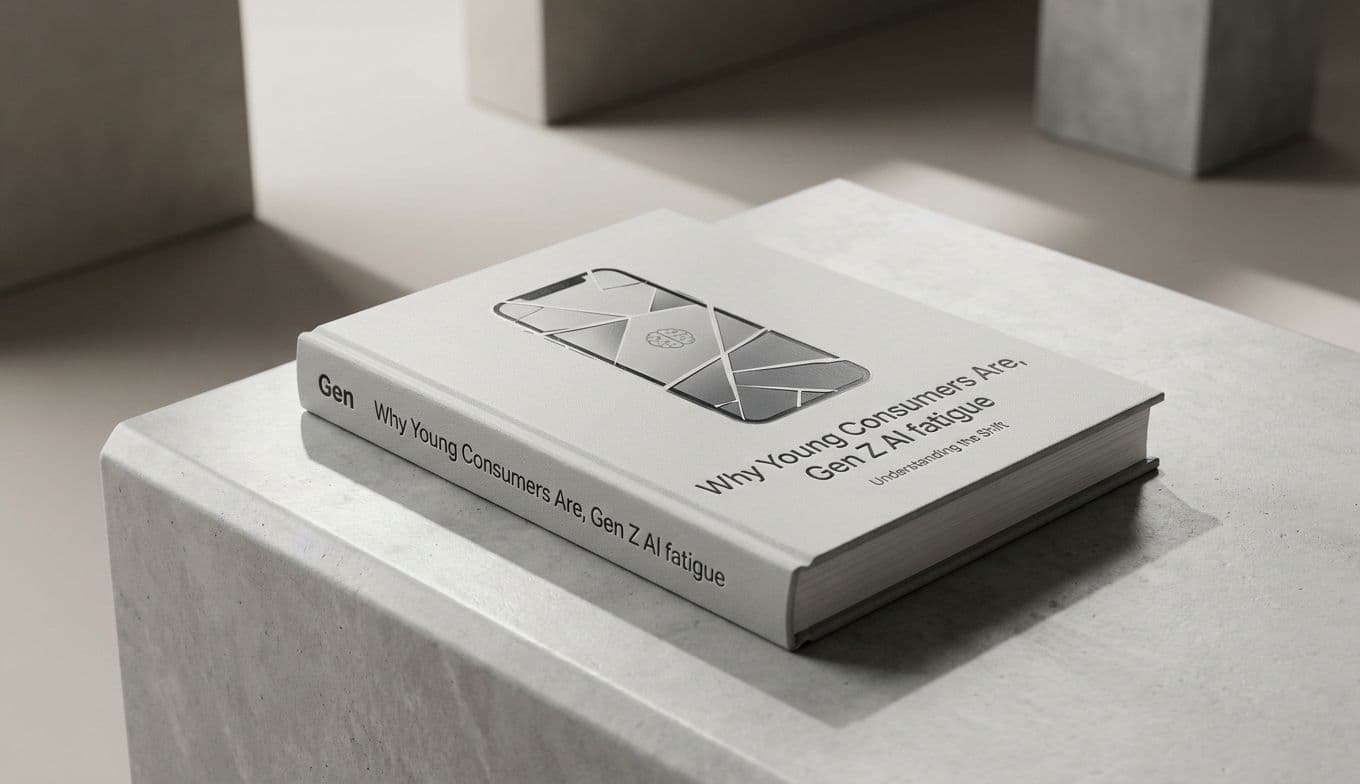
Gen Z AI Fatigue: Why Young Consumers Are Rejecting AI-Washing
Team GimmieThe Paradox of the Guinea Pig Generation
It has been nearly three years since the tech world decided that every corner of our lives needed to be mediated by a large language model. We were promised a utopia of effortless productivity and creative liberation. At the center of this experiment was Gen Z—the digital natives who were expected to embrace these tools with open arms. But a funny thing happened on the way to the future: the generation that uses AI the most has become the one that resents it the most.
This isn’t just a case of tech-fatigue; it is a profound cultural vibe shift. While Silicon Valley continues to push the narrative of AI as an inevitable evolution, young people are increasingly viewing it as an intrusion. For students and early-career professionals, AI hasn’t always felt like a superpower; often, it feels like a chore, a shortcut that devalues their own skills, or a source of uncanny-valley frustration. As we look at the products hitting the shelves today, understanding this love-hate relationship is essential for anyone trying to buy, gift, or live intentionally in 2026.
The Hype Hangover: Why Gen Z is Opting Out
For Gen Z, the novelty of chatbots and generative art wore off the moment it became an obligation. When every school assignment is scrutinized for AI-generated fingerprints and every entry-level job description demands prompt engineering skills, the tech stops being a toy and starts being a burden.
Polling data and social trends show a growing acrimony toward tools that prioritize efficiency over essence. There is a sense that AI-generated content is fundamentally hollow—a slurry of data points that lacks the messy, beautiful spark of human intention. This disillusionment is driving a move away from the "always-on" digital life toward something far more tangible. The backlash isn't about being anti-tech; it's about being pro-human.
Spotting the Gimmick: The New Era of AI-Washing
Just as companies once "green-washed" products to appear eco-friendly, we are now in the age of "AI-washing." Manufacturers are slapping AI labels on everything to justify premium price tags, even when the technology adds zero real value. To be a savvy consumer today, you have to look past the buzzwords.

Consider the smart home market. We are seeing AI-powered toothbrushes that claim to map your mouth using neural networks, or AI-integrated refrigerators that suggest recipes based on your leftovers. In reality, these features often add layers of complexity, requiring constant firmware updates and data sharing for tasks that were perfectly simple before.
Then there are the AI-enhanced headphones that promise "intelligent environmental awareness." While high-end noise cancellation is a legitimate tech win, many mid-range brands are now using AI as a marketing shield for mediocre hardware. If a product claims to use AI to improve something that was already functioning well—like your toaster, your mirror, or your pillow—it is likely a gimmick designed to harvest your data or lock you into a subscription ecosystem.
The Analog Resurgence: Gifts That Don’t Need an Algorithm
The most powerful response to digital saturation is a return to the physical world. If you are looking for a gift that will actually resonate with a Gen Z recipient, consider the "lo-fi" alternatives that offer a break from the screen.
Film cameras, particularly the Fujifilm Instax or refurbished 35mm point-and-shoots, have exploded in popularity. Why? Because a physical photo is a singular, un-editable moment. It is the literal opposite of an AI-generated image. There is no algorithm deciding the lighting; there is only the chemistry of the film and the intent of the photographer.
The same trend is visible in the world of productivity. While AI-powered task managers proliferate, high-end physical planners like the Hobonichi Techo or Leuchtturm1917 journals are seeing a massive resurgence. A physical planner doesn’t send notifications, it doesn’t require a login, and it provides a tactile satisfaction that a glowing screen never will. For a generation drowning in digital noise, the quiet of a blank page is a luxury.
The Giver’s Strategy: Collaboration, Not Substitution
When you do choose to buy technology, the key is to distinguish between tools that substitute for human effort and those that collaborate with it. Gen Z respects tech that acts as a power tool for their own creativity, not a replacement for it.
Look for products that solve specific, high-friction problems. A specialized music production controller that uses machine learning to help a musician isolate a specific frequency is a tool of collaboration. An app that simply writes the song for them is a tool of substitution. The former empowers the artist; the latter erases them.
High-quality mechanical keyboards are another perfect example. They are a "tech" product, but their value lies in the tactile, auditory, and physical experience of typing. They make the act of creation feel more substantial. When gifting, ask yourself: Does this tool help them do what they love, or does it do it for them?
PRO-TIP: How to Read an AI Label
Before you hit the buy button on any AI-branded gadget, do a quick "friction check." Look at the technical specifications or the fine print on the app store and ask these three questions:
- Does it require a subscription? Many AI features are gated behind monthly fees. If the hardware won't work without a recurring payment, you aren't buying a product—you're renting a service.
- Does it work offline? If the AI requires a constant cloud connection to function, it has a shelf life. The moment the company stops supporting those servers, your "smart" device becomes a paperweight.
- What is the data trade-off? If the AI is "personalizing" your experience, it is likely doing so by tracking your habits, movements, or voice. Decide if the convenience of that "smart" feature is worth the loss of privacy.
Conclusion: The Luxury of Being Human
The research is clear: the more we are surrounded by artificiality, the more we crave the authentic. Gen Z’s complicated relationship with AI is a lighthouse for the rest of us. It reminds us that technology is at its best when it stays in the background, supporting our lives rather than attempting to lead them.
As you navigate the world of new gadgets and potential gifts, remember that the most valuable things we can offer one another often have nothing to do with processing power. They are the things that foster real connection, encourage slow creativity, and celebrate the messy, unoptimized reality of being human. In a world increasingly saturated with artificial intelligence, the greatest gift might just be the permission to unplug.