GE Profile Smart Fridge Review: Is the Scan-to-List Feature Worth It?
Team Gimmie
1/2/2026

The Fridge That Scans Your Groceries: Is This GE’s Smartest Move Yet?
Let’s be honest: the act of grocery shopping is a chore that never truly ends. You dash into the store, grab what you think you need, get home, and realize you forgot the milk. Again. Or worse, you buy a second jar of mayo only to find a nearly full one hiding behind the pickles. It’s a minor annoyance, but it’s one that plagues kitchens everywhere.
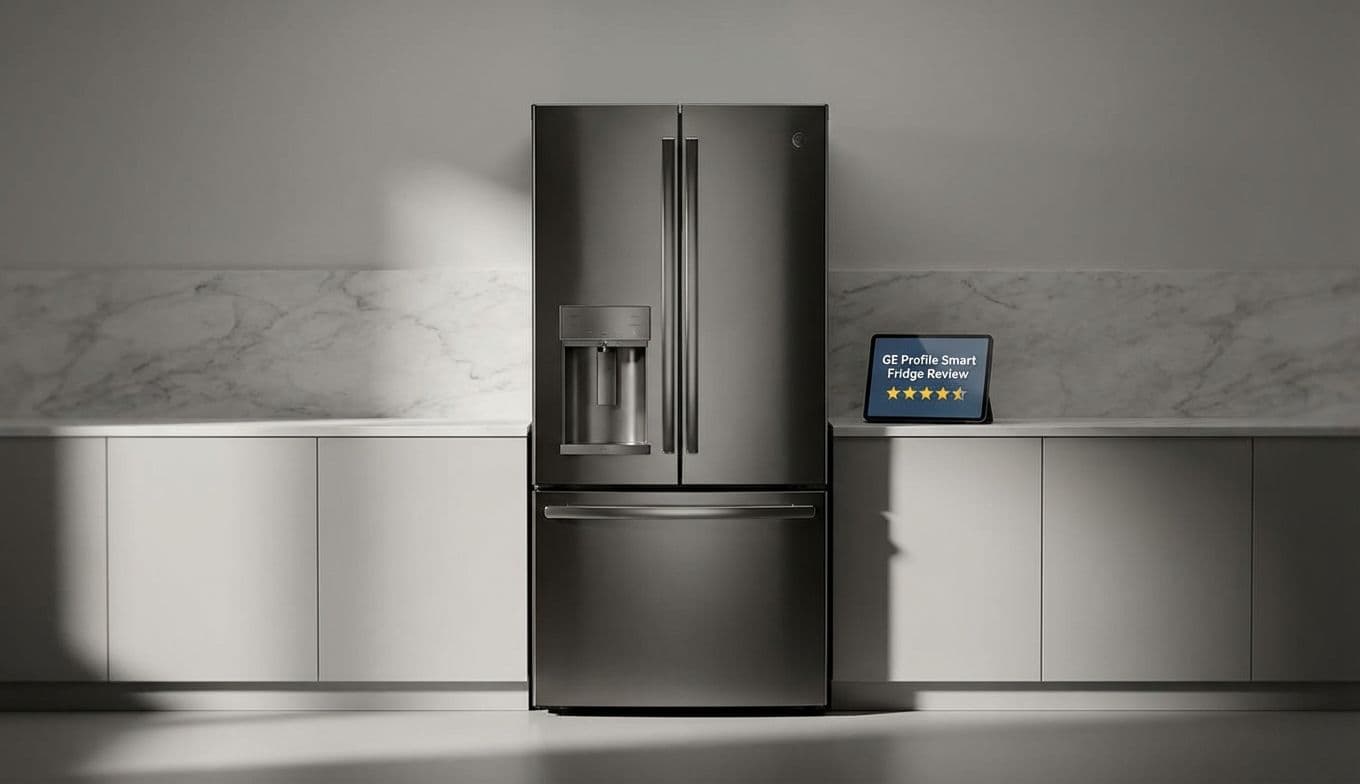
Now, GE Appliances is rolling out a fridge that claims to tackle this exact problem head-on. The new GE Profile Smart 4-Door French-Door Refrigerator with Kitchen Assistant, set to debut at CES 2026, isn’t just an appliance; it’s a connected hub designed to streamline food management. But at $4,899—a $500 premium over the non-smart version—is this the future of the kitchen or just an expensive solution to a problem we’ve already solved with a 99-cent notepad?
THE QUICK VERDICT The GE Profile Smart Fridge is a high-end luxury for tech early adopters and the hyper-organized. The Scan-to-List barcode scanner and interior cameras are impressive, but they require you to change your habits to see the value. The Good: Seamless list-building for packaged goods and a sleek tablet interface. The Bad: A $500 price premium and the manual effort of scanning every empty item. The Bottom Line: If you’re already building a high-end smart home or looking for the ultimate luxury wedding registry item, this is a showstopper. For everyone else, a smartphone app is still more practical.
Peek Inside: The Tech That Promises Smarter Shopping
GE’s approach with this fridge is to bring inventory management to the very point of consumption. The star of the show is the patented Scan-to-List barcode scanner, which is cleverly integrated right into the water dispenser.
The concept is simple: as you finish a carton of eggs or a jar of pasta sauce, you scan its barcode before tossing it in the recycling. That action automatically adds the item to a digital shopping list on the fridge’s built-in 8-inch tablet. Ideally, this cuts down on the mental load of remembering what’s running low.
Complementing the scanner are interior cameras. While cameras in fridges aren’t brand new, GE’s integration with its Kitchen Assistant system suggests they’re intended for more than just a quick peek. The idea is that you can be at the grocery store, pull up the app, and see exactly how much kale you have left.

On paper, it’s a comprehensive system. But the devil is in the execution. For this to work, you have to be disciplined. You have to remember to scan every single item as it leaves the fridge. If you’re in a rush making school lunches and forget to scan the deli meat, the system fails. It’s a classic case of tech requiring the human to be just as smart as the machine.
The $500 Question: Is Digital Convenience Worth the Premium?
GE is asking for nearly five thousand dollars for this refrigerator. When you compare it to a standard GE Profile model, you’re paying roughly $500 extra for the Kitchen Assistant features.
This is where the skepticism kicks in. We are already carrying powerful computers in our pockets. Apps like AnyList or even a shared iPhone Note can track groceries effectively and for free. Many of these apps allow family members to sync lists in real time.
So, does the integrated hardware provide $500 worth of extra value? For that price, the experience needs to be frictionless. If the scanner struggles with crinkled plastic or if the camera only shows you the back of a milk carton instead of the expiration date, that $500 starts to feel like a "tech tax."
Furthermore, the scanner only works for items with barcodes. Your apples, loose carrots, and leftovers still require manual entry on the tablet. If you’re already typing half your list into the tablet, does the barcode scanner really save that much time?
The Privacy Elephant in the Kitchen
We need to talk about the cameras. We’ve become accustomed to cameras on our doorbells and in our living rooms, but placing an internet-connected lens inside your refrigerator—the heart of the home—raises valid privacy questions.
GE ensures the data is secure, but an always-on, connected camera system is a potential point of failure. Who has access to those images? Is the data being used to track your brand preferences for advertising? While most users will trade a bit of privacy for convenience, it’s a factor worth considering before you invite an internet-connected eye into your kitchen. If you’re someone who already puts tape over your laptop webcam, a smart fridge might be a bridge too far.
Who Should Buy vs. Who Should Skip
This fridge is a niche product designed for specific types of homeowners. It isn’t a one-size-fits-all solution for every kitchen.
Who Should Buy: The Smart Home Enthusiast: If your house is already filled with connected lights, blinds, and thermostats, this is the logical next step for a fully integrated life. The Luxury Gifter: This is the ultimate "big ticket" item. It is a perfect choice for a luxury wedding registry or a major housewarming gift for a couple moving into a high-end renovation. The Hyper-Organized: If you find genuine joy in inventory management and meal planning, the Kitchen Assistant will feel like a dream come true.
Who Should Skip: The Budget-Conscious: $500 buys a lot of actual groceries. If you’re looking for value, stick to the standard model and a free app. The Tech-Averse: If you find yourself frustrated when your phone updates, the learning curve of a smart fridge interface will likely be more of a headache than a help. The Privacy-Minded: If the idea of a camera in your fridge makes you uneasy, no amount of convenience will outweigh that discomfort.
A Glimpse of the Future, But Is It Ready Today?
The GE Profile Smart Fridge with Kitchen Assistant is undeniably ambitious. It attempts to solve a universal human problem—the "what do we need?" panic at the grocery store—with a suite of hardware that looks like something out of a sci-fi movie.
For the right person, the convenience of scanning a finished milk carton and seeing it appear on a phone list is magic. It’s a statement piece that defines a modern, high-tech kitchen.
However, for most of us, the $500 premium is a high price to pay for a feature that still requires manual effort. Until these fridges can use AI to automatically recognize when the milk is low without us having to scan a barcode, it remains a luxury rather than a necessity. It’s an exciting development and a bold step forward for GE, but for now, it’s a product for those who want the future today—and are willing to pay the premium for it.