Galaxy Z Fold 7 vs. Laptop: Is the 'Purse Computer' Ready for Work?

Galaxy Z Fold 7 vs. Laptop: Is the 'Purse Computer' Ready for Work?

Team GimmieTeam Gimmie
Published on February 17, 2026

The Purse Computer Paradox: Is the Galaxy Z Fold 7 Finally a Laptop Killer?

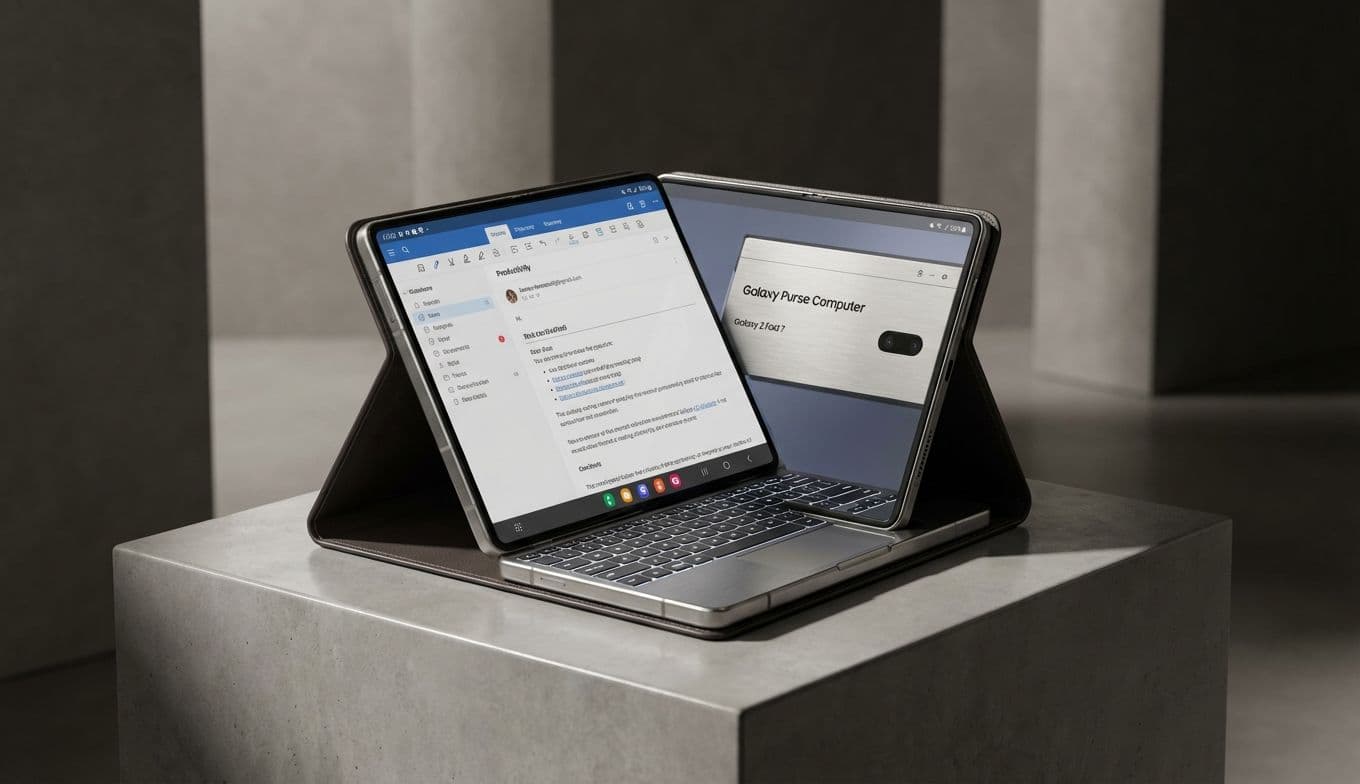
The first rule of Purse Computer is to check your bag before you leave the house. A few days ago, I took a fifteen-minute walk to a nearby coffee shop, feeling like I had finally cracked the code of modern productivity. In my bag was the Samsung Galaxy Z Fold 7, and in my mind, I was carrying a full mobile workstation. I spent the entire walk congratulating myself on how light my load felt compared to my usual MacBook Air setup. It’s almost like it’s not even there, I thought.

The reason it felt like it wasn’t there was because it actually wasn't there.

Once I sat down and opened my latte, I realized the Logitech Keys-To-Go 2—the ultra-slim keyboard that is essential for turning a foldable phone into a typing machine—was still sitting on my nightstand. I spent the next twenty minutes tapping out three painfully slow emails with my thumbs, staring at a beautiful 7.6-inch screen that was essentially a very expensive paperweight for my specific needs. I eventually drank my coffee and walked home in shame. This is the reality of the folding phone dream: it is a high-wire act where the moment one piece of the puzzle is missing, the whole fantasy of the laptop replacement collapses.

The Current State of the Foldable Art

As we move through 2026, the hardware has reached a level of polish that is genuinely stunning. If you look at the Samsung Galaxy Z Fold 7 or the Google Pixel 9 Pro Fold, you aren't looking at experimental prototypes anymore. These are refined, durable, and incredibly powerful machines. The Fold 7, in particular, has mastered the hinge to the point where the crease is almost an afterthought, and the inner display is bright enough to challenge any high-end laptop screen.

The allure is undeniable. You have a device that functions as a standard (albeit chunky) smartphone for your morning scroll, which then unfolds into a canvas that makes reading long-form articles or reviewing PDFs a joy. For the digital nomad, the promise of the Purse Computer is the ultimate goal—the ability to carry a single device that handles your calls, your navigation, and your spreadsheets. But while the hardware is ready for the spotlight, the workflow remains stuck in the wings.

The Software Friction: Where the Fantasy Meets the Wall

The biggest hurdle isn't the screen size; it's the soul of the machine. Most mobile apps are still just phone apps that have been stretched out like a piece of salt-water taffy. When you open Microsoft Excel on a Galaxy Z Fold 7, you realize very quickly that a touch interface is a poor substitute for the precision of a cursor. Trying to highlight specific cells or build a pivot table without a trackpad is an exercise in frustration that usually ends with a lot of accidental deletions.

Even specialized multitasking features, like Samsung’s Taskbar or the Pixel’s split-screen view, can only do so much. Slack, for example, often fails to utilize the extra real estate effectively, leaving you with a giant list of channels and very little room to actually read the conversation. Professional-grade tools like Trello or Final Cut Express for mobile are improving, but they still lack the keyboard shortcuts and right-click functionality that make a laptop a productivity powerhouse.

The Quick Comparison: Foldable vs. Laptop

To understand where these devices sit in your life, it helps to look at where they actually win and where they fall flat.

Foldable Wins:

  • Reading and Research: Unfolding the Pixel 9 Pro Fold to read a long PDF or an e-book is a superior experience to a laptop.
  • Email on the Go: If you are clearing out your inbox using a Logitech Keys-To-Go 2, it’s a great, lightweight solution.
  • Media Consumption: Watching a movie on a plane is significantly more comfortable with a foldable than balancing a laptop on a tray table.
  • Portability: It fits in a pocket or a small clutch, which a MacBook simply cannot do.

Laptop Wins:

  • Long-form Writing: If you are writing a 1,000-word report, the ergonomics of a folding phone setup will eventually cause neck and wrist strain.
  • Complex Data Entry: Anything involving heavy spreadsheets or database management still requires a mouse and a large screen.
  • True Multitasking: While foldables can show three apps at once, a laptop allows you to have twenty tabs open alongside a Zoom call and a document without the system breaking a sweat.
  • Battery Longevity under Load: Running intensive work apps on a Fold 7 drains the battery much faster than a dedicated laptop battery would.

The Buyer’s Guide: Who Should Actually Buy This?

Because of the high price point—often hovering around $1,800 to $2,000—a folding phone is a significant investment. It’s not a generic gift; it’s a specific tool for a specific person.

Buy this for the Frequent Flyer: If you know someone who spends half their life in middle seats or airport lounges, the Galaxy Z Fold 7 is a godsend. It provides the biggest possible screen in the smallest possible footprint. It’s the ultimate device for someone who needs to stay connected and consume content without the bulk of a secondary tablet or laptop.

Skip this for the University Student: While it looks cool, a student needs a reliable workhorse for eight-hour library sessions. A MacBook Air or a high-end Chromebook is a much better use of money. They need the physical keyboard, the trackpad, and the ability to run full desktop versions of research software.

Buy this for the Tech Enthusiast: For the person who loves being on the bleeding edge and views their phone as a conversation piece, the Pixel 9 Pro Fold is the perfect gift. It represents the current peak of what Google can do with hardware and software integration.

Skip this for the Power Spreadsheet User: If their job title includes the word Analyst or Accountant, a folding phone will only frustrate them. The lack of a dedicated number pad and the fiddly nature of touch-based data entry will turn a ten-minute task into an hour-long ordeal.

The Final Verdict

Folding phones are no longer a fantasy, but they aren't quite the laptop-killers the marketing departments want them to be. They are a third category of device—a bridge between the phone and the tablet that occasionally pretends to be a computer.

My walk home from the coffee shop taught me a valuable lesson: technology can be incredibly capable, but it is also fragile in its requirements. To make a foldable work as a laptop, you need a perfect storm of peripherals, optimized apps, and the right environment. Without those things, you’re just a person with a very expensive phone and a very empty bag.

For now, keep your laptop for the heavy lifting. But if you want to glimpse the future of what mobile computing could be, and you have the budget to be an early adopter, the fold is waiting for you. Just remember to double-check for your keyboard before you leave the house.