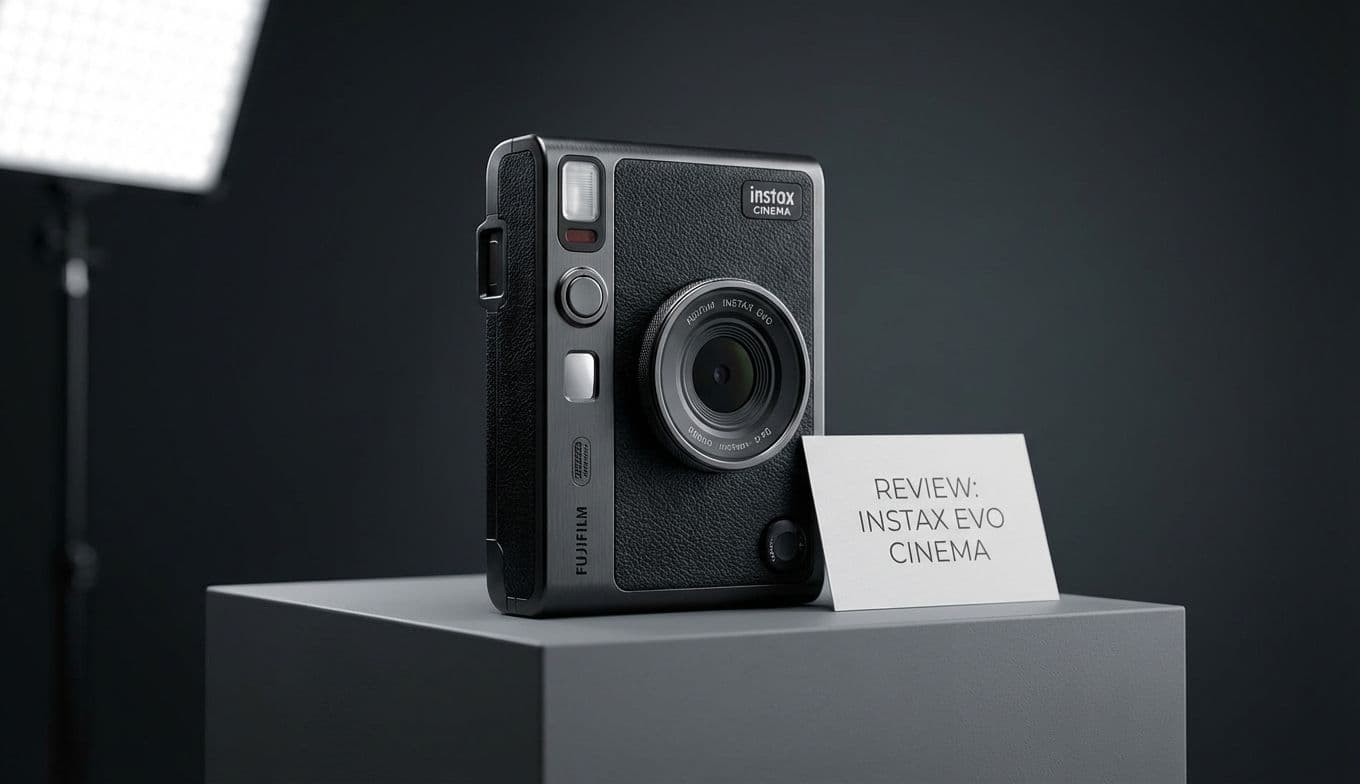
Fujifilm Instax Evo Cinema Review: Lo-Fi Video Magic

Fujifilm Instax Evo Cinema Review: Lo-Fi Video Magic

Team GimmieTeam Gimmie
Published on March 11, 2026

The Fujifilm Instax Evo Cinema: A Love Letter to Lo-Fi Storytelling

We have all seen them: those grainy, charmingly imperfect video clips that feel like they were pulled from a dusty shoebox in a suburban attic. There is an undeniable allure to that vintage aesthetic—a warmth and soul that often gets smothered in today’s world of hyper-sanitized 8K resolution. Fujifilm is leaning hard into that nostalgia with its latest release, the Instax Evo Cinema. This isn’t just another instant camera; it is a dedicated attempt to bring the tactile joy of retro filmmaking into the digital age.

But in an era where everyone has a high-powered cinema camera in their pocket via their smartphone, does a dedicated lo-fi video gadget deserve a spot in your bag? After putting this retro-styled hybrid through its paces, I have the answer.

The Director’s Cut: Tactile Design Over Digital Convenience

The first thing you notice about the Instax Evo Cinema isn’t the lens or the screen—it is the way it feels in your hand. Fujifilm has moved beyond the plastic-heavy feel of earlier Instax models, giving the Cinema a satisfying heft and a textured finish that mimics vintage vulcanite.

The real magic, however, is in the tactile controls. Instead of digging through digital menus, you interact with the camera through physical dials. There is a knurled dial on the front to swap between ten different lens effects—like Soft Focus or Light Leak—and a secondary dial on the top to cycle through ten film simulations, including a gorgeous Monochrome and a saturated 70s-style Retro.

The most satisfying feature is the "Advance Lever." On previous Evo models, this triggered a print; on the Cinema, pulling this physical metal lever initiates the "Final Cut" processing for your video clips. It provides a haptic feedback that a smartphone screen simply cannot replicate. It turns the act of capturing a moment into a deliberate, physical performance.

Technical Specs: The Beauty of Limitation

If you are looking for technical perfection, you are looking at the wrong device. The Instax Evo Cinema operates on a philosophy of "intentional limitation."

The camera captures video in short, 15-second vignettes. This might sound restrictive, but it forces you to think like a film director. You aren't just recording an endless stream of data; you are hunting for a specific moment. These clips are recorded at a 720p resolution—intentionally softened to maintain that analog "fuzz"—and saved to a microSD card.

The camera features a built-in 3-inch LCD screen on the back which serves as your viewfinder and playback monitor. While the screen is sharp enough to navigate the interface, the real fun happens when you sync the camera to the Instax Evo app. From there, you can transfer your filtered clips directly to your phone for sharing. It bridges the gap between the physical world and the digital feed seamlessly.

The $200 Question: Hardware vs. The $5 App

The most common criticism of the Instax Evo Cinema is the price. At roughly $200, it faces stiff competition from smartphone apps like 8mm or VUE that offer similar filters for the price of a latte. Why spend the money on a dedicated device?

The answer lies in the psychology of creation. When you use your phone, you are one notification away from a work email or a distracting text. Using the Instax Evo Cinema is a "mono-tasking" experience. It creates a boundary between you and the digital noise.

Furthermore, software filters often look "applied"—a digital overlay that tries too hard. Because the Evo Cinema processes the video through its specific lens and sensor combination, the light leaks and grain feel more organic. You aren't just adding a filter; you are shooting through a specific medium. For creators who value the process as much as the product, that tactile experience is worth every penny of the premium.

Who Belongs in the Credits?

This camera isn’t trying to replace your mirrorless rig or your iPhone 17 Pro. It is a specialist tool for specific storytellers.

The Social Media Architect: If your TikTok or Instagram aesthetic relies on "mood" and "vibe" rather than high-definition clarity, this is your secret weapon. The 15-second limit is perfectly timed for Reels and Stories, and the unique film simulations give your content a signature look that is hard to batch-produce with standard editing software.

The Memory Keeper: For parents or travelers, this camera turns a standard vacation video into a "home movie." There is something about the 15-second format that captures the essence of a moment—a child blowing out candles, the sun setting over a pier—without the bloat of a ten-minute video file you’ll never watch again.

The Aesthetic Enthusiast: If you own a record player or prefer film cameras but hate the cost of developing 35mm rolls, this is the perfect middle ground. You get the analog "soul" without the analog "bill."

The Final Reel: Is It Worth It?

The Fujifilm Instax Evo Cinema is a triumph of style and intent. It succeeds because it doesn't try to compete with your phone on a spec sheet. Instead, it competes on how it makes you feel while you’re using it.

It is not without its quirks. The 15-second limit will frustrate some, and the low-light performance is exactly what you’d expect from a lo-fi sensor—grainy and temperamental. But those "flaws" are exactly why you buy a camera like this.

If you want a device that turns every mundane moment into a cinematic memory and provides a tactile, joyful shooting experience, the Instax Evo Cinema is the best gift you could give yourself or a fellow creator this year. It’s time to stop just recording and start directing.