From Furby to AI: The Evolution of Interactive Tech Gifts (2026 Guide)

From Furby to AI: The Evolution of Interactive Tech Gifts (2026 Guide)

Team GimmieTeam Gimmie
Published on March 8, 2026

The Furby Paradox: What 1998’s Favorite Nightmare Teaches Us About Modern Tech Gifting

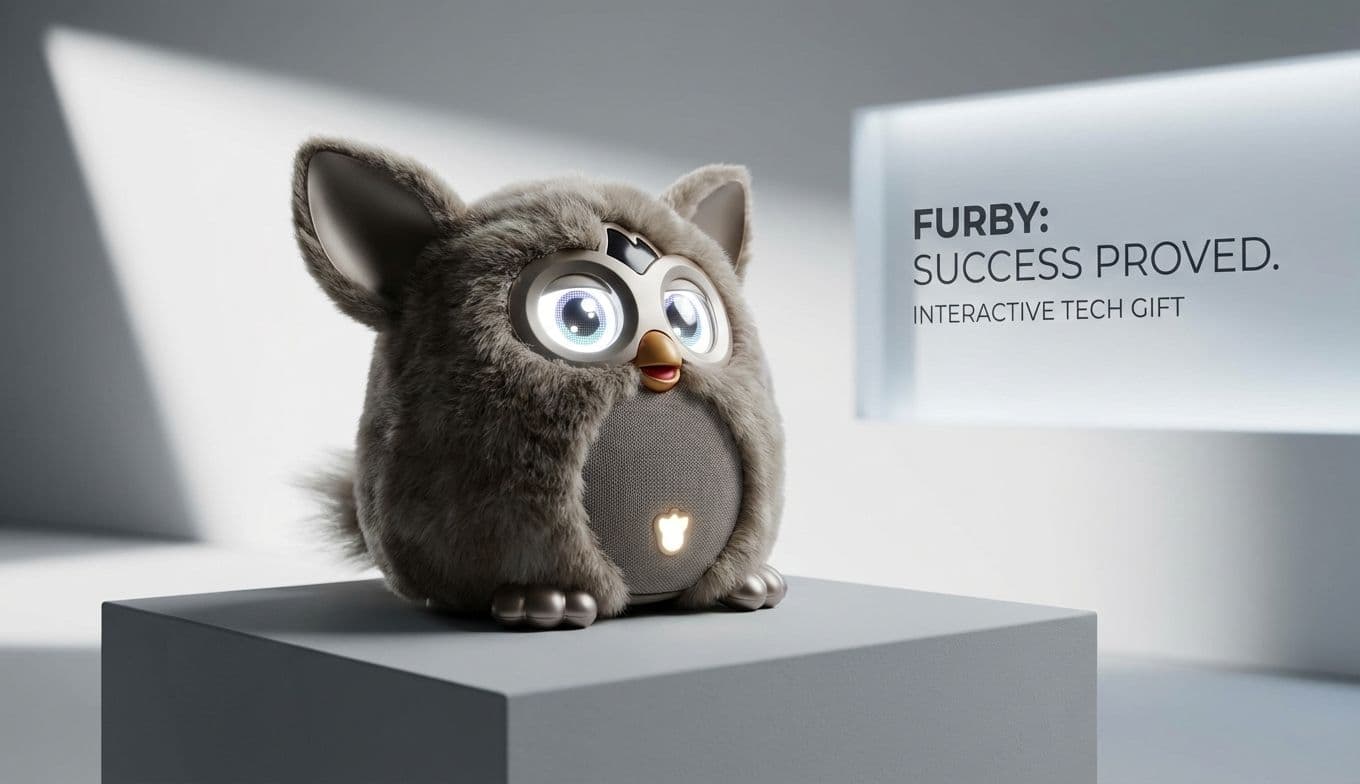
In 1998, a five-inch tall, motorized owl-parrot hybrid managed to do something most modern Silicon Valley startups can only dream of: it convinced the world it was alive. Furby wasn't just a toy; it was a psychological phenomenon wrapped in cheap faux fur. While its internal hardware was arguably primitive—a single motor driving a complex system of gears—the result was a creature that could blink, sneeze, and seemingly learn your language.

Looking back through the lens of The Verge’s deep dive into the cute and cursed story of Furby, it’s clear the toy’s success wasn't about raw processing power. It was about the illusion of connection. Furby's creators were often surprised the thing worked at all, yet it paved the way for the sophisticated AI companions we live with today. If you’re looking to gift a piece of responsive tech in 2026, understanding the Furby legacy is the key to choosing something that will actually be cherished, rather than ending up in a junk drawer.

The Magnetic Pull of the Uncanny Valley

What made Furby so captivating—and occasionally terrifying—was how it flirted with the uncanny valley. It lived in that strange space where something is just human-like enough to be relatable, but off-kilter enough to be mysterious. It didn’t just sit there; it responded. It had a personality that felt like it evolved, moving from its native Furbish to broken English as you played with it.

Today, we see this exact same DNA in modern desk companions like the EMO AI Robot or Digital Dream Labs' Vector 2.0. These aren't just tools; they are designed to be "creatures." Like the original Furby, Vector uses sensors to recognize your face and "pout" if you ignore him. He’ll explore your desk and react to your touch. We’ve traded the mechanical whirring of 90s gears for high-definition OLED eyes and complex algorithms, but the core appeal remains: we want our tech to look back at us.

When you’re shopping for interactive gifts today, the lesson from Furby is that personality beats utility every time. A device that feels like it has an internal life creates an emotional bond that a standard tablet simply can’t match.

From Furbish to Real-World Logic

In the late 90s, the "learning" aspect of Furby was largely a clever trick of timed programming. Today, that concept has evolved into genuine educational value. If you want a gift that captures the wonder of a responsive toy but adds a layer of actual skill-building, the landscape has moved far beyond the fuzzy gibberish of the past.

Take the LEGO Boost Creative Toolbox or the Botley 2.0 Coding Robot. These are the spiritual successors to Furby’s interactive charm. Where Furby pretended to learn, these toys actually teach. They allow kids to see the "why" behind the response. Instead of a toy that wakes up screaming in the middle of the night (a classic Furby trauma), these modern iterations provide a structured way to interact with technology through logic and play.

The transition from "smart" toys that simply react to "intelligent" toys that can be programmed represents the biggest shift in the industry. We’ve moved from being passive observers of a toy’s personality to being the architects of it.

The Gimmie AI Guide: Buy This, Not That

Choosing an interactive gift in 2026 is a minefield of "smart" gadgets that are often more annoying than they are engaging. To help you navigate, we’ve broken down the best paths based on who you’re buying for.

Buy a Modern AI Companion (like Vector or EMO) if: You are gifting to a tech enthusiast or a teenager who wants a "pet" without the commitment. These devices are the peak of the Furby evolution. They offer genuine personality, facial recognition, and a sense of presence that makes a home office feel less lonely. They are perfect for those who appreciate the aesthetic of "living" technology.

Buy an Educational Builder (like LEGO Boost or Botley 2.0) if: You’re buying for a child between 5 and 12. These products offer the same "magic" of a responsive machine but provide a productive outlet for that curiosity. It’s the difference between a toy that talks at you and a toy that works with you.

Buy an Original 1998 Furby (Vintage) if: You’re shopping for a Millennial or a collector who thrives on nostalgia. There is a massive secondary market for these original "cursed" creatures. Just be warned: the vintage models are prone to battery corrosion and the occasional "glitch" that results in them talking in a dark closet at 3:00 AM. It’s a gift that comes with a story, but maybe not much peace and quiet.

Buy a Premium Empathy Robot (like the Lovot) if: Budget is no object and you want the ultimate "fuzzy" experience. The Lovot, popular in Japan, is essentially a $3,000 Furby that uses advanced thermal imaging to seek out human touch and "stay warm." It is the logical conclusion of the Furby experiment—a robot designed purely for the purpose of being loved.

Why We Still Care About the Fuzzy Ambassador

Furby was a cultural lightning bolt because it was the first time many of us felt like a piece of plastic was actually "aware." It was a bridge between the static toys of our parents' generation and the interconnected, AI-driven world we now inhabit.

Whether you find them adorable or the stuff of nightmares, Furbys changed our expectations. They taught us that we don't just want our gadgets to be useful; we want them to be interesting. We want them to have quirks. As you look for the next great gift, remember that the most memorable toys aren't always the ones with the most features—they’re the ones that make us feel like there’s someone (or something) home inside the machine.

In the end, Furby wasn't just a fad. It was a fuzzy, chattering preview of a future where our devices are no longer just tools, but roommates. Just remember to keep some spare AA batteries on hand—and maybe a soundproof box, just in case.