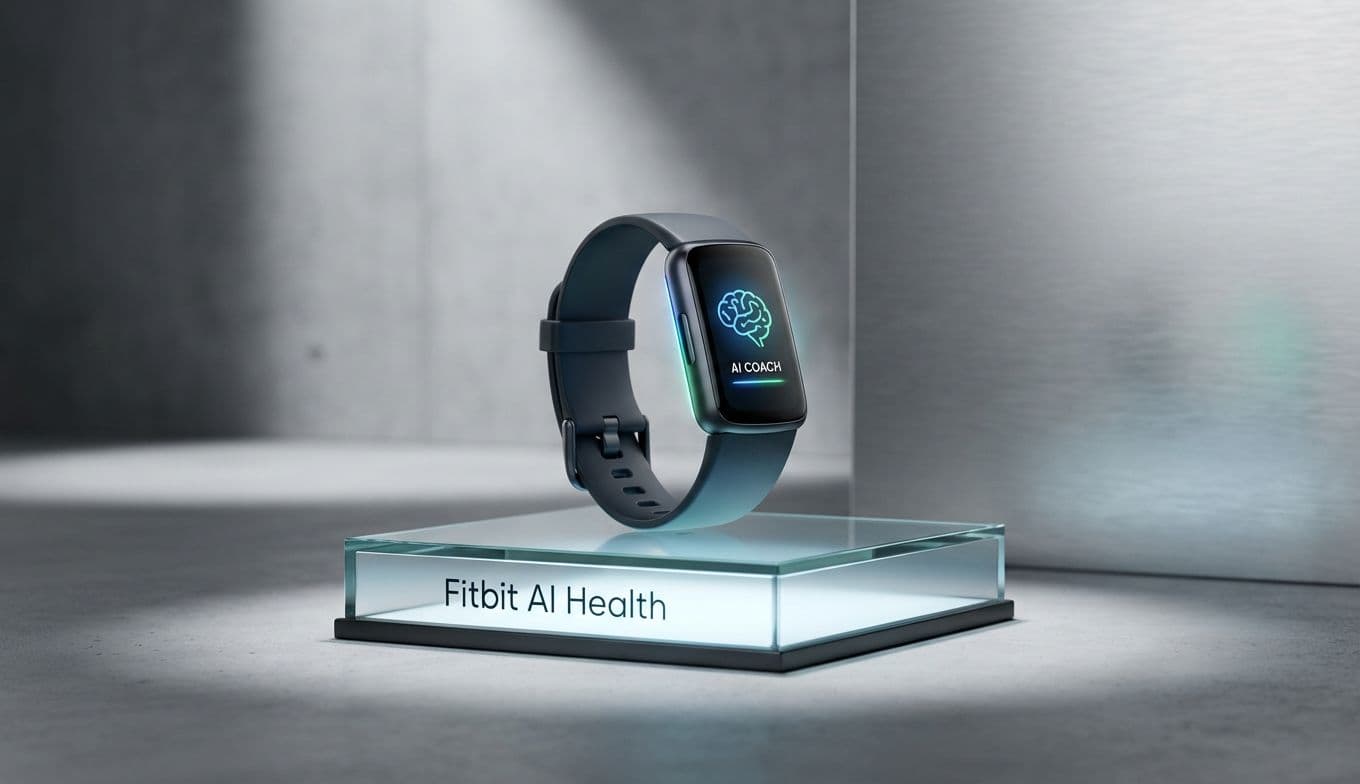
Fitbit AI Health Coach: Medical Records Integration & 2026 Guide

Fitbit AI Health Coach: Medical Records Integration & 2026 Guide

Team GimmieTeam Gimmie
Published on March 19, 2026

The AI Doctor in Your Pocket: Beyond Step Counting

We’ve watched AI move from a novelty to a necessity over the last few years. It helps us write emails, plans our travel, and now, it wants to read our medical charts. Google’s latest announcement that Fitbit’s AI health coach will soon have the green light to access users' clinical medical records is a watershed moment for wearable tech.

If this feels familiar, it’s because Apple Health has allowed us to store medical records on our iPhones for years. But there’s a massive difference between a digital filing cabinet and a virtual coach that analyzes your blood work to tell you why you’re feeling sluggish on your Tuesday run. As we move deeper into 2026, the question isn’t just whether the tech works, but whether we’re ready for this level of intimacy with our devices. For anyone looking to gift a fitness tracker this year, or for those of us trying to optimize our own longevity, the stakes just got a lot higher.

Bridging the Gap: Epic, MyChart, and the Tech Behind the Curtain

This isn’t just a simple software update. Fitbit’s new capability relies on a deep integration with major health informatics systems, specifically Epic and its widely-used MyChart portal. If you’ve ever logged into a patient portal to check your lab results or message your doctor, you’ve likely interacted with Epic.

By linking these records, the Fitbit AI can now see the full picture. It doesn’t just know you slept poorly last night; it knows you were recently prescribed a new medication that lists insomnia as a side effect. It doesn’t just see that your heart rate was elevated during a walk; it can correlate that data with your most recent cholesterol panel or thyroid function tests.

The goal is hyper-personalized guidance. Instead of generic advice like "try to sleep eight hours," the AI might suggest, "Your lab results show low iron levels, which may be why your recovery scores have dipped this week despite consistent effort." It’s an impressive leap, but it requires handing over the keys to your most private vault.

The Privacy Quick-Start: Taking Control of Your Data

The "creep factor" is real. We’re talking about data that reveals chronic conditions, mental health history, and genetic markers. Google has been vocal about its commitment to security, but as a consumer, you shouldn’t just take their word for it. Whether you’re setting up a new device for yourself or helping a parent get started with a gift, use this checklist to ensure you’re sharing on your own terms:

  1. Audit the Permissions: When linking MyChart, you can often select which categories of data are shared. You don’t have to share your entire history; you might choose to only sync lab results and medications while keeping clinical notes private.
  2. Enable Two-Factor Authentication (2FA): This is non-negotiable. If your health data is in the cloud, your account needs more than just a password. Ensure 2FA is active on both your Google account and your medical provider’s portal.
  3. Review AI Training Toggles: Check the settings to see if your data is being used to train Google’s global AI models. Most platforms now offer an opt-out that keeps your data used only for your personal insights.
  4. Set an Expiration Date: Some integrations allow you to authorize access for a limited time. If you’re just tracking a specific health goal for three months, consider setting a reminder to revoke access once that goal is met.

Who Is This For?

The target audience for this advanced coaching isn’t the person who just wants to hit 10,000 steps. This is a tool for the "health engineers"—those managing chronic conditions like Type 2 diabetes or hypertension, or high-performance athletes who treat their bodies like fine-tuned machines.

Imagine a user managing a thyroid condition. Being able to see how their medication dosage correlates with their resting heart rate and temperature data over six months provides invaluable context for their next doctor's visit. However, for the casual user who just wants a stylish watch to track their weekend hikes, this level of data integration might feel like overkill.

The 2026 Hardware Guide: Which Device Earns the Upgrade?

If you’re shopping for a device to take advantage of these new AI features, the landscape has shifted. The older Sense and Versa models are still capable, but for the full AI experience, you’ll want to look at the current flagships.

The Google Pixel Watch 4: This is the gold standard for this ecosystem. With the 2026 model, Google has integrated a dedicated AI co-processor that allows for faster, more secure on-device processing of some health metrics. Its sensors are the most accurate in the lineup, making it the best choice for those who want to use the medical record integration to its full potential. The only downside remains the battery life, which still requires a daily charge.

The Fitbit Sense 3: If battery longevity is the priority, the Sense 3 is the winner. It trades some of the Pixel’s "smart" features for a dedicated focus on health. It includes advanced sensors for continuous electrodermal activity (cEDA) to track stress and a high-fidelity skin temperature sensor. It’s the better gift for someone who wants deep health insights without the distraction of a million apps on their wrist.

The Fitbit Charge 7: For the minimalist, the Charge 7 remains the best value. It will support the AI coaching features through the app, though it lacks the advanced on-wrist processing power of its larger siblings. It’s the perfect "entry-level" gift for someone curious about the tech but not ready to commit to a full smartwatch.

A New Era of Health Ownership

Fitbit’s move to integrate medical records isn’t just a new feature; it’s a philosophical shift. We are moving away from wearables that simply tell us what happened and toward devices that explain why it happened and what we should do next.

It’s an exciting frontier that promises to make our health data more actionable than ever before. But that power comes with a responsibility to be an informed consumer. If you’re gifting one of these devices, you’re not just giving a gadget; you’re giving a gateway to a new kind of self-knowledge. Just make sure the recipient is as comfortable with that data-sharing future as you are.

As with any tool this powerful, the value lies in how we use it. Start slow, prioritize your privacy, and remember that while the AI can read your labs, you’re still the one in the driver's seat of your own health journey.