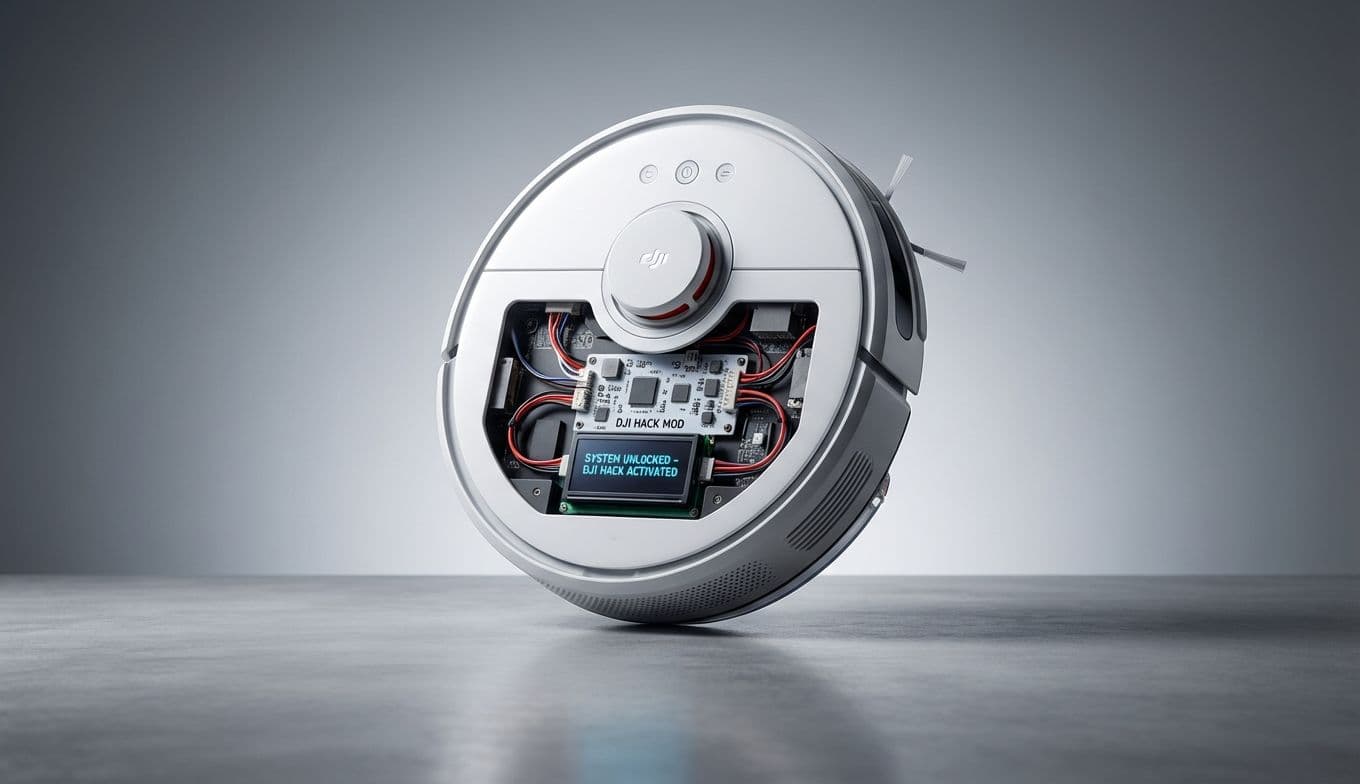
DJI Robot Vacuum Hack: How a PlayStation Controller Exposed 7,000 Homes
Team GimmieThe PlayStation Controller That Unlocked 7,000 Homes
It was Valentine’s Day, a day usually reserved for grand gestures and quiet dinners. But for Sammy Azdoufal, it became the day he accidentally realized he could peer into the living rooms of thousands of strangers. Azdoufal wasn’t a high-level cybercriminal working from a dark basement; he was a guy with a PlayStation controller and a DJI Romo robot vacuum. By simply tinkering with his controller setup, he stumbled upon a catastrophic security flaw that granted him access to a network of 7,000 other DJI robots.
As someone who has spent years reviewing the latest gadgets and filling my own home with smart tech, this story hits close to home. It’s one thing to read about a data breach at a social media company. It’s another thing entirely to realize that the little disc-shaped helper you bought to keep your carpets clean could effectively become a roaming surveillance camera for anyone with the right peripheral and a bit of curiosity.
This incident, while bizarre, is a massive wake-up call. DJI, a brand we’ve long praised for its industry-leading drones, has struggled to translate that engineering prowess into bulletproof home security. While they eventually paid Azdoufal a $30,000 bug bounty—a significant step up from their historically defensive stance toward security researchers—the damage to consumer trust is harder to patch than a line of code.
The Romo Identity and the Security Gap
To understand how we got here, we have to look at the device itself. Originally marketed under a few different naming conventions including the RoboVac series, the DJI Romo was intended to be the ultimate smart home companion. It’s sleek, efficient, and carries the prestige of the DJI name. But the Azdoufal hack revealed a chilling reality: convenience often comes at the cost of compromise.
Azdoufal’s discovery allowed him to not only see the status of these devices but potentially access their data streams. DJI was reportedly already working on some of these fixes, but the scale of the vulnerability—7,000 devices open to a guy with a gaming controller—suggests that security was an afterthought in the design process.
This isn't just a DJI problem. It’s a systemic issue in the Internet of Things (IoT) world. We are currently in a gold rush where manufacturers are racing to add Wi-Fi and smart features to everything from lightbulbs to slow cookers. The goal is to be first to market, which often means security testing is treated as a final hurdle rather than the foundation of the build. When you bring a connected device into your home, you aren't just buying a vacuum; you are opening a digital window.

The Psychological Weight of a Tech Gift
Think about the last time you gave someone a piece of smart home technology. Maybe it was a video doorbell for your parents or a smart speaker for a friend’s housewarming. These gifts are popular because they feel helpful. They say, I want your life to be easier.
However, the DJI Romo fiasco adds a heavy psychological layer to that gesture. If you gift a device that eventually gets hacked, you haven’t just given a bad gift—you’ve inadvertently introduced a vulnerability into the sanctuary of a loved one’s home. For a tech-savvy recipient, a security flaw is an interesting problem to solve. For an older relative or someone who just wants things to work, it’s a source of genuine anxiety and a violation of privacy.
This is why we have to stop looking at smart home tech as just a collection of features. We need to look at it through the lens of trust. When we choose a brand, we are trusting them with our floor plans, our daily schedules, and in many cases, our literal sight and sound.
Searching for a Safer Clean: Better Alternatives
If the DJI incident has you second-guessing the robot vacuum on your wishlist, don't worry—you don't have to go back to the old upright manual vacuum just yet. There are brands in this space that have made security a core part of their identity rather than a PR response.
If you are looking for a gift that won’t compromise your privacy, consider these alternatives:
-
iRobot (Roomba Series) iRobot has spent years positioning itself as the gold standard for privacy. They were one of the first to receive the TUV SUD Cyber Security Mark, a rigorous third-party certification. They use high-level encryption for the data sent between the robot and the cloud, and perhaps most importantly, they are incredibly transparent about what they do—and don’t—do with your data. They have built their reputation on the idea that your home’s map belongs to you, not them.
-
Roborock While they are a younger company than iRobot, Roborock has moved aggressively to secure their ecosystem. Many of their top-tier models, like the S8 series, have earned the ETSI EN 303 645 consumer IoT security certification. This is a globally recognized standard that ensures the device meets specific requirements for password security, software updates, and data protection. They have shown that you can have high-end features like AI obstacle avoidance without leaving the back door unlocked.
The Smart Home Security Gut Check
Before you click buy on that next smart home gadget, run it through this quick checklist. If a brand can’t answer these questions clearly on their website, it’s a red flag.
Does the manufacturer have a public-facing security page? Reliable companies will have a dedicated section explaining their data encryption and how they handle vulnerabilities.
Is there a history of third-party security certifications? Look for names like TUV SUD, TUV Rheinland, or UL Solutions. If they’ve paid an outside firm to hack them and they passed, that’s a great sign.
Does the device offer Two-Factor Authentication (2FA)? If the app only requires a simple password to access your home’s data, it’s not secure enough.
How long does the company promise software and security updates? Hardware might last ten years, but if the security updates stop after two, the device becomes a ticking time bomb.
What is the data deletion policy? You should be able to wipe your home’s maps and personal data at any time through the app.
The Bottom Line: Privacy is the Ultimate Luxury
The DJI Romo incident is a reminder that we are living in an era where our vacuum cleaners are as much computer as they are appliance. As consumers, we have more power than we realize. By choosing brands that prioritize security and demanding transparency from the ones that don't, we can shift the market.
Convenience is great. Having a robot that keeps your house spotless while you’re at work is a genuine luxury. But that luxury isn’t worth much if it costs you your peace of mind. When you’re shopping for yourself or a loved one, remember that the most important spec isn't the suction power or the battery life—it’s the lock on the digital door.
Smart gifting requires smart choices. Don't just give a gadget; give the assurance that the home remains a private space. Because at the end of the day, a clean floor is nice, but a secure home is essential.