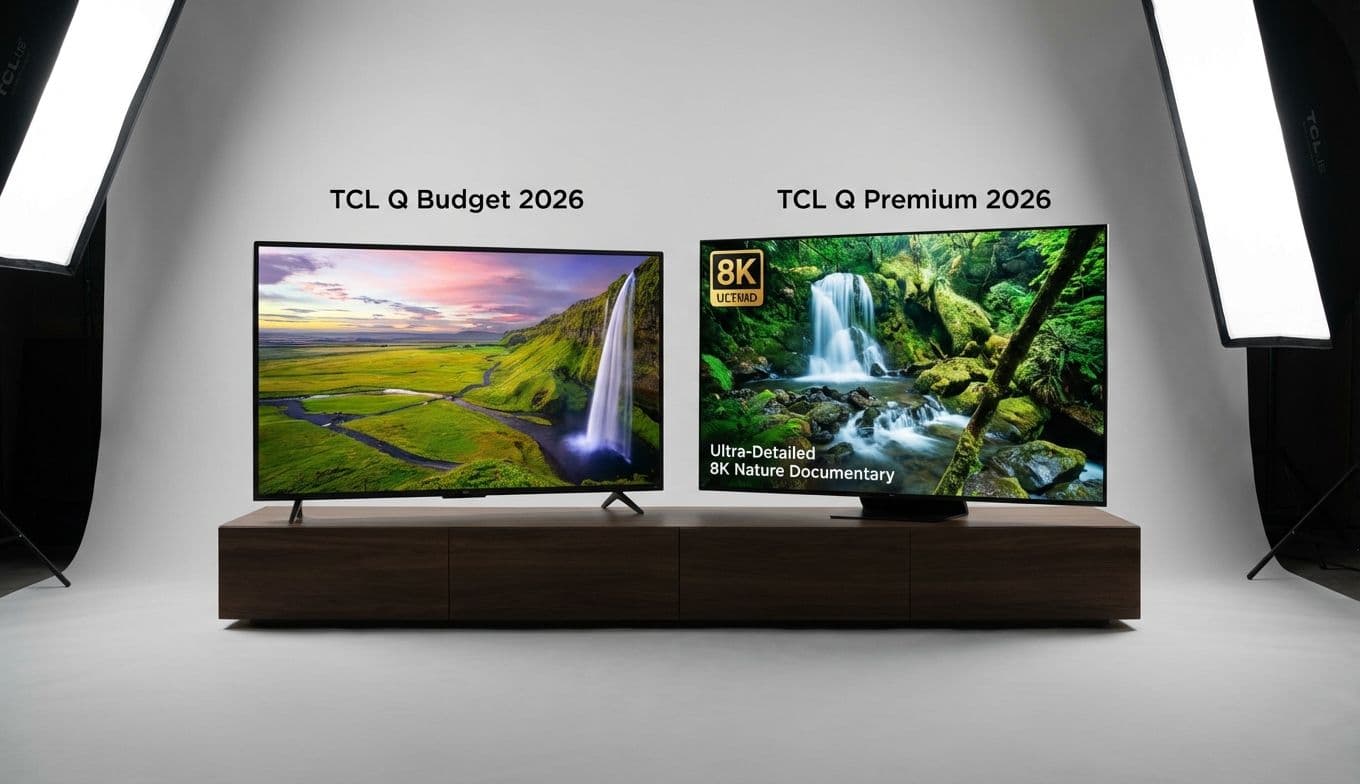
Budget vs. Premium TVs 2026: Why TCL & Hisense Rival Sony & LG
Team Gimmie
1/8/2026

The Death of the Budget TV Compromise
If you walked into a high-end home theater showroom today, you might find yourself in a bit of a predicament. Standing in front of two 75-inch displays, one priced at $2,500 and the other at $900, you’d likely struggle to see where that extra sixteen hundred dollars went. For decades, the hierarchy was set in stone: if you wanted a jaw-dropping picture, you paid the Sony, LG, or Samsung tax. If you bought anything else, you were settling.
As we kick off 2026, that hierarchy hasn't just been shaken—it’s been dismantled. The massive price-to-performance shift we’ve seen over the last twelve months has effectively killed the concept of the budget compromise. Brands like TCL and Hisense are no longer just the affordable alternatives you buy for a spare bedroom. They are producing flagship-grade hardware that, in many cases, outshines the entry-level offerings from the old guard.
The Great Equalizer: Mini-LED for the Masses
The primary reason for this shift is the rapid democratization of Mini-LED technology. Just a few years ago, Mini-LED—which uses thousands of tiny LEDs to provide incredible brightness and precise local dimming—was a luxury feature. Today, it’s the standard for TCL and Hisense’s mid-to-high-end lineups.
TCL has completely revamped its approach, moving away from the old R-Series nomenclature and leaning heavily into its Q-Series branding. Their latest QM7 and QM8 models are pushing thousands of nits of peak brightness and featuring dimming zone counts that would have been unthinkable at these price points in 2024. Meanwhile, Hisense’s U7 and U8 series continue to dominate the value conversation, offering black levels that rival OLED while maintaining the punchy, vibrant highlights that make HDR content pop.
What this means for you is simple: the visual floor has been raised. You’re no longer choosing between a bright, washed-out screen and a dim, high-contrast one. You’re getting both, even on a sub-$1,000 budget.
The 2026 Gift-Giver’s Persona Guide
Because the market is so crowded with great options, the challenge isn't finding a good TV—it's finding the right one for the person you’re buying for. Here is how to navigate the current landscape based on who is unwrapping the box.

The Dorm Room or Apartment Gamer If you’re shopping for a gamer, the old rules of buying a premium brand for low input lag are gone. Today’s TCL Q-Series sets, specifically the QM7, offer a 144Hz refresh rate, dedicated Game Bars for on-the-fly adjustments, and full HDMI 2.1 support across multiple ports. For a college student or a first-apartment gamer, a 55-inch TCL offers a high-end gaming experience for roughly half the cost of a comparable Samsung, leaving plenty of room in the budget for a new console or a few extra controllers.
The Home Theater Enthusiast on a Budget For the person who wants the lights off and the popcorn ready, the Hisense U8 series is the current heavyweight champion of value. Its ability to control light bleed (that annoying glow around bright objects on a dark background) is stunning. It delivers a cinematic experience that rivals flagship sets costing twice as much. This is the best gift for the person who cares about black levels and contrast but doesn't want to deal with the potential burn-in risks or lower brightness of a traditional OLED.
The Living Room Generalist If you’re buying for someone who just wants a reliable, high-quality TV for the main living space—news, sitcoms, and the occasional movie—the TCL Q6 or Q7 provides a massive upgrade over an aging 4K set without requiring a deep technical dive. These sets are intuitive, bright enough for sun-drenched rooms, and look sleek enough to satisfy any interior design concerns.
The Gimmie Tip: Why Upscaling Still Matters for Sports Fans
While the hardware gap has closed significantly, there is one area where the premium brands—specifically Sony and LG—still hold a distinct advantage: image processing.
Here is the Gimmie Tip: If the person you are buying for is a die-hard sports fan, you might still want to look toward the premium end of the spectrum. Most live sports are still broadcast in 720p or 1080i. A TV has to do a lot of heavy lifting to stretch that low-resolution signal to fit a 4K or 8K screen.
Sony’s XR Processor and LG’s latest Alpha series chips are still the gold standard for upscaling. They can take a fuzzy football broadcast and make it look remarkably crisp, reducing motion blur and digital noise in ways that budget processors sometimes struggle with. If your Sunday consists of eight hours of back-to-back games, that extra investment in a Sony Bravia or an LG OLED pays dividends in eye comfort and clarity.
Where the Premium Brands Still Shine
Beyond upscaling, the Big Three (Sony, Samsung, LG) are focusing their efforts on the ultra-premium experience to justify their price tags. You’ll find better-integrated sound systems, more luxurious build materials (think brushed metal instead of plastic), and smarter home integration.
LG continues to lead the way in OLED technology, specifically with their G-series which can now reach brightness levels that were previously impossible for organic LEDs. Samsung remains the king of the lifestyle TV, with The Frame continuing to be a top gift for those who prioritize aesthetics over raw specs.
However, these are now niche advantages. For the vast majority of people, the difference in build quality or a slightly more polished smart interface (like LG’s webOS or Samsung’s Tizen) isn't worth a 100% price markup.
The Verdict for 2026
We have reached a tipping point where brand prestige is being replaced by raw performance data. TCL and Hisense aren't just "good for the money" anymore; they are genuinely great televisions that happen to be affordable.
If you’re looking to upgrade a home theater or give a gift that truly wows this year, don't let old biases hold you back. Check out the latest Q-Series from TCL or the ULED sets from Hisense. You’ll likely find that the money you save can go toward a better soundbar, a more comfortable couch, or simply more movies to watch. In 2026, the best seat in the house doesn't have to be the most expensive one.