Best Soundbars for Dialogue 2024: Enhance TV Voice Clarity

Best Soundbars for Dialogue 2024: Enhance TV Voice Clarity

Team GimmieTeam Gimmie
Published on February 23, 2026

Stop Reaching for the Remote: How to Finally Hear What Your TV Is Saying

You know the routine. You’re settled in for a movie, the cinematic score is swelling beautifully, and the action sequences are shaking the floorboards. But the moment two characters start talking, everything falls apart. You lean forward, squinting as if that helps your ears, and eventually, you start frantically tapping the volume-up button. Ten minutes later, an explosion occurs, and you’re diving for the remote to turn it back down before you wake the neighbors.

It’s the most common frustration in modern home entertainment: the "mumble track." If you feel like you’re losing your hearing, I have some good news. It’s probably not your ears—it’s your gear.

Why Modern TVs Sound So Bad

There are two main culprits behind why dialogue has become so hard to parse. First, there is the physical reality of modern design. We all want paper-thin TVs with non-existent bezels. The problem is that audio requires moving air, and moving air requires space. To keep TVs slim, manufacturers have to use tiny, inexpensive speakers that are often tucked behind the screen or aimed downward. Instead of the sound hitting your ears directly, it’s bouncing off your floor or the wall behind your TV, reaching you as a muddy, reflected mess.

The second culprit is "the mix." Directors today often mix audio for high-end cinema environments with dozens of speakers. When that complex, multi-layered soundscape gets squeezed into the two tiny speakers on your flat-screen, the dialogue gets buried under the music and sound effects. This is why a dedicated soundbar isn't just a luxury; for many of us, it’s the only way to actually understand the plot.

Before You Buy: The No-Cost Fixes

Before you drop money on a new piece of hardware, try these three adjustments in your TV or current soundbar settings. They won't work miracles, but they can bridge the gap.

  1. Turn Off Virtual Surround: Features labeled "3D Audio" or "Virtual Surround" often add reverb and echo to make the sound feel "bigger." Unfortunately, this is the enemy of clarity. Turn it off to keep the sound focused.
  2. Look for Night Mode: Most modern receivers and TVs have a Night Mode or "Dynamic Range Compression" (DRC). This feature essentially shrinks the gap between the quietest and loudest sounds. It keeps explosions from being too loud and boosts whispers so they’re actually audible.
  3. Check for Dialogue or News Presets: These settings typically boost the mid-range frequencies where human voices live while rolling off the heavy bass that can mask speech.

The Top Solutions for Dialogue Clarity

If the settings tweaks didn’t cut it, you need a soundbar specifically designed for intelligibility. We’ve moved away from the standard "bigger is better" mindset here. Instead, we’re looking for devices with dedicated center channels and sophisticated Digital Signal Processing (DSP).

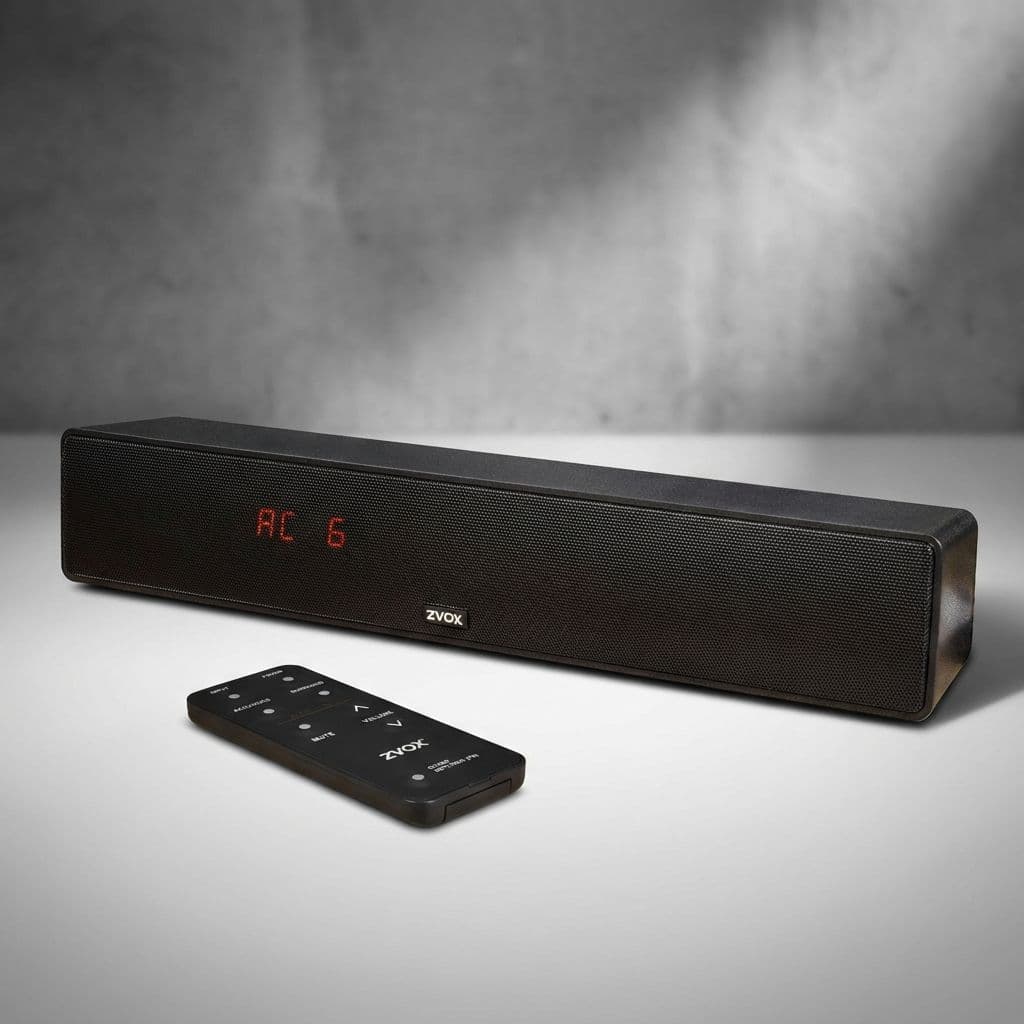
Best for Seniors and Severe Hearing Needs: ZVOX AccuVoice AV157

If your primary goal is hearing the news and understanding every word of a British period drama, ZVOX is the gold standard. While most brands focus on "home theater," ZVOX focuses on hearing aid technology.

The AV157 uses their proprietary AccuVoice technology, which literally lifts the voices out of the background sounds. It offers 12 levels of dialogue boost. Level one is a subtle lift; level twelve is a surgical extraction of speech that makes it nearly impossible to miss a word. It doesn't have the deep, cinematic bass of a subwoofer-heavy system, but for clarity, it is untouchable.

Best for Small Apartments and Design Lovers: Sonos Beam (Gen 2)

The Sonos Beam is a compact powerhouse that fits perfectly under a 50-inch TV. What makes it a dialogue champion is the "Speech Enhancement" feature found in the Sonos app. When toggled on, it emphasizes the frequencies of the human voice.

Unlike cheaper bars that just make everything shriller, the Beam uses its internal processing to intelligently separate speech from the background score. Because it has a dedicated center tweeter, the voices feel like they are coming directly from the mouths of the actors on screen rather than from a box sitting below the TV. Plus, if you find the bass is still overwhelming the voices at night, the app includes a dedicated Night Sound mode.

Best for Large Rooms and Cinematic Impact: Samsung HW-Q990D

If you have a large living room and don't want to sacrifice that "big movie" feel just to hear the dialogue, this is the system for you. This is a full 11.1.4 channel setup, meaning it comes with a subwoofer and rear speakers.

The secret weapon here is Samsung’s Active Voice Amplifier (AVA). The soundbar actually listens to the ambient noise in your room. If someone starts vacuuming or a loud truck drives by, the bar automatically boosts the dialogue volume and clarity in real-time. Because it has a powerful, dedicated center channel, it handles the heavy lifting of speech while the other speakers manage the explosions and music, ensuring they never overlap or compete.

What to Look for When You Shop

When you’re browsing the aisles (or the web), don't get distracted by "Total Watts" or "Subwoofer Size." Those are measures of power and rumble, not clarity. Instead, look for these three things:

A Dedicated Center Channel: Budget soundbars often have only two channels (Left and Right). This forces the dialogue to share space with the music. A "3.0" or "3.1" system has a dedicated speaker just for speech. Mid-Range Performance: Human speech lives in the mid-range frequencies (roughly 1kHz to 4kHz). Look for reviews that mention "neutral" or "forward" mid-range rather than "V-shaped" sound profiles which prioritize boomy bass and sharp treble. App-Based Control: The best dialogue fixes happen in the software. Brands that offer an app usually provide more granular control over "Voice Boost" levels than those that just give you a basic remote.

The Bottom Line

We’re living in a golden age of television content, but a golden age of terrible television audio. You shouldn’t have to rely on subtitles just to follow a conversation in your favorite show. Whether it’s a simple ZVOX for maximum clarity or a sophisticated Sonos setup, the right soundbar doesn't just make your TV louder—it makes it understandable again. Your ears (and your remote) will thank you.