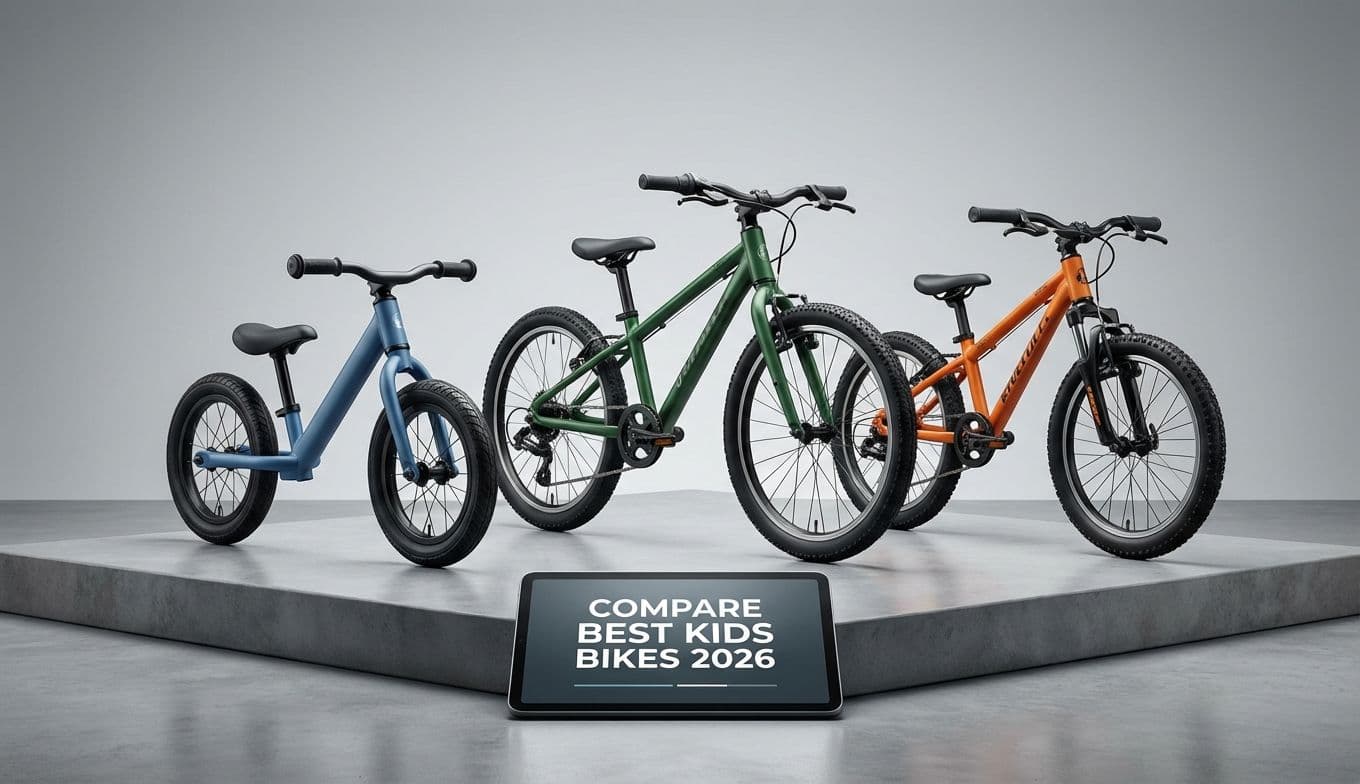
Best Kids Bikes 2026: Lightweight & Safe Picks for Parents
Team GimmieThe Best Kids Bikes of 2026: A Parents Guide to Weight, Safety, and Real Fun
Imagine if your mountain bike weighed 80 pounds. You would likely leave it in the garage to gather dust. For a 40-pound child, a typical 25-pound bike from a big-box retailer is the functional equivalent of a grown adult trying to pedal a small motorcycle without an engine. It is heavy, unwieldy, and frankly, discouraging. When a bike accounts for 60 percent of a child’s body weight, every incline feels like a mountain and every turn feels like a chore.
The secret to getting your kid to love cycling isn’t found in flashy stickers or tassels. It is found in the weight-to-power ratio. After testing the latest fleet from the industry’s top players, I have found that the best bikes share three traits: they are exceptionally light, they use geometry designed for small proportions, and they prioritize high-quality hand brakes over the old-fashioned pedal-backward coaster brakes.
Quick Comparison: The Top Performers
Before we dive into the details, here is a snapshot of how the leading models for 2026 stack up for a typical four-to-six-year-old rider.
Woom 3 Best For: The lightest possible ride Weight: 13.1 lbs Price: $449 Height Range: 41 to 47 inches
Guardian Ethos 16 Best For: Safety and confidence Weight: 16 lbs Price: $329 Height Range: 40 to 46 inches
Prevelo Alpha Two Best For: Athletic handling and durability Weight: 14.5 lbs Price: $439 Height Range: 39 to 47 inches
The Lightweight Advantage: Why Grams Matter
In the world of kids’ bikes, weight is the single most important specification. A lighter bike is easier to start from a standstill, easier to balance, and—crucially—easier to pick up after the inevitable tumble.
Brands like Woom have turned this into a science. By using high-quality aluminum frames and lightweight wheels, they have created machines that feel like an extension of the child. When a bike is light, a child can maneuver it without fighting the physics of the machine. This leads to faster skill acquisition and, more importantly, the confidence to go further. If you are choosing between a bike with front suspension that weighs 22 pounds and a rigid bike that weighs 15 pounds, choose the lighter one every single time. At this age, tires provide all the suspension a child needs; weight is the enemy of fun.

The Top Contenders for 2026
Woom: The Gold Standard for Weight Woom remains the brand to beat if your primary goal is a featherweight build. Their sizing system is numerical, making it easy to track as your child grows. The Woom 2 (14-inch wheels) is designed for toddlers aged 3 to 4.5 years and weighs a staggering 11 pounds. It features a low entry point and a long wheelbase, which makes balancing almost instinctive. The Woom 3 (16-inch wheels) fits most 4- to 6-year-olds. It’s the bike that usually turns a hesitant rider into a neighborhood speedster. For older kids looking to hit the dirt, the Woom OFF series provides mountain-bike capability without the massive weight penalty usually associated with trail bikes. Expect to pay between $400 and $600, but know that these bikes hold about 70 percent of their value on the resale market.
Guardian: Redefining Safety with SureStep Guardian has carved out a massive following by solving the two biggest fears parents have: going over the handlebars and failing to stop. Their Ethos and Aero models feature the SureStop braking system. This utilizes a single hand lever that intelligently distributes braking force to both wheels, ensuring the rear wheel engages just slightly before the front. It prevents the head-over-heels flips that can happen when a panicked child grabs a handful of front brake. The Guardian Ethos 16 is their workhorse, priced more competitively than Woom while still staying impressively light at 16 pounds. It is an excellent choice for parents who want a premium experience without the $500 price tag.
Prevelo: The Riders Bike Prevelo bikes, particularly the Alpha series, are designed for families who really ride. Their geometry is lower to the ground, which lowers the center of gravity and makes the bike feel more stable at high speeds. The Alpha One (14-inch) and Alpha Two (16-inch) feature custom-made small-scale components, including cranks designed specifically for the narrow hips of a child. This prevents the bow-legged pedaling stance seen on cheaper bikes. At roughly $430, the Alpha Two is a high-performance machine that can handle everything from paved cul-de-sacs to light gravel paths.
Features That Actually Move the Needle
When shopping, it is easy to get distracted by color-matched fenders or kickstands. Instead, focus on these three technical areas:
The Brake Debate Most cheap bikes use coaster brakes (pedal backward to stop). While traditional, they are actually difficult for beginners. If a child is struggling to balance, they often pedal backward instinctively, which causes the bike to jerk to a stop and the child to fall. Hand brakes allow kids to keep their feet in the perfect "power position" to start and stop smoothly. Look for small-reach levers designed for tiny hands.
Drivetrain Simplicity For kids under the age of seven, gears are often more of a distraction than a help. A single-speed bike with a well-chosen gear ratio is lighter, easier to maintain, and allows the child to focus on balance and steering. Only move to gears (like those on the Woom 4 or Guardian 20) once your child is comfortably riding 5-plus miles and tackling significant hills.
Geometry and Q-Factor Cheap bikes often use adult-sized components scaled down poorly. This results in a "Q-Factor" (the distance between the pedals) that is too wide, forcing the child’s legs outward. Premium brands like Prevelo and Woom use narrow cranks so the child’s legs move in a natural, vertical motion. This reduces fatigue and prevents knee strain.
The Investment Mindset: Balancing the Budget
It is true that $400 is a lot of money for a "toy" that a child might outgrow in two years. However, high-end kids' bikes are better viewed as a piece of equipment rather than a disposable plaything.
A heavy, poorly made bike often ends up sitting in the garage because the child finds it frustrating to ride. A high-quality bike gets used daily. Furthermore, the secondary market for brands like Woom and Guardian is incredibly robust. It is common to see two-year-old Woom bikes sell on local marketplaces for $300. When you factor in the resale value, the "cost of ownership" for a premium bike is often lower than the cost of a $150 heavy steel bike that has zero resale value and ends up in a landfill.
If the sticker price is still too high, look for certified pre-owned programs or local cycling groups. Because these bikes are built with high-quality components, they can easily last through three or four different owners before needing significant repairs.
The Final Word
The best bike for your child is the one that makes them feel powerful. By prioritizing a lightweight frame and intuitive controls, you are giving them the gift of mobility and confidence. Whether you choose the ultra-light Woom, the safety-first Guardian, or the performance-driven Prevelo, you are moving away from a "heavy metal" struggle and toward a lifetime of cycling. Your child won't remember the color of the frame as much as they will remember the feeling of finally keeping up with you on the trail.