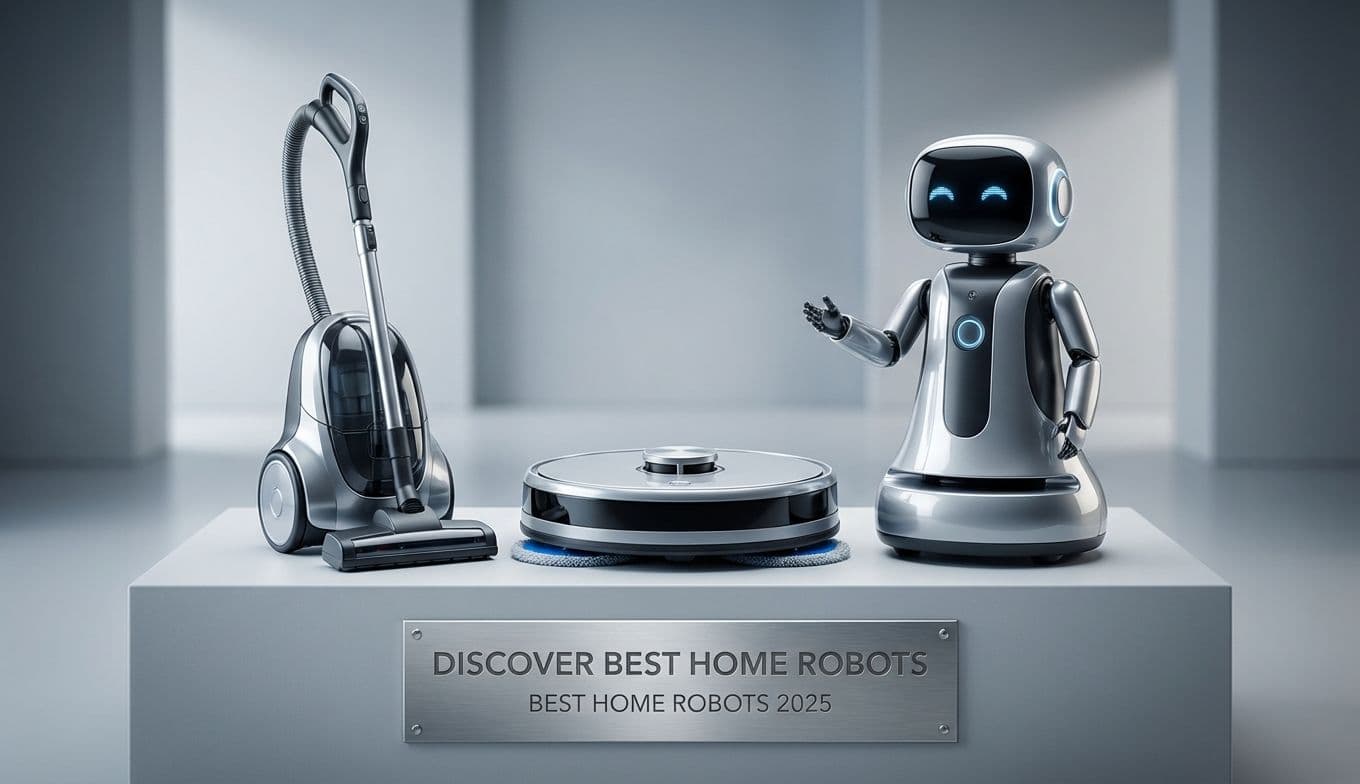
Best Home Robots 2025: Why Humanoids Aren't Ready Yet
Team Gimmie
12/21/2025

The Robot Butler Is a Myth: Here’s the Tech That Actually Helps
It is December 21, 2025. If you are anything like me, you are staring at a calendar that is running out of days, looking at a gift list that still has holes in it, and wondering if this is the year you can finally buy a robot to do everyone's chores.
I have bad news and good news.
The bad news comes courtesy of the latest round of "robot fail" videos circulating the internet. You’ve probably seen the clips of humanoid prototypes—supposedly the future of our workforce—taking clumsy spills or freezing up while trying to fold a t-shirt. As much as I enjoy watching billion-dollar hardware faceplant (it keeps me humble), it’s a stark reminder: The sci-fi dream of a bipedal butler named Jeeves who will walk your dog and cook your dinner is still just that—a dream.
If you are holding out for a humanoid robot to put under the tree this year, you are going to be waiting a long time. And honestly? You don't want the current generation in your house. They are heavy, expensive, and frankly, a liability around your grandmother’s vase collection.
But here is the good news: You don't need a humanoid robot. The best robotics technology available right now doesn't look like a person. It looks like a disc, a box, or a tiny tank. If you want to gift the luxury of automation—which is what we really mean when we say we want a robot—here is what is actually worth your money in late 2025.
The Floor Patrol: Buying Back Time
Let’s be real. The most practical application of robotics in the domestic space is still cleaning. I have tested dozens of robot vacuums over the last decade, and for a long time, they were dumb, loud, and got stuck on sock piles.
That has changed. The flagship models of 2025 are genuinely impressive. We are past the point of simple "bump and turn" navigation.
If you are looking for a "wow" gift for a busy parent or a tech-loving homeowner, look at the combo mop-vacs with self-cleaning docks. Brands like Roborock and Dreame have largely perfected this. I’m talking about machines that vacuum the rug, lift the mop pads so the carpet doesn't get wet, scrub the hardwood, and then return to the base to empty their own dustbin and wash their own mop pads with hot water.

The Verdict: Is it cheap? No. You’re looking at over $1,000 for the top-tier models. But unlike a humanoid prototype, this robot actually works. It saves the owner 3-4 hours of manual labor a week. That is a gift of time, and that is priceless.
The Desktop Companion: For the "Cool Factor"
Maybe you aren't looking for utility. Maybe you are shopping for a tinkerer, a teenager, or that friend who just really loves sci-fi. You want something with personality.
Since we can’t buy a C-3PO, we have to scale down. This is where "desktop pets" and educational robotics shine.
I have a soft spot for the DJI RoboMaster series. These aren't just toys; they are mecanum-wheeled tanks that teach programming. They are fast, durable, and genuinely fun to drive. For a younger demographic, or just the young at heart, looking into "pet" robots like Loona or Eilik offers that interactive, emotional connection without the expectation that the robot will actually do anything useful.
The Verdict: These are great for sparking curiosity. If you are buying for a kid who talks about building Gundams one day, get them a programmable robot kit. It’s hands-on, educational, and won't try to take over the world.
The Invisible Butler: The Smart Home
Here is my hottest take: The best robot is the one you can’t see.
While we were all watching videos of robots trying to walk on two legs, our houses quietly got smarter. Thanks to the maturation of AI and the Matter smart home standard, we are finally approaching a home that anticipates needs.
Instead of a robot butler, consider gifting components of a smart ecosystem.
- Smart Lighting: Not just bulbs you turn on with an app, but motion-sensing setups that gently illuminate the hallway at 2 AM.
- AI-Integrated Hubs: The latest smart displays from Google and Amazon are getting better at understanding context. They can manage calendars, suggest recipes based on what's in the fridge, and control the house.
It’s not as flashy as a metal man walking through the door, but having a house that locks itself at night and warms up the living room before you get out of bed feels like magic.
The Bottom Line
We are all fascinated by the idea of humanoid robots because they reflect us. We want a machine that can navigate our world exactly the way we do. But from a product engineering standpoint, legs are inefficient for most household tasks. Wheels are better. stationary appliances are better.
The "failure" of the current crop of humanoid robots isn't really a failure; it's part of the process. They will get there eventually. But for this holiday season, don't buy the hype.
If you want to give a great gift, focus on the robots that have mastered a single task. Buy the vacuum that scrubs the floors so your sister doesn't have to. Buy the programmable tank that teaches your nephew Python. Buy the smart lock that lets your friend ditch their keys.
Leave the walking, stumbling robots to the viral videos. We’ll watch them together, safe in the knowledge that our floors are clean and we didn't spend $20,000 on a prototype that can't even hold a cup of coffee.