Best Fitness Trackers for Chronic Illness Management

Best Fitness Trackers for Chronic Illness Management

Team GimmieTeam Gimmie
Published on March 16, 2026

The Invisible Shield: Why a Fitness Tracker is the Ultimate Tool for Chronic Illness Management

Imagine you are halfway through a bike ride on a beautiful afternoon. The sun is out, your legs feel strong, and you’re in the flow. Then, without warning, the world tilts. Your brain feels like it is quite literally on fire. Your limbs turn to lead. This wasn't just a tough workout; it was the beginning of a multi-day "crash" that would leave you bedridden and wondering how you missed the warning signs.

This is the reality Arielle Duhaime-Ross described in a powerful piece for The Verge, and it’s a story known all too well by the millions of people living with chronic illnesses like POTS, ME/CFS, or Long COVID. In these communities, the body’s internal fuel gauge is often broken. You don’t get a "low battery" notification until you’re already at zero percent.

For years, we’ve treated fitness trackers as toys for the "worried well"—gadgets to help marathon runners shave seconds off a PR or to remind office workers to stand up once an hour. But for those navigating the unpredictable waters of chronic illness, these devices have evolved into something far more vital. They aren't just fitness trackers anymore; they are pacing tools, early-warning systems, and, in many cases, a lifeline back to a semi-predictable life.

The Data of Pacing: Beyond the Step Count

For someone with a chronic illness, "10,000 steps" isn't a goal; it might be a recipe for a medical emergency. The metric that actually matters is pacing—the art of staying within a very narrow window of energy expenditure to avoid a flare-up.

This is where sophisticated wearables change the game. Instead of focusing on how much you did, these devices help you understand what your body can handle. One of the most significant developments in this space is the Visible app. Designed specifically for conditions like Long COVID and ME/CFS, Visible integrates with wearable data (like the Polar Verity Sense) to help users track their "pacing" in real-time. It doesn't tell you to go faster; it tells you when to sit down before you hit the point of no return.

By monitoring Heart Rate Variability (HRV) and Resting Heart Rate (RHR), these tools detect physiological stress long before you feel it. A dip in HRV often signals that your autonomic nervous system is under duress. For a healthy athlete, that’s a sign to take a rest day. For someone with a chronic illness, that’s a sign that doing the laundry today might trigger a week-long crash.

Gold Standard Features: Body Battery and Readiness Scores

If you are looking for a device that truly understands the chronic illness experience, you have to look at the specific proprietary metrics developed by brands like Garmin and Oura. These aren't just "flashy features"—they are the gold standards for the community.

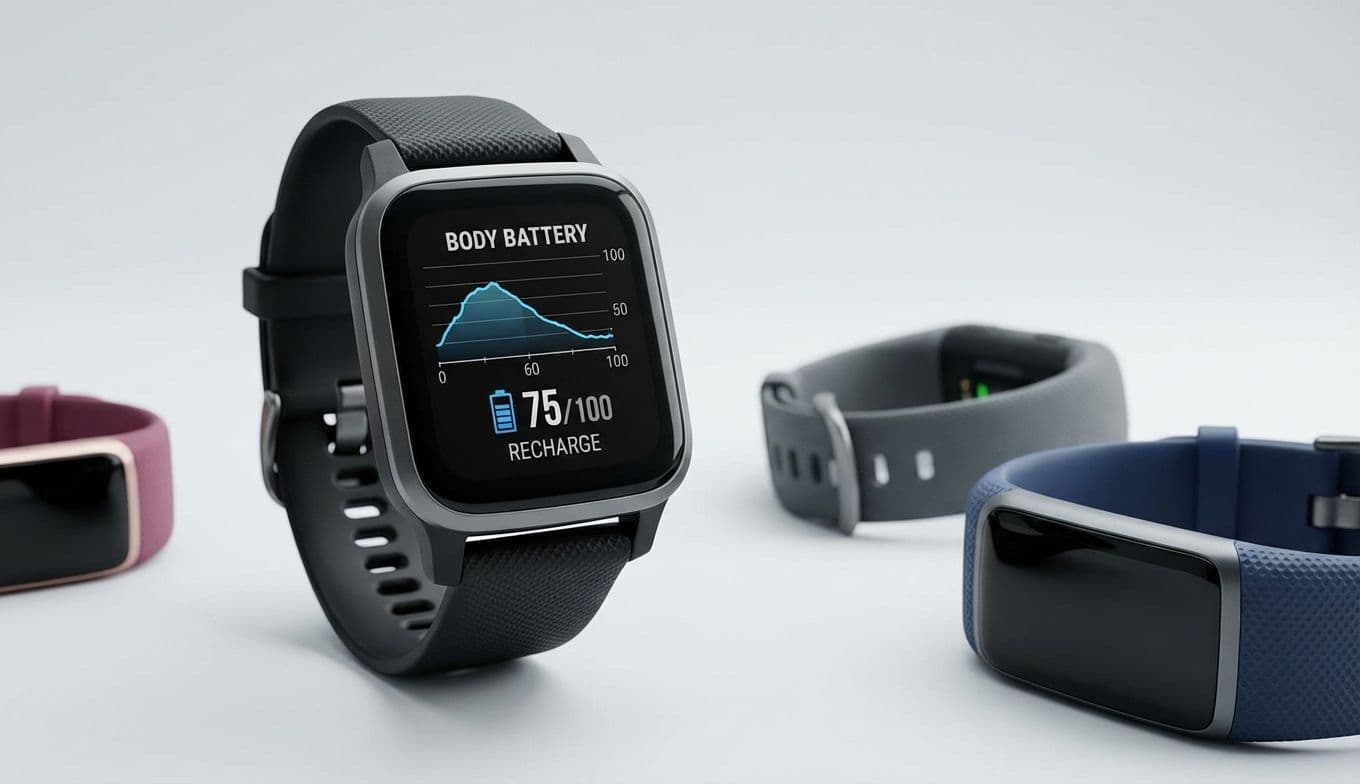
Garmin’s Body Battery is perhaps the most beloved tool in this space. It uses a combination of HRV, sleep, and activity to give you a score from 1 to 100 representing your remaining energy. For a healthy person, a Body Battery of 50 means they’ve had a busy morning. For someone with chronic fatigue, seeing that number hit 20 by noon is a concrete, data-backed validation that they need to stop and rest. It takes the guesswork—and the guilt—out of self-care.

Similarly, the Oura Ring offers a Readiness Score. Because the Oura is a ring rather than a watch, it’s often more accurate at tracking sleep and recovery metrics without the bulk of a wrist-based device. When your Readiness Score is low, the app explicitly advises you to take it easy. For a person whose body is constantly sending confusing signals, having an objective "second opinion" from a piece of tech can be incredibly grounding.

Screen Fatigue and the Power of Low-Maintenance Tech

There is a hidden hurdle in health tech that rarely gets discussed: screen fatigue. When you are already dealing with brain fog or sensory overload, the last thing you want is a bright OLED screen on your wrist buzzing with emails, news alerts, and "move" reminders.

This is why screenless trackers like Whoop and the Oura Ring have become favorites for those with chronic conditions. Whoop, in particular, focuses entirely on the relationship between "Strain" and "Recovery." There is no watch face to distract you, just a low-profile strap that collects high-fidelity data. It allows you to stay informed about your health without the constant digital noise of a smartwatch.

Then there is the issue of physical maintenance. For someone managing severe fatigue, the simple act of charging a device every night can feel like an impossible chore. This is where battery life becomes a crucial accessibility feature, not just a convenience. Devices like the Garmin Lily 2 or the Oura Ring can last nearly a week, while higher-end Garmins can go for fourteen days or more. If a gift-giver is looking to support a loved one, prioritizing a 7+ day battery life ensures the device remains a tool rather than a burden.

The Takeaway: Reclaiming Control in an Unpredictable World

Living with a chronic illness often feels like being a passenger in a car with no brakes and a foggy windshield. You never quite know when you’re going to hit a wall.

Fitness trackers—when used as health monitors rather than workout coaches—provide the windshield. They don't cure the illness, but they provide the visibility needed to navigate it. They offer data that can be exported and shown to doctors who might otherwise dismiss subjective symptoms. They offer validation when you feel "lazy" but your heart rate is screaming that you’re overexerted.

If you are considering a tracker for yourself or as a gift for someone navigating a health journey, remember that the "best" device isn't the one with the most apps. It’s the one that provides the most accurate picture of recovery and the longest battery life to ensure consistent monitoring.

It is about moving from a state of constant reaction to a state of informed management. It is about understanding your body’s unique language and using that knowledge to live a life that is as full and stable as possible. In the end, the most powerful thing a piece of technology can give someone with a chronic illness isn't a step count—it’s a sense of agency.