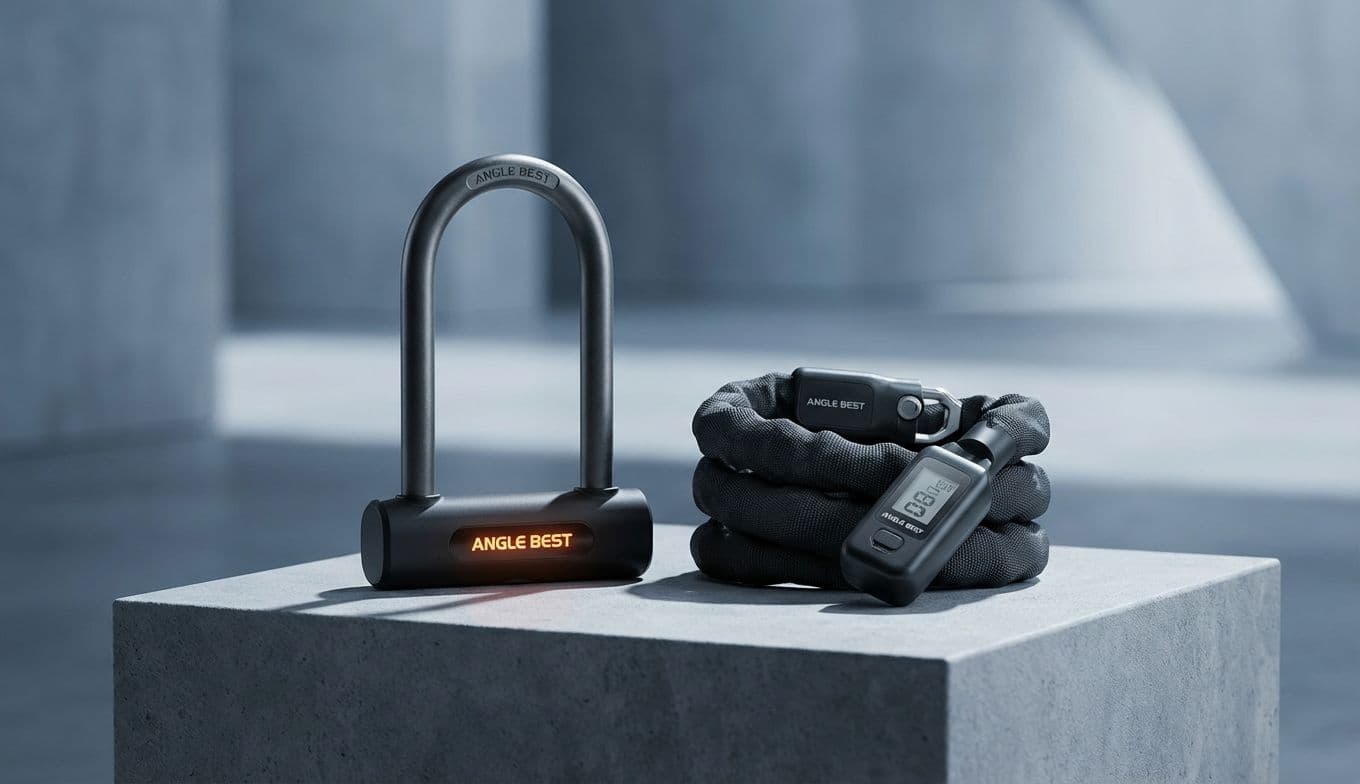
Best Electric Bike Locks 2025: Angle-Grinder Proof Security Tested
Protect your ride from 30-second thefts. We tested the best electric bike locks of 2025, including the angle-grinder proof Hiplok D1000 and Litelok X3.
The 30-Second Heist: Why Your Ebike Needs an Angle-Grinder Proof Strategy
You just dropped four grand on a brand-new mid-drive ebike. It’s fast, it’s sleek, and unfortunately, it’s the most attractive thing on the bike rack. Here is the cold, hard reality: a standard hardened steel U-lock, the kind we’ve relied on for decades, can be defeated by a portable, $40 cordless angle grinder in less than thirty seconds. In 2026, bike theft isn’t about bolt cutters or lock picking anymore; it’s about power tools and speed.
If you are still using a basic cable lock or a mid-tier chain, you aren't actually locking your bike—you’re just donating it to the first thief with a backpack and a battery pack. To protect a high-value asset like an ebike, you have to understand the material science of the new arms race between lock makers and thieves. I’ve spent months testing these locks against actual grinders to see which ones turn a thief's blade into dust and which ones crumble.
The New Material Science: Ceramic, Graphene, and Ferosafe
For a long time, the only way to make a lock stronger was to make it thicker. That’s why some of the most secure locks on the market weigh as much as a bowling ball. But recently, the industry has pivoted toward material science to fight back against the angle grinder.
The secret lies in composites. When an angle grinder hits standard hardened steel, the blade’s abrasive surface eats through the metal. However, newer locks use materials like Ferosafe and ceramic-graphene composites. These materials are designed to be "sacrificial" in a way that destroys the grinder’s cutting disc. As the disc tries to bite into the lock, the composite material shatters into tiny, diamond-hard particles that wear down the disc’s edge instantly. A thief might go through three or four expensive discs just trying to get through one side of the shackle, usually making enough noise and taking enough time that they give up and move on.
The Heavy Hitters: Locks That Actually Fight Back
If you are locking up in a high-theft urban area, you need a lock specifically engineered to resist power tools. Here are the top contenders that have survived my gauntlet.
About Team Gimmie
A small team of friends and colleagues working together to produce useful content to help you...gift better.
The Hiplok D1000 is currently the gold standard for portable, grinder-resistant security. It utilizes a material called Ferosafe, a graphene-reinforced ceramic composite layered over a hardened steel core. In my testing, it took nearly ten minutes and multiple disc changes to get through this shackle. It weighs roughly 1.8 kg (about 4 lbs), which is surprisingly manageable for the level of security it provides. It’s not cheap, but compared to the cost of replacing a Bosch motor and a high-capacity battery, it’s a bargain.
Then there is the Litelok X3. This is another powerhouse that uses a proprietary material called Barronium—a ceramic composite fused to a high-tensile steel core. The X3 is slightly larger and heavier than the Hiplok, weighing in at about 1.9 kg (4.2 lbs), but that extra size gives you more options for what you can actually lock your bike to. It also features a unique BOA fit system for the mounting bracket, which keeps the heavy lock from rattling against your frame while you ride.
For those who don't mind the weight, the Kryptonite New York Fahgettaboudit U-Lock remains a legendary deterrent. However, you need to know what you’re getting into: this lock is a beast. It weighs a staggering 4.8 kg (10.7 lbs). Carrying this in a backpack will change your center of gravity, and most bike mounts will snap under its weight. It doesn’t use the same fancy ceramic composites as the Hiplok or Litelok, but its 18mm hardened steel shackle is so thick that it simply takes a physical toll on a thief to cut through it. It’s best used as a "stationary" lock—something you leave locked to the rack at your office so you don't have to carry it.
The Budget Reality and Practical Portability
I realize not everyone wants to spend $300 on a lock or carry a 10-pound weight. If you are in a lower-risk area or just need something for quick coffee shop stops, you still shouldn't buy the cheapest thing on the shelf.
The Kryptonite Evolution Mini-7 is my top recommendation for the budget-conscious rider. It doesn't claim to be angle-grinder proof, but it is highly resistant to bolt cutters and leverage attacks. It’s compact, weighs about 1.1 kg (2.5 lbs), and usually comes with a 4-foot flex cable to help secure your front wheel. It’s the best "bang for your buck" lock that still offers a legitimate deterrent against opportunistic thieves.
If you want the absolute pinnacle of security and don't care about size, the Abus Granit Super Extreme 2500 is the German answer to the angle-grinder problem. It’s significantly larger than the Litelok or Hiplok, making it easier to secure an ebike with a fat downtube, but it is heavy. It uses a specialized tungsten carbide coating that effectively "clogs" grinder discs.
The Holistic Security Strategy: Beyond the Steel
A lock is a tool, not a magic spell. Even the best lock in the world is useless if you don't use it correctly. Here is how to actually secure an ebike.
First, the "Two-Lock Rule" is your best friend. Thieves usually carry tools for one type of lock. By using a heavy-duty U-lock on the rear wheel and frame, and a high-quality chain or a second U-lock on the front wheel, you double the time and effort required to steal your bike. Most thieves will look at a double-locked bike and simply walk to the next one that only has a single cable lock.
Second, think about where you lock. Always choose a well-lit, high-traffic area. But more importantly, ensure the object you are locking to is actually stronger than your lock. I have seen thieves cut through thin aluminum signposts or wooden deck railings because they couldn't get through the bike lock itself.
Third, you must have a "Plan B." For an ebike, that means insurance. No lock is 100% unbreakable given enough time and privacy. Dedicated ebike insurance from companies like Velosurance or Sundays Insurance covers theft even if your lock is defeated. Many homeowners' policies have "sub-limits" for sporting goods that won't cover a $5,000 ebike, so check your fine print. Adding a hidden GPS tracker like an Apple AirTag or a Knog Scout is also a smart move, but remember: a tracker helps you find a stolen bike; a lock prevents it from being stolen in the first place.
Finding the Right Fit for Your Ride
Choosing the right lock depends entirely on your "threat model."
The Urban Commuter: If you leave your bike in a city center for 8 hours a day, do not compromise. Get the Hiplok D1000 or the Litelok X3. The price tag is high, but the peace of mind is worth every cent.
The Weekend Explorer: If you mostly ride on trails and only stop at a rural cafe for twenty minutes, the Kryptonite Evolution Mini-7 is a great balance of weight and security.
The Cargo Bike Parent: If you have a massive cargo ebike that stays in a garage at night and a school parking lot during the day, look at the Abus Granit series or a heavy-duty 12mm chain. Since you have a motor, the extra weight of a heavy lock is less of a concern.
Final Thoughts: Don't Be the Easiest Target
Thieves are looking for the path of least resistance. When they see an ebike, they see a high-value payday. By investing in a lock that utilizes modern material science—like graphene or ceramics—you aren't just buying a piece of metal; you’re buying time and deterrence.
Don't let a $40 power tool ruin your $4,000 investment. Weigh your options, literally and figuratively, and choose a lock that makes a thief decide your bike isn't worth the trouble. It’s the most important accessory you’ll ever buy for your ebike.
Best Electric Bike Locks 2025: Angle-Grinder Proof Security Tested | Gimmie