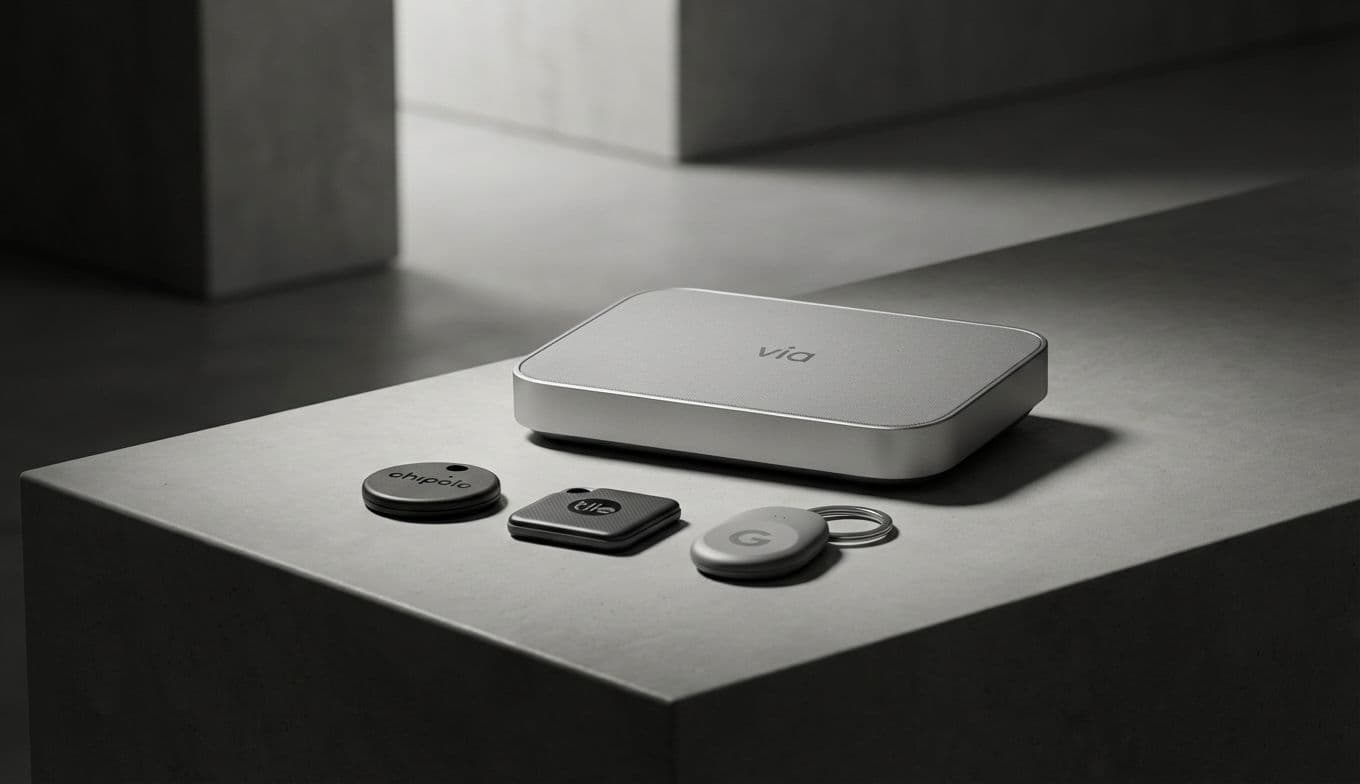
Best Bluetooth Trackers (2026): AirTag, Moto Tag & More
Stop losing your keys. Discover the best Bluetooth trackers of 2026 for iPhone and Android, including AirTag, SmartTag2, and Moto Tag. Find your match!
The Panic of the Missing Keys: Finding the Right Bluetooth Tracker for Your Life
We have all been there. You are already five minutes late, the coffee is cooling in your travel mug, and your car keys have seemingly vanished into a parallel dimension. You check the counter, the jacket pockets, and the "spot" where they are supposed to be, but come up empty. For those of us who live in a state of perpetual search-and-rescue for our own belongings, Bluetooth trackers have evolved from niche gadgets into absolute essentials.
The market has shifted significantly over the last year. It is no longer just about a little plastic tag that beeps. We now have massive, global networks that can find a lost suitcase in a different time zone and sophisticated sensors that can lead you to a remote hidden deep within the couch cushions. Perhaps most importantly, the industry has finally grown up regarding safety. Apple and Google have implemented a shared industry standard for unwanted tracking alerts, meaning your phone—regardless of whether it is an iPhone or an Android—will now proactively warn you if an unknown tracker is traveling with you.
I have spent months living with these trackers, attaching them to everything from my dog’s collar to my gym bag. Here is the breakdown of which trackers actually earn their keep in 2026.
The Apple Standard: Why AirTag Still Wins for iPhone Users
If you carry an iPhone, the second-generation Apple AirTag remains the most logical choice. It is not just about the hardware; it is about the sheer scale of the Find My network. With hundreds of millions of Apple devices acting as a silent, anonymous search party, your chances of recovering a lost item in a crowded city are higher here than anywhere else.
The standout feature is still Precision Finding. Thanks to the upgraded second-gen ultra-wideband (UWB) chip, your iPhone can act like a digital divining rod, showing you an arrow and the exact distance to your keys once you are within range. It is the difference between hearing a faint beep from under a pile of laundry and being told exactly which shirt is covering your wallet.
Fast Facts: Apple AirTag (2nd Gen)
Network: Apple Find My
Battery: CR2032 (User-replaceable, approx. 1 year)
Special Features: Ultra-wideband (UWB) Precision Finding, IP67 water resistance
Price: $29 (plus the cost of a holder)
About Team Gimmie
A small team of friends and colleagues working together to produce useful content to help you...gift better.
The downside? Apple still refuses to put a hole in the device itself. You will almost certainly need to buy a keychain or a loop to actually use it, which effectively turns a $29 tracker into a $40 investment. However, for the integration and the peace of mind of the world’s largest tracking network, it is a tax most iPhone users are happy to pay.
The Galaxy Essential: Samsung SmartTag2
For the millions of people in the Samsung ecosystem, the SmartTag2 is a formidable rival to the AirTag. Samsung has leaned heavily into a rugged, practical design that includes a large, built-in metal reinforced keyring hole—no extra accessories required.
The SmartTag2 leverages the SmartThings Find network. While not quite as massive as Apple’s, it is incredibly dense, particularly in suburban and urban areas where Galaxy phones are everywhere. The "Compass View" is Samsung’s answer to Precision Finding, utilizing UWB to guide you directly to your item with on-screen cues. It also features a "Power Saving Mode" that can stretch the battery life to nearly two years if you are okay with losing some of the more advanced tracking features.
Fast Facts: Samsung SmartTag2
Network: Samsung SmartThings Find
Battery: CR2032 (User-replaceable, up to 500 days)
Special Features: UWB Compass View, built-in keyring, IP67 rating
Price: $29.99
The Moto Tag: The Android Answer to Precision Tracking
For a long time, Android users who did not own a Samsung phone were left behind in the UWB revolution. That changed with the Motorola Moto Tag. This is the first major tracker built specifically for Google’s Find Hub network that includes ultra-wideband support.
If you own a modern Android phone with a UWB chip—like a Pixel 8 Pro or newer—the Moto Tag offers the same "hot and cold" directional finding that AirTag users have enjoyed for years. It is designed to fit into most accessories made for AirTags, which is a clever move by Motorola to ensure users have access to thousands of third-party cases and mounts from day one. In my testing, Google’s Find Hub is rapidly catching up to Apple’s Find My in terms of density, making this the best "all-around" choice for the non-Samsung Android crowd.
Fast Facts: Moto Tag
Network: Google Find Hub
Battery: CR2032 (User-replaceable, approx. 1 year)
Special Features: UWB support, dedicated phone-finder button, IP67 rating
Price: $29.99
The Versatile Workhorse: Pebblebee Clip 5
If you are someone who switches between phones or lives in a household where one person has a Pixel and another has an iPhone, the Pebblebee Clip 5 is your best bet. It is one of the few high-quality trackers that supports both Apple’s Find My and Google’s Find Hub (though you pick one during setup).
What truly sets the Pebblebee apart is the battery. While almost everyone else uses disposable coin cells, the Clip 5 is rechargeable via USB-C. A single charge lasts about a year. It also features a very bright LED light strip that flashes when you ring the device, which is a lifesaver when you are looking for your keys in a dark car or at the bottom of a backpack. It lacks UWB, so you won't get the fancy arrow on your screen, but the 500-foot Bluetooth range and loud buzzer more than make up for it.
Fast Facts: Pebblebee Clip 5
Network: Apple Find My OR Google Find Hub
Battery: Rechargeable via USB-C (Up to 12 months per charge)
Special Features: Multi-network support, bright LED flash, 500-ft range
Price: $34.99
The Wallet Specialist: Pebblebee Card 5
Losing your keys is annoying; losing your wallet is a logistical nightmare. While you could try to wedge a coin-shaped tracker into a card slot, it usually results in an awkward bulge that ruins your wallet’s shape. The Pebblebee Card 5 is the thickness of about two credit cards and slides in unnoticed.
Like its sibling the Clip 5, the Card 5 is rechargeable, but this one supports Qi wireless charging. You just drop your wallet on a charging pad once every 18 months and you are good to go. It is impressively loud for something so thin, and it taps into the same massive Apple and Google networks to ensure your wallet can be found even if you left it at a restaurant across town.
Fast Facts: Pebblebee Card 5
Network: Apple Find My OR Google Find Hub
Battery: Wireless Rechargeable (Up to 18 months per charge)
Special Features: Ultra-slim 1.8mm design, IP66 water resistance
Price: $34.99
Final Thoughts: Which One Should You Buy?
The "best" tracker is no longer about who has the loudest beep; it is about which phone you have in your pocket.
If you use an iPhone: Stick with the AirTag. The integration is seamless and the network is unbeatable.
If you use a Samsung Galaxy: The SmartTag2 is the clear winner for its durability and long battery life.
If you use any other Android phone: The Moto Tag is the first to bring true precision tracking to the Google network.
If you hate buying batteries: The Pebblebee Clip 5 is the most sustainable and versatile option on the market.
Investing in a tracker is essentially buying yourself time and lowering your daily stress levels. In a world where we have enough to worry about, knowing exactly where your keys are hiding is a small but significant victory. Now, if only they made a tracker for my motivation on Monday mornings.
Best Bluetooth Trackers (2026): AirTag, Moto Tag & More | Gimmie