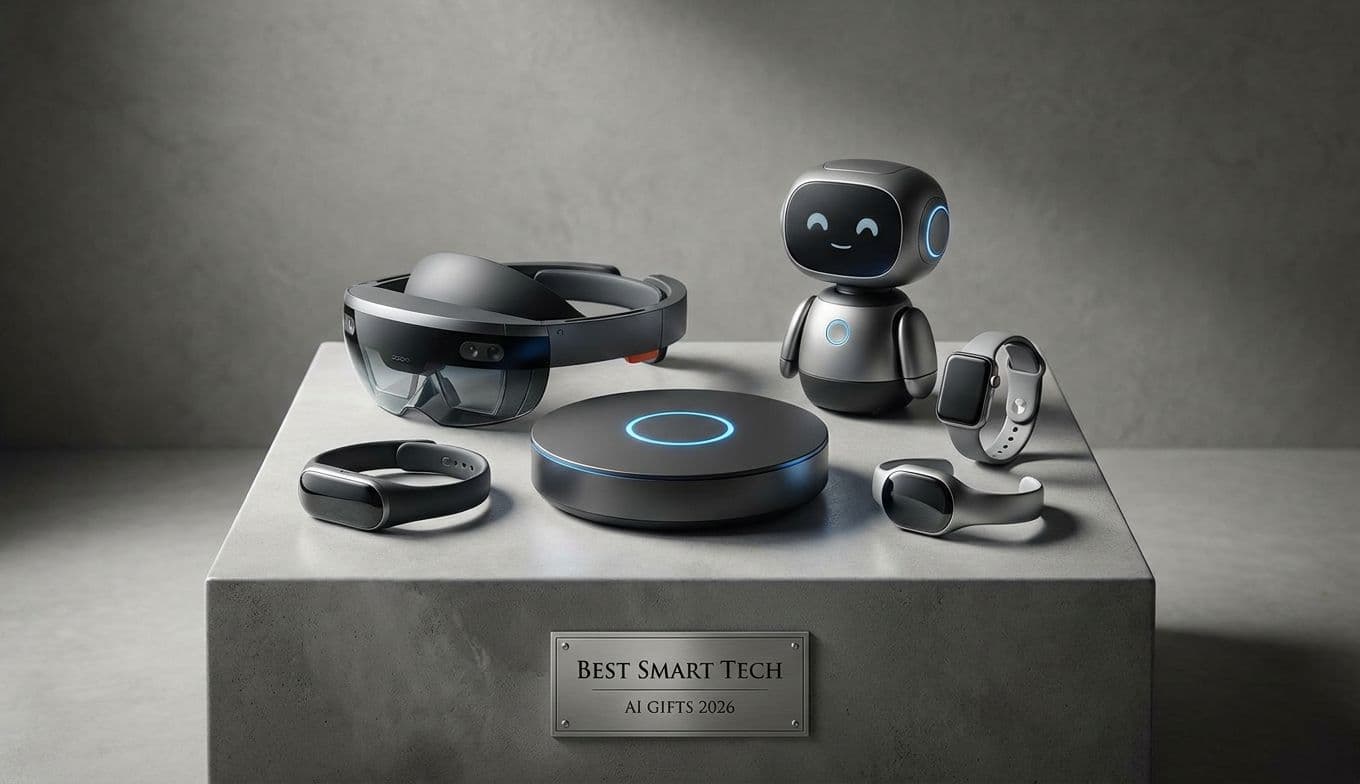
Best AI Gifts 2026: Smart Tech vs. The AI Bubble Hype
Team GimmieThe AI Bubble and Your Shopping Cart: A Guide to Smart Gifting
Let’s be honest: AI is currently the loudest guest at every party. It’s in our phones, our cars, and according to Senator Elizabeth Warren, it might be the thing that triggers the next global financial meltdown. Recently, Warren sounded the alarm, drawing direct parallels between the current AI gold rush and the subprime mortgage madness that led to the 2008 recession. When a high-ranking member of the Senate Armed Services and Banking committees starts comparing Silicon Valley to the pre-crash housing market, it’s worth paying attention.
But before you swear off technology and start buying everyone hand-knitted sweaters for their birthdays, we need to distinguish between the macro-economic noise and the gadgets actually worth your money. Warren’s concern is largely about the massive, debt-fueled investments pouring into companies that are burning cash to build "the future." For us, the consumers looking for a thoughtful present, the stakes are different. We aren’t venture capitalists; we just want a pair of headphones that actually cancels out the sound of a crying baby on a plane.
The reality of 2026 is that we are living in a bifurcated AI world. On one side, you have the speculative bubble Warren is worried about—startups valued at billions with no clear path to profit. On the other side, you have practical, integrated technology that makes life marginally easier. The trick to being a great gift-giver this year is knowing how to spot the difference.
Beyond the Hype: The Rise of Edge AI
One of the biggest shifts we’ve seen in the last year is the move toward On-Device Processing, often called Edge AI. In the early days of the AI boom, every smart device sent your data—your voice, your habits, your heartbeat—up to a cloud server to be analyzed. This was slow, required a constant internet connection, and was a privacy nightmare.
If you are looking for an AI-powered gift in 2026, the gold standard is now Edge AI. This means the artificial intelligence lives on a dedicated chip inside the device itself. Why does this matter for your gift recipient? First, it’s faster. Second, it’s more secure. When the AI doesn’t have to "call home" to a server in Virginia to process a command, the data stays on the device.

When you’re browsing, look for products that brag about local processing or neural engine integration. This is the difference between a gift that feels like a surveillance tool and one that feels like a helpful assistant. It’s the ultimate "peace of mind" feature for the privacy-conscious friend on your list.
The Actually Smart Litmus Test
We’ve reached a point where companies are slapping an AI label on everything from toothbrushes to toasters just to justify a thirty percent price hike. As a gift-giver, your job is to be the skeptic. Before you hit "buy," ask yourself one question: Does the AI solve a problem that existed before the product was made?
Take the smart home category. An AI-driven climate control system that uses local sensors to balance the temperature based on room occupancy is a great gift. It saves money and increases comfort. Conversely, a Wi-Fi-connected coffee maker that uses "AI algorithms" to suggest what time you should drink your espresso is usually just a regular coffee maker with a fancy app you’ll never use.
In 2026, the best AI gifts are the ones where the technology is invisible. You shouldn’t have to navigate a complex menu to "start the AI." The device should just work better because the technology is there. If the product description focuses more on the buzzwords than the actual benefit, it’s probably a speculative gimmick that belongs in Warren’s "bubble" category.
Specific Picks for the 2026 Gift Season
If you want to give a tech-forward gift that actually delivers on its promises, skip the generic smart mugs and look toward these specific, high-authority models that represent the best of current innovation.
The New Standard in Audio: Sony WH-1000XM7 Sony has remained the king of noise cancellation by leaning heavily into dedicated AI processors. The XM7 model uses dual-chip on-device processing to analyze ambient noise 700 times per second. It doesn't just block out steady drones; it uses predictive modeling to anticipate and cancel out sudden sharp noises like a car horn or a siren. It’s a gift that offers literal peace and quiet, powered by tech that doesn't need a cloud login to function.
Health Intelligence: The Oura Ring Gen 4 Wearables have moved beyond step counting. The Oura Ring Gen 4 uses local AI to synthesize body temperature, heart rate variability, and sleep cycles into a "Readiness Score." What makes this a great 2026 gift is the refined "Symptom Radar" feature, which can often detect the onset of a cold or flu days before the wearer feels any symptoms. It’s practical, subtle, and the AI serves a very clear purpose: proactive health management.
Creative Tools for the Next Generation: The ReMarkable 3 Paper Tablet For the student or the creative professional, the ReMarkable 3 has integrated local AI that can transform messy, handwritten notes into structured, searchable text and summaries without ever needing to sync to a server. It maintains the feel of paper but adds the organizational power of a digital assistant. It’s a perfect example of AI being used to enhance a traditional experience rather than replacing it with something more complicated.
A Final Reality Check
Senator Warren might be right—the massive financial valuations of AI companies might eventually come crashing down to earth. Markets go through cycles, and the current level of spending is likely unsustainable for many of the big players in Silicon Valley.
However, a market correction doesn't mean the technology itself is a fraud. Just as the dot-com bubble of 2000 didn't mean the internet was a fad, an AI bubble doesn't mean that noise-canceling headphones or smart health monitors are going to stop working.
When you’re picking out a gift, ignore the stock market reports and the congressional hearings. Focus on the person you’re buying for. If the AI in a product makes their life simpler, their home quieter, or their health easier to track, then it’s a good gift. If the product feels like it was designed by a marketing department trying to cash in on a trend, leave it on the shelf. The best gifts are the ones that are built to last, regardless of what’s happening on Wall Street.