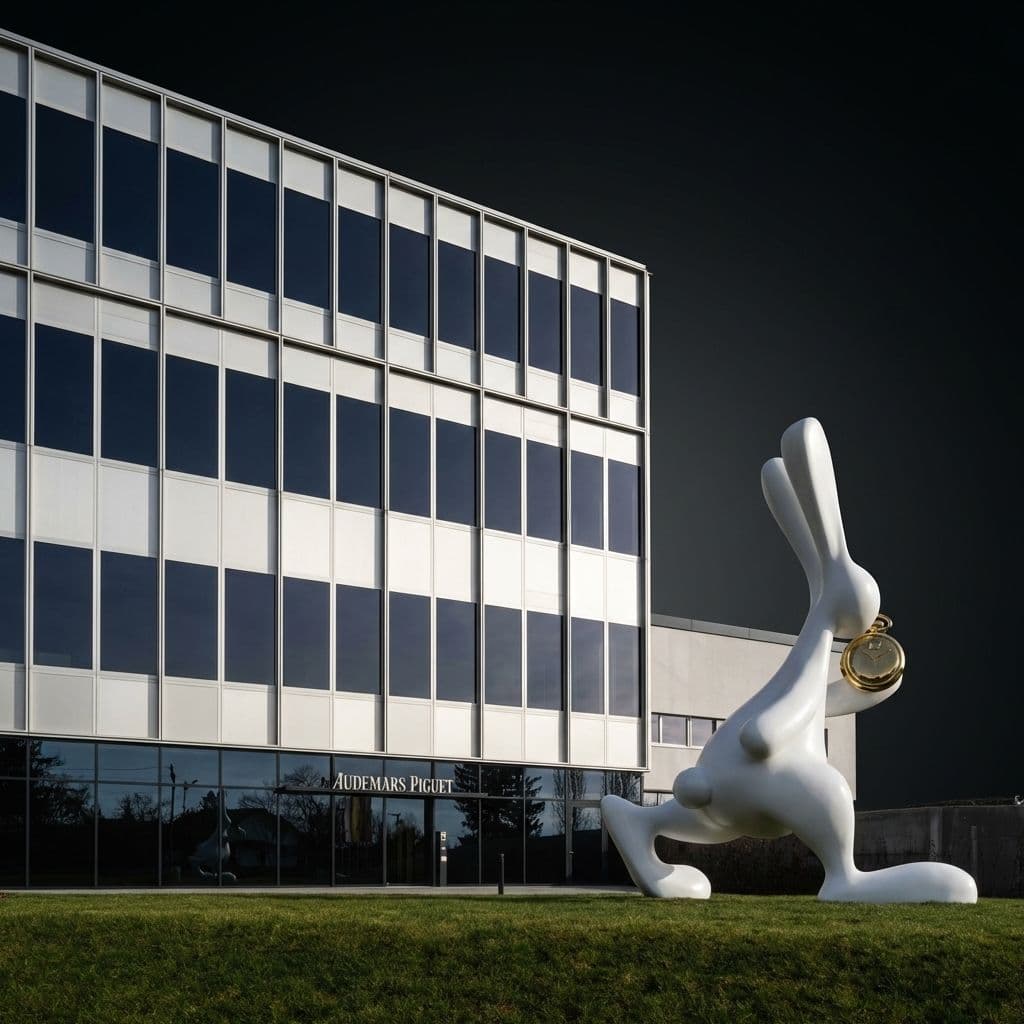
Audemars Piguet Inaugurates New Meyrin Manufacturing Facility

Audemars Piguet Inaugurates New Meyrin Manufacturing Facility

Team GimmieTeam Gimmie
Published on March 21, 2026

THE WEIGHT OF A LEGACY: WHY THE BOX MATTERS

When you hand over a watch box to a daughter graduating law school or a spouse celebrating a quarter-century of marriage, you aren't just giving them a way to tell time. In the age of the smartphone, a mechanical watch is a redundant object by design. You are giving them a legacy. You are handing over a piece of engineering that is intended to outlive the person wearing it.

For the person giving that gift, the stakes are high. You want to know that the craftsmanship justifies the investment and that the brand behind the name is obsessed with the right things. This is why the recent news out of Switzerland regarding Audemars Piguet's new Meyrin facility actually matters to you. While the corporate headlines focus on square footage and construction timelines, the real story is about what this building does for the watch on your wrist—and the one you plan to pass down.

Audemars Piguet (AP) has officially inaugurated its massive new manufacturing hub in Meyrin, Geneva. It is a move that signals a shift from simply being a legendary watchmaker to becoming a completely self-reliant powerhouse of innovation. For the collector and the gift-giver, this facility is essentially a guarantee of future-proof quality.

THE ARCHITECTURE OF COMFORT: BEYOND THE MOVEMENT

In the world of luxury watches, most people spend their time talking about the movement—the gears and springs inside the case. But when you actually wear a watch every day, the movement isn't what you feel. You feel the bracelet. You feel the weight of the case. You feel the way the metal catches the light or, unfortunately, the way a poorly designed link can pinch the skin.

By centralizing the production of cases and bracelets at the new Meyrin site, AP has brought the most tactile parts of the watch under its direct supervision. In the past, even the most prestigious brands often relied on outside specialists for these components. By bringing it all in-house, AP is practicing what the industry calls vertical integration, but what you should think of as total creative control.

What does this mean for a Royal Oak you buy in 2026? It means the tolerances are tighter than ever. It means the hand-finished polishing on those iconic octagonal edges is scrutinized by the same people who designed the watch. When a brand controls the forge and the finishing bench, they can ensure that a gold bracelet feels more like silk than metal. That level of comfort is the difference between a watch that sits in a safe and one that is worn every single day for thirty years.

THE LABORATORY OF FOREVER: INNOVATING FOR GENERATIONS

The centerpiece of the Meyrin facility isn't just a factory floor; it's the new technologies hub. In many corporate settings, a tech hub is a marketing buzzword. At AP, it is a materials laboratory.

If you are buying a legacy timepiece, your biggest enemy is time itself—specifically, the wear and tear that comes with it. The work being done in Meyrin is focused on making watches that are more durable without losing their soul. We are seeing the fruits of this research in the development of new alloys, like the recently debuted Sand Gold, and the advanced use of ceramics.

These materials aren't just for looks. They are engineered to be incredibly scratch-resistant and to maintain their luster for decades. When you gift an AP today, the innovations coming out of this new facility ensure that the watch will look nearly as pristine when it reaches the next generation as it does today. The tech hub is effectively working to solve the problem of aging, ensuring that the milestone you are celebrating in 2026 remains a visible, beautiful memory in 2056.

THE SECURITY OF TOTAL CONTROL

There is a quiet confidence that comes with buying from a brand that owns its entire process. When a company outsources parts, they are at the mercy of someone else's quality control and someone else's timeline. By investing so heavily in the Meyrin complex, Audemars Piguet is telling its customers that they aren't going anywhere and they aren't cutting corners.

For a gift-giver, this provides a layer of security. You aren't just buying a luxury product; you are buying into an ecosystem. A brand that invests hundreds of millions into a specialized manufacturing hub is a brand that is prepared to service, maintain, and stand behind its products for the next century. It’s the difference between buying a piece of fashion and investing in a piece of horological history.

The Meyrin facility also allows AP to experiment in ways that smaller or less integrated brands simply can't. They can prototype new bracelet designs that offer better ergonomics for smaller wrists or develop clasps that are more secure yet easier to operate. These small, human-centric improvements are the direct result of having the engineers and the craftsmen working in the same building.

A GIFT THAT DEFIES THE CALENDAR

The opening of a new factory usually isn't cause for celebration for anyone outside of a boardroom. But Audemars Piguet's Meyrin facility is different because it directly impacts the physical reality of the watch. It represents a commitment to the "touch" of the timepiece—the way it wears, the way it lasts, and the way it represents the brand's values.

When you choose an Audemars Piguet as a gift this year, you are choosing a product of the most advanced manufacturing environment in the watch world. You are giving a gift that has been obsessed over from the initial smelting of the metal to the final hand-polished link.

In a world of planned obsolescence and fast fashion, there is something deeply meaningful about a gift that is built to last forever. Thanks to the innovations and the rigorous standards of the new Meyrin facility, an AP is more than just a watch. It is a promise kept, a milestone marked, and a legacy secured for the generations to follow.