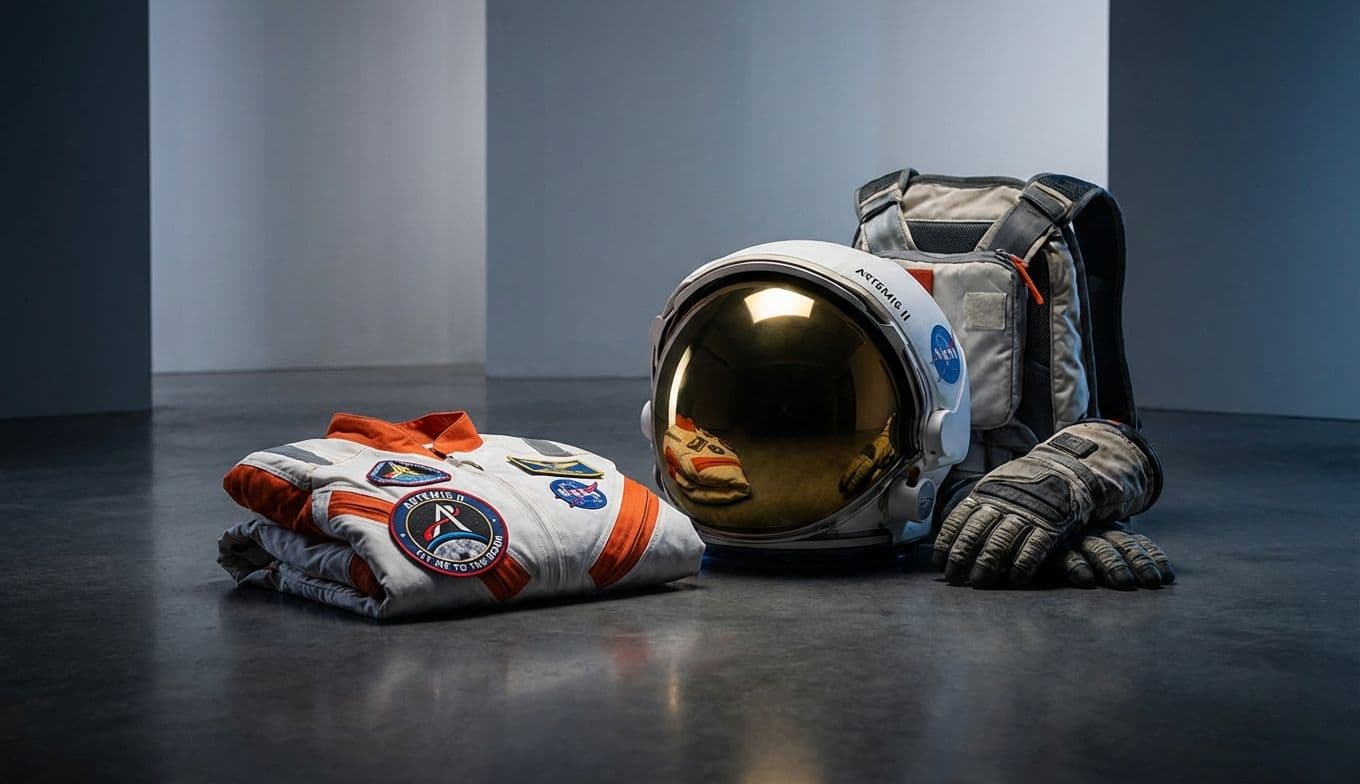
Artemis II Mission Gear: Telescopes, LEGO & Space Tech
Team GimmieTHE ARTEMIS ERA IS HERE: HOW TO OWN A PIECE OF THE NEW SPACE AGE
As you read this on April 7, 2026, four human beings are currently drifting 252,756 miles away from Earth. They are aboard the Orion capsule, looking back at our blue marble from a distance no human has ever reached before. The Artemis II mission isn't just a headline or a line item in a government budget anymore—it is a live, record-breaking reality unfolding across our screens on Netflix and YouTube.
For the first time in over fifty years, we aren't just looking at the Moon as a distant lantern; we are looking at it as a destination. But while Commander Reid Wiseman and his crew handle the G-forces and the cosmic radiation, what does this mean for those of us back on the ground? Beyond the scientific data, Artemis has ignited a new consumer revolution. We are seeing a shift from "space-themed" kitsch to high-performance gear and immersive tech that lets us participate in this journey.
Whether you are looking to commemorate this specific week in history or want to gear up like a modern explorer, the options have evolved far beyond basic t-shirts. Here is how to bring the Artemis mission home while the crew is still making their way back to us.
THE ULTIMATE LUNAR WATCH PARTY: OPTICS AND AMBIANCE
The Artemis II mission is arguably the first true "social media" moon mission. With 4K livestreams beamed directly to our living rooms, the grainy black-and-white footage of the 1960s is a thing of the past. To truly appreciate the scale of what is happening right now, you need more than a smartphone screen.
If you want to track the Moon while the Orion capsule is orbiting its far side, generic "high-quality telescopes" won't cut it for the modern enthusiast. For a seamless experience, the Unistellar Odyssey Smart Telescope is the current gold standard. It removes the frustration of manual alignment, using autonomous field detection to find the Moon in seconds, and it syncs directly to your tablet so a whole room of people can see the lunar craters in vivid detail. For those who prefer a more traditional, tactile experience, the Celestron NexStar 8SE remains the king of the backyard. Its massive light-gathering ability makes the lunar surface look close enough to touch.

If you’re hosting a viewing party for the splashdown later this week, ditch the TV for a Samsung The Freestyle Gen 2 projector. You can point it at the ceiling, sprawl out on the floor, and feel like you’re looking out of Orion’s docking hatch. Pair this with a few bags of Mountain House Freeze-Dried Neapolitan Ice Cream—the same brand that has actually fueled NASA missions—to give the kids (and the adults) a literal taste of the astronaut lifestyle.
BUILDING THE MISSION: HANDS-ON HISTORY
There is something unique about building a piece of history while that history is still in flight. The demand for commemorative gear has spiked since the April 2nd launch, and one item stands above the rest for both collectors and hobbyists: the LEGO Icons Artemis Space Launch System.
This isn't a simple toy; it’s a 3,601-piece architectural marvel that includes the mobile launch tower and the SLS rocket. Building it provides a genuine appreciation for the complexity of the hardware currently sitting in lunar orbit. Because this mission is active, these sets are becoming the "must-have" items of 2026, much like the Saturn V sets were for the Apollo generation.
For those who want a wearable connection to the mission, the focus has shifted toward brands with actual flight heritage. While the Omega Speedmaster "Moonwatch" remains the ultimate (if expensive) investment piece, brands like Boeing and Lockheed Martin have released limited-edition mission patches and apparel that use the same technical fabrics found in the crew’s flight suits. Look for "Artemis II Launch Team" gear that features "Outlast" technology—a material originally developed for NASA to buffer against temperature swings, now found in high-end jackets and base layers.
MISSION-GRADE GEAR FOR THE EARTHBOUND EXPLORER
The Artemis program is forcing NASA to solve the "Lunar Night" problem—surviving temperatures that drop to minus 208 degrees Fahrenheit. This obsession with thermal management and durability is trickling down to consumer outdoor gear in a big way. We’re moving past "sturdy" and into "over-engineered."
If you’re looking for a gift that embodies the ruggedness of the Orion capsule, look at OROS. They utilize Solarcore, a proprietary insulation integrated with NASA-inspired aerogel—the same stuff used to insulate Mars rovers. Their Orion Parka is literally named after the mission’s capsule and offers a thickness-to-warmth ratio that traditional down can't touch.
The same philosophy applies to transit. The GORUCK GR1 rucksack, built from Special Forces-grade Cordura, has become the go-to for those who value "mission-ready" durability. It’s the kind of gear that feels at home in the trunk of a rover, designed to withstand abrasion and stress that would shred a standard backpack. When we talk about "Artemis-inspired" tech, we are talking about products that value utility over aesthetic fluff. It’s about owning things that won't fail when the environment gets hostile.
CULTIVATING THE NEXT GENERATION OF DREAMERS
As we watch the Artemis II crew break distance records today, it’s easy to forget that the people who will actually walk on Mars in the 2040s are likely in elementary school right now. The gifts we give today are the seeds for those future careers.
Instead of a simple book of facts, look for interactive experiences. The KiwiCo Astronaut Starter Kit offers hands-on physics lessons that explain how a 5.75-million-pound rocket actually leaves the atmosphere. For a more permanent fixture in a future explorer’s room, the Smithsonian Optics 15x-150x Refractor Telescope offers a legitimate scientific tool at an entry-level price point, ensuring that the wonder of the Artemis mission doesn't fade once the capsule splashes down in the Pacific.
We are also seeing a rise in "Space-Centric" digital literacy. Subscriptions to platforms like Brilliant.org, which offers courses on Rocket Science and Orbital Mechanics, have seen a massive uptick this month. These aren't just gifts; they are pathways.
A MOMENT IN TIME
The Artemis II mission is more than a technical milestone; it is a cultural reset. For the last several decades, space was something that happened in the past—something our parents and grandparents watched on grainy tubes. Today, it is something we are living through in real-time, in high definition.
The products and gifts emerging from this era reflect that shift. They are more technical, more durable, and more connected to the actual science of exploration than ever before. Whether it’s a smart telescope that maps the stars for you or a jacket insulated with Martian-grade aerogel, we now have the ability to weave the spirit of discovery into our daily lives.
As the Orion capsule begins its journey back to Earth over the coming days, take a moment to look up. We are no longer a planet that just dreams of the stars; we are a planet that is actively reclaiming its place among them. There has never been a better time to be a space fan, and there has never been a better time to bring a piece of that frontier home.