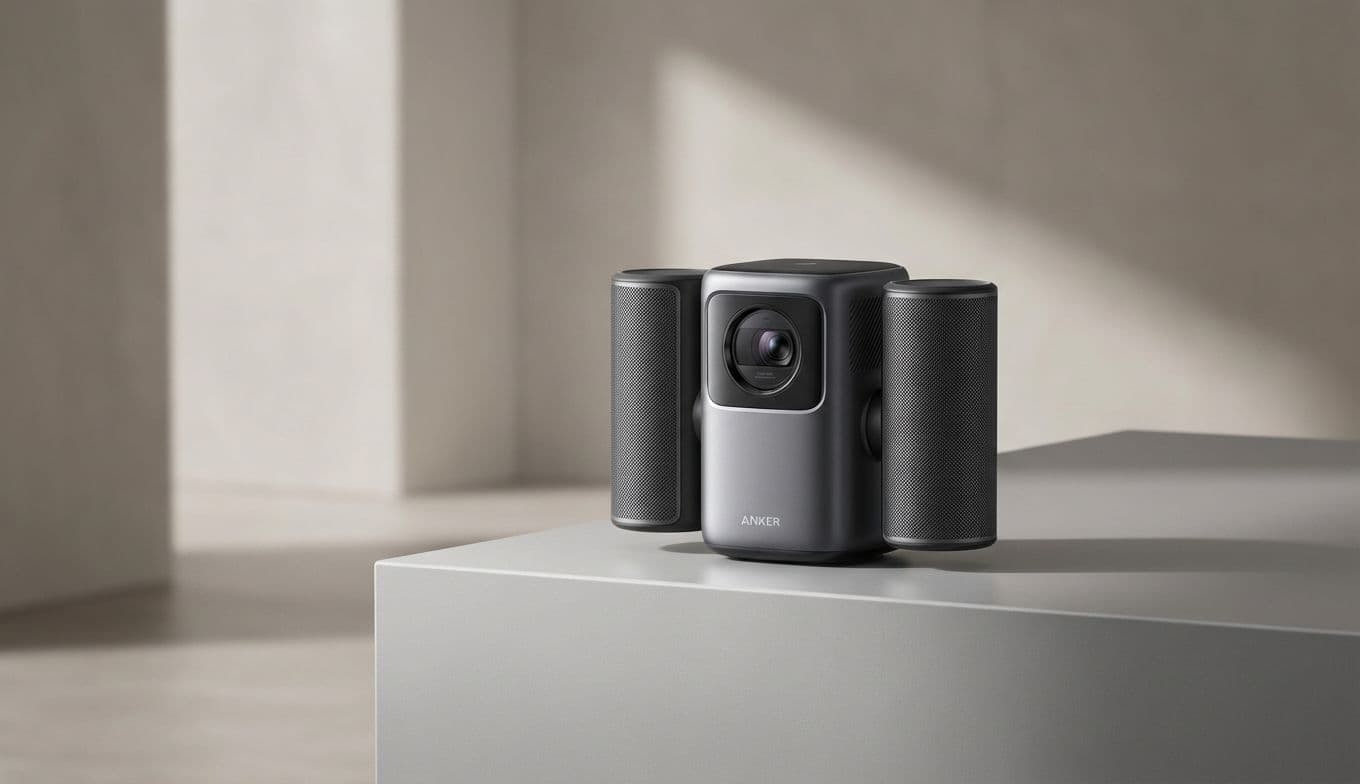
Anker Nebula P1 Review: The Best Portable Projector for Sound?

Anker Nebula P1 Review: The Best Portable Projector for Sound?

Team GimmieTeam Gimmie
Published on April 5, 2026

The Sound-First Revolution: Why the Anker Nebula P1 Redefines Portable Cinema

We have a chronic problem in the world of portable projectors: they look great in lifestyle photos but sound like a bumblebee in a tin can. For years, the trade-off has been simple. If you want a device that fits in your backpack, you have to accept audio that makes blockbuster movies sound like AM radio.

The Anker Nebula P1 is here to break that cycle, though it demands a significant sacrifice in exchange. This isn't just another black box with a lens; it is a specialized audio-visual tool that prioritizes the "audio" half of that equation more than any competitor I have tested. If you are tired of squinting with your ears while watching a 100-inch screen, the P1 might be the specific solution you have been hunting for.

The Quick Verdict

Pros:

  • Industry-leading audio with true stereo separation.
  • Detachable magnetic speakers provide a genuine soundstage.
  • Google TV integration is seamless and fast.
  • Solid build quality that feels premium.

Cons:

  • No internal battery; requires a constant power source.
  • Moderate brightness (best suited for dark rooms).
  • Bulkier than true "pocket" projectors.
  • High price point at $799.

The Secret Sauce: Detachable Audio

The standout feature of the Nebula P1—and the reason it justifies its existence—is the pair of detachable speakers. Most portable projectors, like the TCL PlayCube or Anker’s own Capsule series, cram a single driver into the chassis. No matter how much processing you apply, that sound is coming from a single point in space. It is mono, narrow, and flat.

The P1 changes the game with a clever magnetic docking system. The speakers sit flush against the sides of the projector for transport, but you can pull them away to create a physical soundstage. They remain tethered by integrated cables that offer enough slack to place the speakers about three to five feet apart.

When you sit in the center of that audio triangle, the experience is transformative. You actually hear a car drive from the left side of the screen to the right. Dialogue feels grounded. For anyone who has spent time in a van or a small camper, where space is tight but atmosphere is everything, this separation creates an immersion that a single-unit speaker simply cannot match. It is the difference between watching a movie and feeling like you are inside of it.

The Portability Paradox

Here is where we need to be honest about the word "portable." In the tech world, that usually implies you can use it in the middle of a park without a cord in sight. That is not the Nebula P1.

There is no internal battery here. To use the P1, you must be plugged into a wall outlet or a beefy portable power station. This design choice allowed Anker to push more power to the speakers and the lamp, but it changes the use case entirely.

I’ve been testing the P1 while traveling through the European countryside, and it fits a very specific niche. It is perfect for the "glamper" or the RV traveler who has a power bank or a shore-power hookup. It is brilliant for a backyard movie night where you can run an extension cord to the patio. However, if you are looking for something to pull out of a bag during a sunset hike to project onto a rock face, this isn't it. You are trading the freedom of a battery for the fidelity of a high-end sound system.

Performance: Brightness and Visuals

On the visual front, the P1 is a capable performer, though it doesn’t quite hit the heights of its audio. It delivers a 1080p image that is sharp and color-accurate enough for most casual viewers. However, with its moderate lumen count, you really need a dark environment to make the image pop.

In the twilight hours of a campsite, the image is "decent." Once the sun fully sets, it becomes "great." It features Google TV natively, which is a massive upgrade over the clunky, sideloaded apps found on cheaper projectors. Netflix, Disney+, and YouTube work right out of the box with a remote that actually feels responsive.

Who Should Buy the Nebula P1?

At an MSRP of $799 (though often found on sale for around $639), the P1 is an investment. It’s not an impulse buy for a kid's bedroom; it’s a piece of gear for someone who cares about the "vibe" of their screening.

The Van-Lifer: If you live or travel in a vehicle, you already have a power source, but you don't have room for a full surround-sound system. The P1 gives you that high-end audio experience in a footprint that tucks away into a cabinet.

The Atmosphere-First Movie Lover: If you find yourself constantly annoyed by thin, screechy audio on portable devices, this is the only projector in its class that solves your problem.

The Premium Gifter: If you are looking for a "wow" gift for a tech-obsessed traveler, the P1’s unique detachable speakers make it feel much more like a piece of high-end audio equipment than a standard plastic projector.

Final Thoughts: A Sound Investment?

The Anker Nebula P1 isn't trying to be the "king" of every category. It isn't the brightest, it isn't the smallest, and it certainly isn't the most cordless. But by focusing on the one thing everyone else ignores—stereo separation—it carves out a space that no one else is currently occupying.

It’s a specialized tool for a specific type of viewer. If you understand that you’ll be tethered to a power outlet, you’ll be rewarded with the best sound I’ve ever heard from a device this size. For the audio-conscious traveler, that trade-off isn't just acceptable—it’s exactly what we’ve been waiting for.