Animal Crossing Origin Story: From Dungeons to Perfect Gifts

Animal Crossing Origin Story: From Dungeons to Perfect Gifts

Team GimmieTeam Gimmie
Published on February 9, 2026

FROM DUNGEONS TO DOORSTEPS: THE RADICAL EMPATHY OF ANIMAL CROSSING

Imagine a cold, damp dungeon floor. You are alone, navigating shadows, clutching a sword, and fighting for survival in a subterranean labyrinth. This was the original blueprint for Animal Crossing. It seems almost impossible now, given the game’s reputation as the ultimate cozy experience, but the journey from a dark dungeon crawler to a sun-drenched island paradise tells us everything we need to know about why this game has become a cultural lifeline.

The shift from combat to community wasn’t just a change in mechanics; it was a response to a very human crisis. When we look at Animal Crossing today, we see a world of fishing, bug-catching, and debt-repaying to a tanuki. But beneath that charming surface lies a design philosophy rooted in the universal need for connection—a philosophy that makes it one of the most significant gifts you can give someone in an increasingly isolated world.

THE ARCHITECTURE OF EMPATHY

The story of Animal Crossing begins with Katsuya Eguchi, a young designer who moved from Chiba to Kyoto in 1986 to join Nintendo. While the move was a career milestone, it was also a personal upheaval. Eguchi found himself in a new city, far from his family and friends, grappling with a profound sense of loneliness. He realized that even when you are surrounded by people, the absence of your personal "tribe" can make a city feel like a desert.

Initially, Eguchi and his team envisioned a massive multiplayer dungeon-crawling RPG for the Nintendo 64. The idea was to have multiple players cooperating to clear objectives. However, hardware limitations forced them to scale back the grand adventure. Instead of seeing this as a defeat, Eguchi pivoted. He asked himself what he really wanted from a game. The answer wasn't more monsters to slay; it was a way to recreate the feeling of coming home.

He wanted a space where players could build a life, leave messages for one another, and feel the presence of others even if they weren't playing at the exact same time. The "dungeon" was replaced by a village, and the "monsters" became quirky animal neighbors with distinct personalities. This origin is why Animal Crossing feels different from other simulators. It wasn’t built to be a productivity tool; it was built to be a cure for homesickness.

GIFTING THE ISLAND EXPERIENCE

When you give someone Animal Crossing: New Horizons, you aren’t just giving them a digital hobby. You are giving them a "third place"—a social environment separate from the stresses of work or school. Because the game runs on a real-time clock, it encourages a slow, healthy pace of play that fits perfectly into different lifestyles.

For the Stressed-Out Overachiever We all know someone whose life is a blur of deadlines and high-pressure environments. For them, New Horizons is a forced decompression chamber. There are no "game over" screens and no ticking timers. The simple act of watering virtual flowers or listening to the waves on the beach provides a meditative quality that few other games can match.

For the Design Enthusiast If your recipient has a Pinterest board for every room in their house, they need the Happy Home Paradise DLC. While the base game allows for island decoration, this expansion turns the player into a professional vacation home designer. It provides a massive library of furniture and sophisticated design tools that allow for unparalleled creative expression. It’s a lower-cost gift (around $25) that adds hundreds of hours of value for someone who already owns the main game.

PRO-TIP: THE POWER OF CONNECTION

If you are gifting the game to a friend or family member, there is one essential "add-on" you shouldn't overlook: a Nintendo Switch Online subscription.

While Animal Crossing can be played entirely solo, the spirit of Eguchi’s original vision lives in the social features. With an online subscription, players can visit each other’s islands, trade rare fruits, and share custom clothing designs. It turns a solitary experience into a shared neighborhood. If you’re gifting the game to someone who lives far away, an online sub is the bridge that lets you "hang out" on a virtual porch when you can’t do it in person. It transforms the game from a gift into a shared activity.

CURATING THE COLLECTION: BEYOND THE SCREEN

The aesthetic of Animal Crossing—clean lines, soft colors, and iconic characters—has led to some truly high-quality physical merchandise. However, not all collectibles are created equal. If you’re looking to bring a piece of the game into the real world, aim for these expert-approved options:

The Sanei All Star Collection If you’re looking for a plush, skip the generic supermarket bins. The Sanei All Star Collection is the gold standard for Nintendo fans. These plushes are known for their high-quality stitching, accurate proportions, and incredibly soft fabric. Whether it’s the helpful Isabelle, the industrious Tom Nook, or the zen-like Blathers, a Sanei plush feels like a premium collector's item rather than a cheap toy.

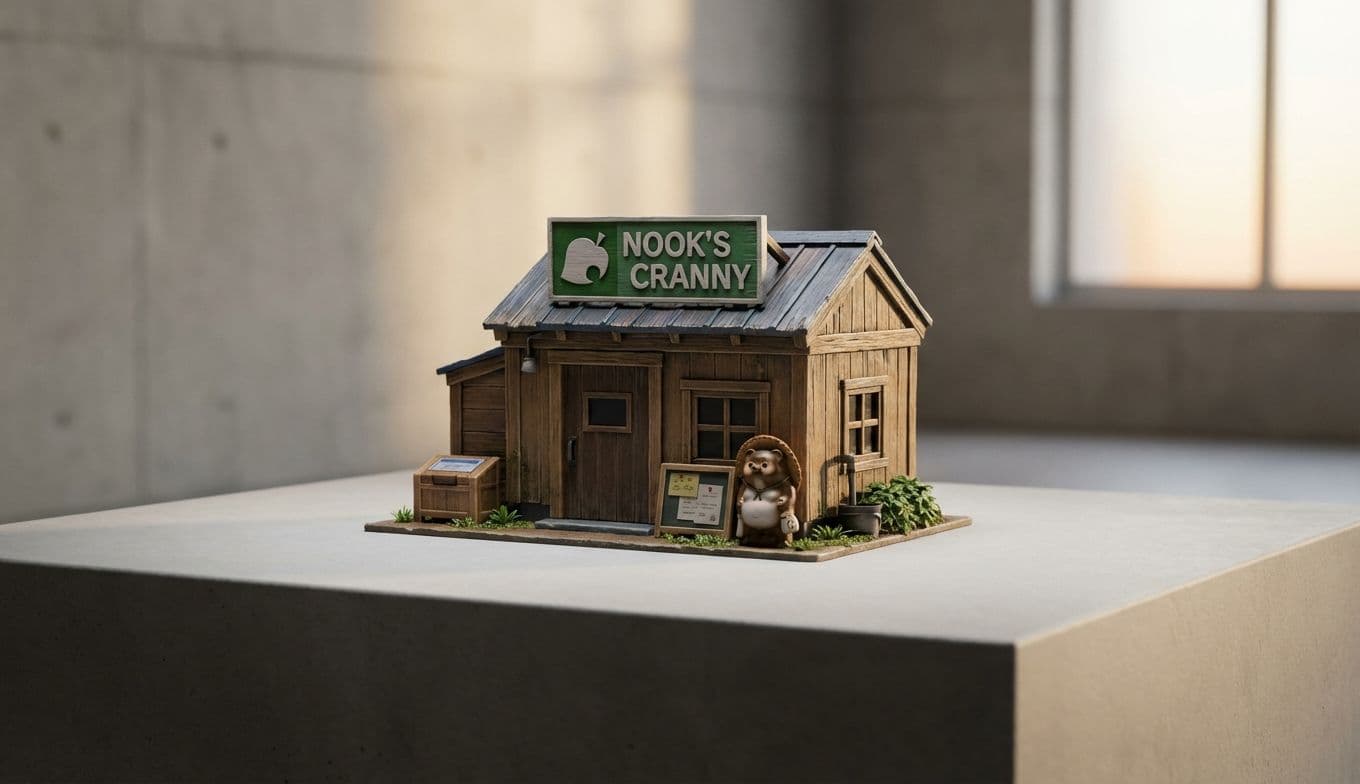
Official LEGO Animal Crossing Sets Recently, Nintendo partnered with LEGO to create modular sets that perfectly capture the game's "grid-based" building logic. Sets like Nook’s Cranny or Isabelle’s House Visit allow fans to physically rebuild their islands. They are fantastic gifts because they bridge the gap between digital creativity and tactile play, and they look great on a bookshelf or desk.

Stationery and Daily Life Tools Because Animal Crossing is about the beauty of the mundane, stationery is a natural fit. Look for official Hobonichi Techo covers or stationery sets featuring the game’s letter-writing motifs. For a student or a remote worker, an Animal Crossing-themed desk mat or a set of washi tape can make a workspace feel a little less corporate and a lot more cozy.

WHY IT MATTERS

In the decades since its debut, Animal Crossing has grown from a niche experiment into a global phenomenon. We saw this most clearly in 2020, when the world went into lockdown and millions of people turned to their virtual islands to celebrate birthdays, hold weddings, and find the community they were physically denied.

Critics who claim it "isn’t a real game" because it lacks conflict are missing the point. The "conflict" in Animal Crossing is the same one Eguchi faced in Kyoto: the struggle to stay connected in a world that often feels isolating. By conquering that struggle through kindness, creativity, and patience, Animal Crossing offers a victory that feels more "real" than any high score.

Whether you are buying the game for a child starting their first digital journey or a grandparent looking for a way to stay in touch with family, you are giving them more than a piece of software. You are giving them a world built on heart—a place where the coffee is always hot, the neighbors are always happy to see you, and you are never truly alone. Not bad for a game that started in a dungeon.

Animal Crossing Origin Story: From Dungeons to Perfect Gifts | Gimmie