Amazon Echo Lineup & History: From 2014 to Today's Smart Home
Team GimmieThe Ambient Home: How the Amazon Echo Evolved From a Science Experiment to a Household Staple
It is hard to remember now, but there was a time not so long ago when talking to your house was a sign of a breakdown, not a technological convenience. Then came 2014. When the first Amazon Echo arrived, it looked like a sleek, black Pringles can that happened to have a brain. It was an oddity, a "voice computer" that Jeff Bezos had dreamed of for years—a device that promised to make the friction of modern life disappear through simple conversation.
As a product reviewer, I have seen thousands of gadgets promise to change the world, only to end up in a junk drawer six months later. The Echo was different. It did not just enter our homes; it changed our expectations of what a home should be. Today, Alexa is no longer just a voice in a speaker. She is the invisible connective tissue of the modern household, and the hardware has evolved from a single curious cylinder into a massive ecosystem of specialized tools.
The Grit Behind the Magic
The story of the Echo, as chronicled in the Verge's Version History, is not one of easy wins. The technical hurdles were immense. In the early days, the teams at Amazon were fighting a war on two fronts: hardware and linguistics. They had to figure out how to make a device hear a command from across a noisy room while music was playing, and then they had to teach it to understand the messy, inconsistent way that humans actually talk.
Bezos wanted a device that felt natural, something that could replace the clunky remotes and unintuitive apps that made early smart homes feel like a chore. The result was the Alexa voice assistant, powered by the cloud and delivered through the Echo. It was the first time artificial intelligence felt accessible. You did not need to be a coder to use it; you just had to be able to speak. That simplicity is what turned a niche project into a global phenomenon.
A Speaker for Every Room: Decoding the Current Lineup
One of the biggest mistakes people make today is thinking that all Echo devices are created equal. In the early years, you basically chose between the big one and the small one. Now, the lineup is highly specialized, and picking the right one depends entirely on how you live.

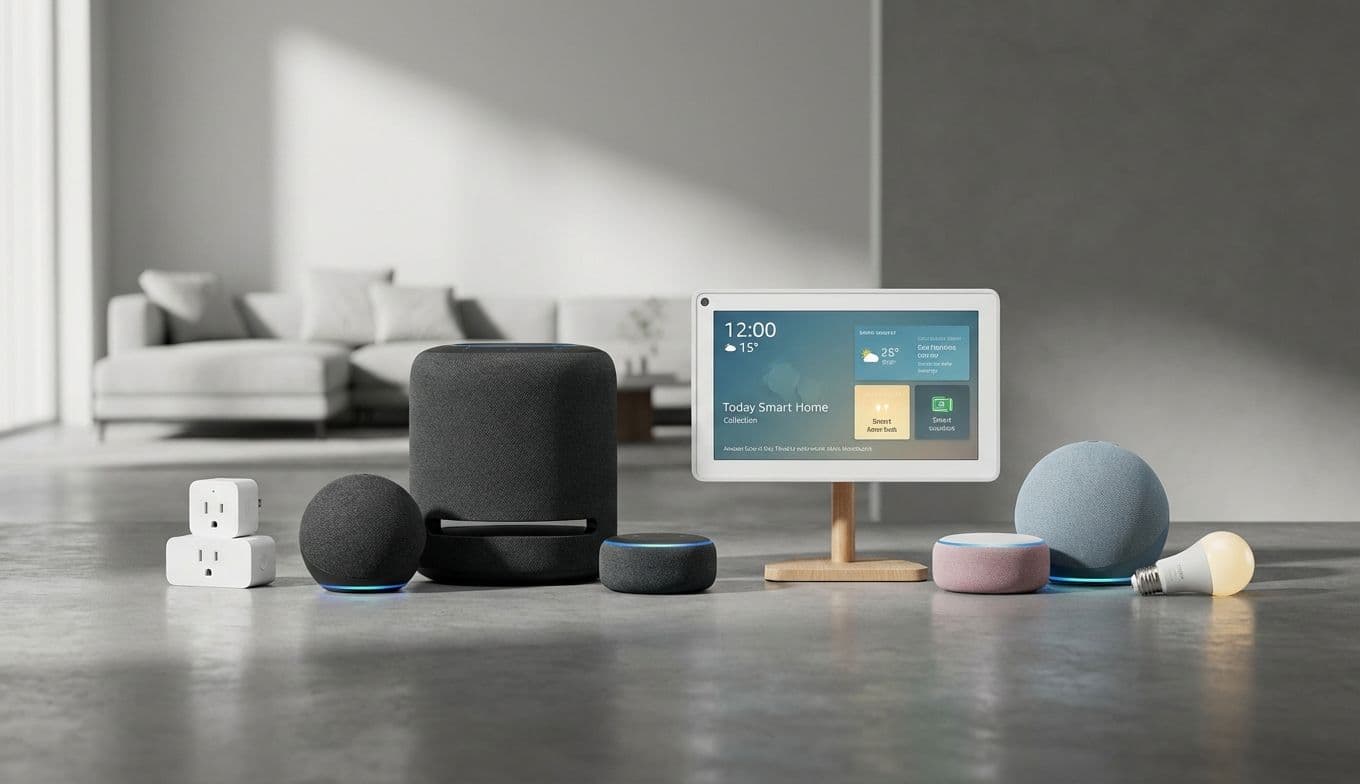
For those just starting out or looking to add voice control to a small space like a bathroom or a laundry room, the Echo Pop is the current entry point. It is a compact, semi-sphere design that is surprisingly loud for its size. It lacks some of the advanced sensors of its bigger siblings, but for quick weather checks or a morning podcast, it is the most efficient way to expand the ecosystem.
If you are looking for a central hub for the kitchen or a bedside table, the Echo Show 8 (3rd Generation) is the sweet spot of the current generation. Unlike the basic speakers, the Show 8 provides a vibrant display for recipes, video calls, and security camera feeds. The latest 3rd Gen model features a centered camera for better framing and, more importantly, a built-in smart home hub that supports the latest industry standards.
The Brain of the Modern Home: Matter and Thread
If you have looked at smart home tech recently, you have likely seen the terms Matter and Thread. While they sound like jargon, they are critical for anyone building a reliable home setup. In the past, smart home devices were notoriously finicky—your lightbulbs might not talk to your hub, or your sensors might drop offline.
Amazon has leaned heavily into these new standards. Modern devices like the Echo (4th Gen) and the Echo Show 8 (3rd Gen) act as Thread border routers. This means they speak a universal language that allows devices from different brands to talk to each other faster and more reliably, even without a constant internet connection. When you are buying an Echo today, you aren't just buying a speaker; you are buying a foundation that ensures your smart home won't be obsolete in two years.
For the Music Lover: The Echo Studio
For a long time, the knock on Echo devices was that they sounded "fine for a voice assistant" but terrible for music. That changed with the Echo Studio. This is Amazon's answer to high-end audio, and it is the only choice for someone who prioritizes sound quality. It features five directional speakers and utilizes spatial audio processing to fill a room. It senses the acoustics of your space and tunes itself automatically. While it might not replace a five-figure audiophile setup, it holds its own against premium wireless speakers twice its price, especially when playing high-res audio tracks.
Addressing the Elephant in the Room: Privacy and Trust
You cannot talk about the Echo without talking about privacy. The idea of an "always-listening" device is a genuine hurdle for many, and it is a topic I take seriously. It is important to understand that these devices are listening for a specific "wake word" (like Alexa), and they do not stream your private conversations to the cloud unless that word is triggered.
However, peace of mind often requires more than just a promise of code. One of the best features Amazon has maintained across its hardware is the physical privacy controls. Every Echo device features a hardware mute button that electronically disconnects the microphones. When that red light is on, the device is physically incapable of hearing you. On video-enabled devices like the Echo Show 10 or Show 8, there is a built-in sliding shutter that physically blocks the camera lens. For a gift-giver, pointing out these tactile security features can go a long way in making a recipient feel comfortable with the tech.
The Art of the Practical Gift
The reason the Echo remains a top-tier gift choice is that it solves real-world problems for specific people.
For the Busy Parent: An Echo Show in the kitchen is a second set of hands. Being able to say "Alexa, show me the front door" when the doorbell rings while you are mid-diaper-change, or "Alexa, add milk to the list" when you find an empty carton, is a genuine life-saver.
For the Elderly: Voice control is more than a convenience; it is an accessibility tool. For those with mobility issues or declining vision, being able to control the lights, set medication reminders, or call a family member without needing to navigate a smartphone screen is transformative. It provides a level of independence that a tablet or a computer simply cannot match.
For the Minimalist: The Echo Dot with Clock is perhaps the most underrated device in the lineup. It provides a subtle LED display for the time and weather, making it the perfect replacement for a cluttered nightstand. It is a tool that adds value without demanding your constant attention.
The Echo has come a long way from its days as a secretive project in an Amazon lab. It has evolved from a novelty that could tell you a joke into a sophisticated piece of infrastructure that manages our energy, secures our homes, and connects us to our families. We have finally learned to speak the language of the smart home, and it turns out, the home was ready to listen.