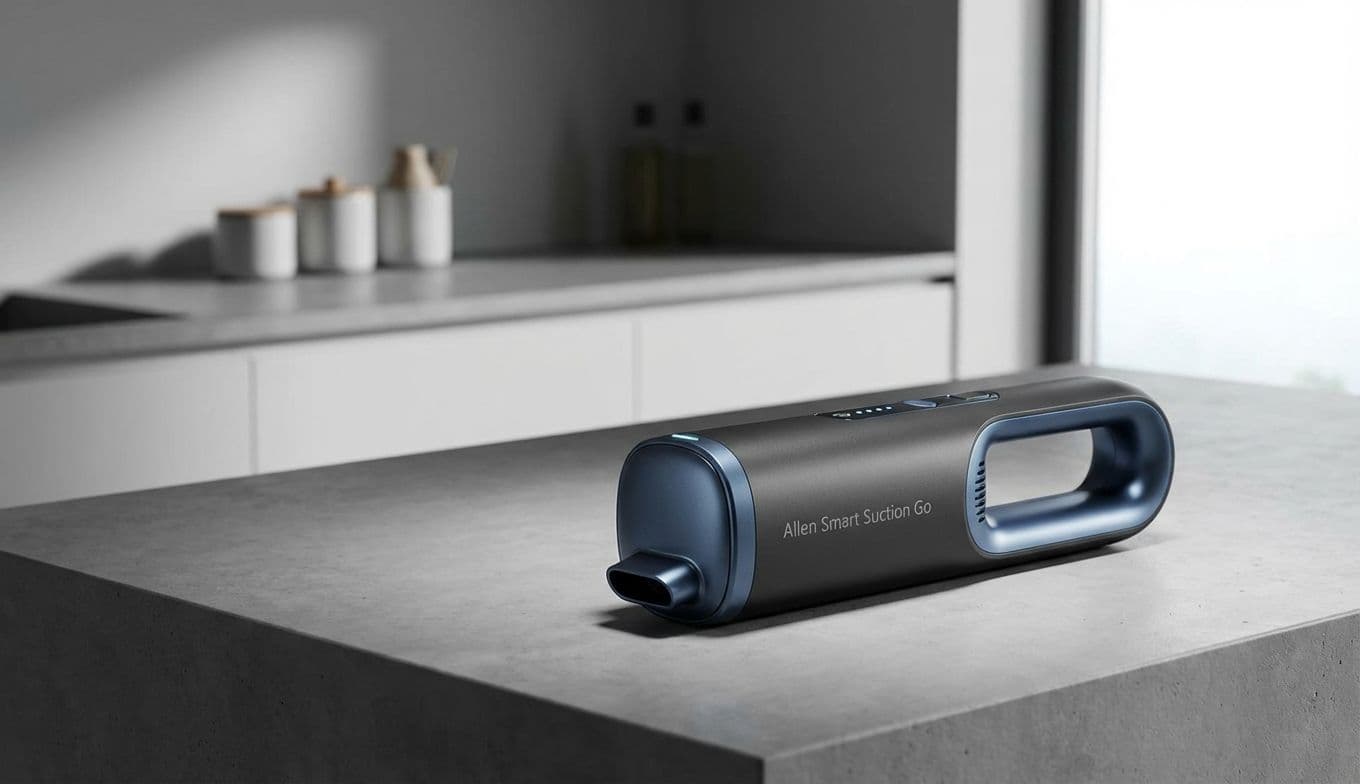
Allen Smart Suction Go Review: High-Tech Bike Rack Gamble
Team GimmieThe High-Tech Gamble: Is the Allen Smart Suction Go a Revolution or a Headache?
Imagine you are cruising down the interstate at 70 miles per hour. In your rearview mirror, you see your prized carbon-fiber road bike—the one that cost more than your first car—bobbing slightly in the wind. Now, imagine that the only thing keeping that bike from becoming a high-speed projectile on the pavement is a few inches of vacuum-sealed rubber and a Bluetooth signal.
If that thought makes your heart skip a beat, you are not alone. For decades, Allen Sports has been the bedrock of the bike rack world. Richard Allen basically put the industry on the map with his 1967 patent, and since then, the company has built a reputation on simple, mechanical, and frankly, unkillable trunk and hitch racks. But their latest pivot, the Smart Suction Go, feels like a departure from that blue-collar reliability. It is a $299 system that swaps steel bolts for suction cups and a smartphone app. It is high-tech, it is sleek, and for many of us, it is absolutely terrifying.
The Intelligence of Air Pressure
To understand why this product exists, we have to look at what the Smart part of the name actually means. Unlike traditional suction mounts that rely on you manually checking a physical plunger every few hours, the Smart Suction Go features integrated Bluetooth pressure sensors.
These sensors monitor the vacuum seal in real-time. If the seal begins to degrade due to temperature changes, road vibration, or a dirty mounting surface, the rack sends an immediate push notification to your smartphone. It is essentially a digital early warning system. However, it is important to clarify what this tech does not do: it does not automatically re-pump the vacuum. If you get an alert at highway speeds, you still have to find the nearest shoulder, hop out, and manually reset the seal.
While the added layer of digital monitoring is intended to provide peace of mind, it also introduces a new point of failure. Now, your bike’s safety depends not just on physics, but on your phone’s battery life, a stable Bluetooth connection, and the lack of software glitches. For a brand built on mechanical simplicity, this feels like adding a computer to a hammer.

The Niche: Who Is This For?
Despite the inherent anxiety of the suction cup life, there is a specific subset of cyclists for whom this rack is a godsend. It is not for the person with a dedicated SUV and a permanent 2-inch hitch receiver. Instead, it targets a very modern, mobile demographic.
The Rental Car Warrior: If you fly to a destination and rent a car, you never know what you are going to get. A suction rack fits in a carry-on and attaches to almost any roof, regardless of whether the car has a hitch or roof rails.
The Glass-Roof Enthusiast: Many modern EVs, like the Tesla Model 3 or Model Y, feature expansive glass roofs that make traditional clip-on racks impossible. Suction mounts provide a non-invasive way to haul gear without permanent modifications.
The Aesthetic Purist: Some drivers spent a lot of money on their car’s sleek lines and do not want a bulky metal rack permanently obscuring their trunk or roof. The ability to slap a rack on for a Saturday morning ride and have it completely gone by brunch is a powerful selling point.
The Cost of Innovation
At $299, the Smart Suction Go enters a crowded market where that same amount of money can buy a lot of proven security. The industry leader in this space, SeaSucker, has spent years proving that suction cups can hold up even on the roofs of race cars. By pricing the Smart Suction Go in the same neighborhood, Allen Sports is asking consumers to choose between the proven mechanical track record of SeaSucker and their own new, unproven digital monitoring.
There is also the question of longevity. Mechanical racks last decades; they might need a new strap or a bolt tightened once every five years. But how will a Bluetooth pressure sensor fare after three winters of road salt and summer heatwaves? When we buy bike racks, we usually want to buy them once. Adding electronics to a high-stress outdoor component feels like putting an expiration date on a product that should last a lifetime.
Better Bets for Your $300
If the idea of trusting a Bluetooth signal with your bike makes you break out in a cold sweat, you are in luck. The $300 price bracket is the sweet spot for some of the most reliable racks ever made. If you want to spend your money on something that offers zero-stress transport, consider these two stalwarts:
The Saris Bones EX 3-Bike: For around $250, this is the gold standard of trunk racks. It is made of 100% recycled materials, it is incredibly sturdy, and its unique arched design fits over most spoilers. It uses good old-fashioned straps and mechanical tension. No batteries required.
The Hollywood Racks Destination 2-Bike: If your car has a hitch, this $200-$250 platform rack is a steal. Platform racks are generally much safer and easier to load than hanging racks. It holds the bikes by the wheels and the frame, keeping them stable and far away from your car’s paint job.
The Final Verdict
The Allen Sports Smart Suction Go is a fascinating experiment. It shows a legacy company trying to find its footing in a tech-obsessed world. For the gadget-loving cyclist who frequently swaps between rental cars or drives a vehicle with no traditional mounting points, the Bluetooth peace of mind might be worth the premium.
But for the rest of us—the ones who just want to get to the trailhead without checking a smartphone app every ten minutes—the Smart Suction Go feels like a solution in search of a problem. In the world of bike transport, there is a lot to be said for the quiet confidence of a steel bolt and a nylon strap. Sometimes, the most advanced technology is the kind that doesn't need a firmware update to keep your bike off the asphalt.