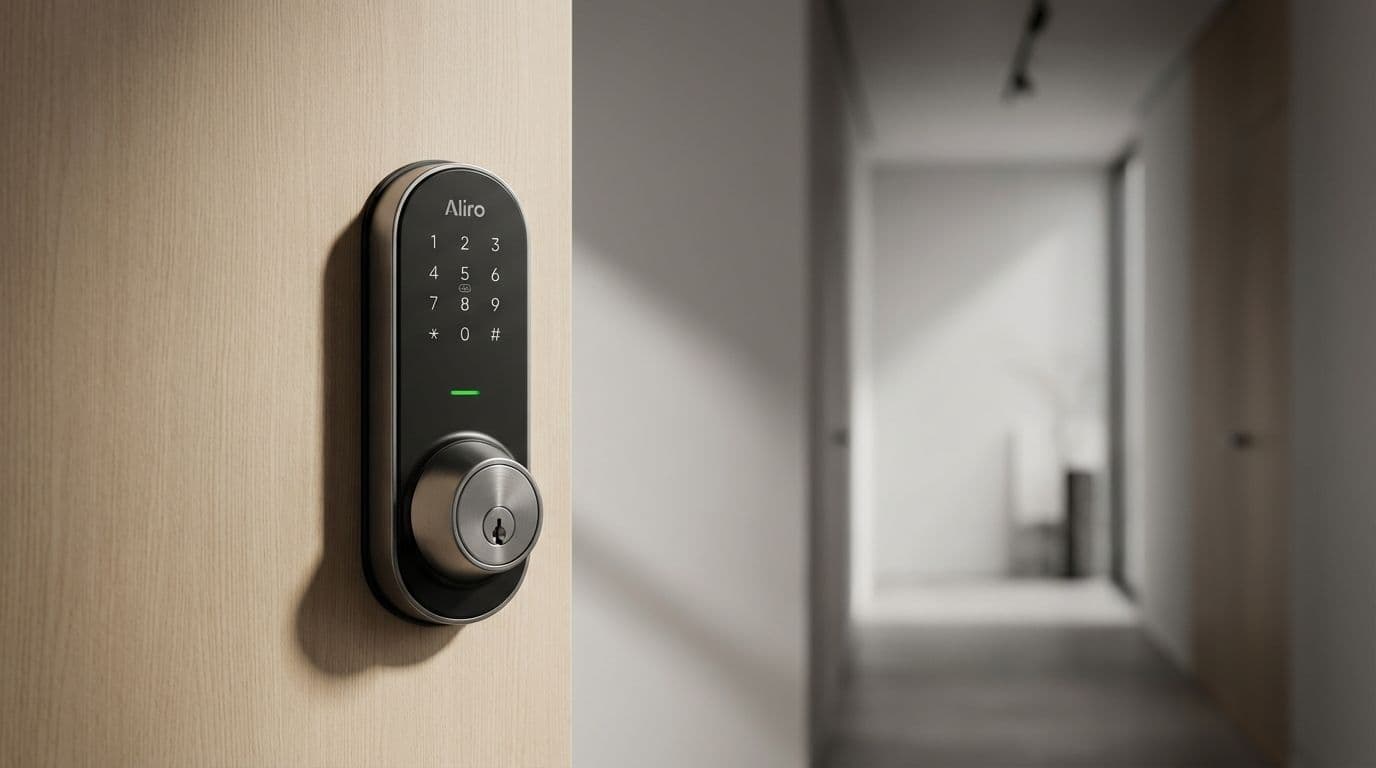
Aliro Smart Lock Standard: The Future of Universal Digital Keys
Team GimmieTHE END OF THE KEYCHAIN STRUGGLE
We have been living in a half-finished future for a long time. For over a decade, smart lock manufacturers have promised us a world where physical keys are a clunky relic of the past, right up there with floppy disks and landlines. But if you have ever actually owned a smart lock, you know the reality is often more "fumble" than "future." You have to open a specific app, wait for it to connect via Bluetooth, or realize that your partners iPhone works perfectly with the door while your Android phone requires a three-step authentication dance just to let you inside.
The industry has finally realized that for smart locks to actually be smart, they need to stop acting like jealous gatekeepers of their own ecosystems. Enter Aliro. This is a new communication standard backed by the biggest names in tech—Apple, Google, and Samsung—designed to make the "digital key" experience universal. It is the open, cross-platform solution we have been waiting for, and it is about to change how you think about home security.
ALIRO VS MATTER: SOLVING THE SMART HOME IDENTITY CRISIS
Before we dive into which locks you should buy, we need to clear up some common confusion. You have likely heard of Matter, the big smart home standard that lets your Alexa talk to your Google-compatible light bulbs. While Matter is the language that allows devices to talk to one another over a network, Aliro is specifically about the "handshake" between your mobile device and your lock.
Think of it this way: Matter is the plumbing that lets you say, "Hey Siri, lock the front door," while you are sitting on the couch. Aliro, on the other hand, is the digital credential that lives in your phone’s wallet. It allows you to walk up to your door and tap your phone—or even just have your phone in your pocket—to unlock the deadbolt. It uses technologies like Near Field Communication (NFC) and Ultra-Wideband (UWB) to ensure that the lock knows it is actually you standing there, not just someone with a signal booster.
The brilliance of Aliro is that it breaks down the walls between Apple Home Key and Google Wallet. Until now, if you wanted the "tap-to-unlock" experience, you usually had to pick a side. Aliro ensures that regardless of whether you are carrying a Pixel or an iPhone, the door opens just as easily for everyone in the house.

THE HEAVY HITTERS: WHO IS BUILDING FOR ALIRO?
A tech standard is only as good as the companies that actually use it. Fortunately, the Aliro roster looks like a Whos Who of home security. The Connectivity Standards Alliance (CSA), which manages Aliro, includes heavyweights like Yale, Schlage, and August.
These are the brands that currently dominate the aisles of your local hardware store. When Schlage or Yale commits to a standard, it means the hardware is going to be reliable, well-built, and—most importantly—available everywhere. We are already seeing early movers like Nuki and Allegion (the parent company of Schlage) demonstrating Aliro-ready prototypes.
For the average consumer, this means you wont have to research "Is this compatible with my specific phone?" every time you want to upgrade your security. If the box has the Aliro logo, it will work. This move toward interoperability is exactly what the market needs to move from "niche gadget" to "household essential."
THE RENTER’S EDGE: UPGRADING WITHOUT THE EVICTION NOTICE
One of the biggest hurdles for smart lock adoption has been the "renter problem." Most landlords are not thrilled when you start unscrewing the entire deadbolt assembly and replacing it with a glowing piece of high-tech hardware. However, the rise of Aliro is perfectly timed with the evolution of "retrofit" smart locks.
Brands like August and Nuki have pioneered locks that only replace the interior thumb-turn of your existing deadbolt. This means the outside of the door looks completely normal, and your landlord’s physical key still works. With Aliro integration, a renter can simply install a retrofit kit and gain the ability to tap their phone to enter their apartment. When the lease is up, you swap the old thumb-turn back on in five minutes and take your smart lock to your next place.
This also solves the guest access nightmare. Instead of hiding a physical key under a sketchy welcome mat or paying for a locksmith when a roommate loses their set, you can simply text a digital Aliro key to a friend’s phone. You can set it to expire in three hours or three months, giving you total control over who enters your space without ever needing to touch a piece of metal.
THE SHOPPER’S DILEMMA: SHOULD YOU BUY NOW OR WAIT?
If you are currently standing in a store staring at a shelf of smart locks, or if you are looking for the perfect high-tech gift, you are facing a bit of a dilemma. Aliro 1.0 has been officially released, but we are currently in the transition period where the first wave of certified hardware is just beginning to hit the market.
THE VERDICT: BUY NOW IF... Your current lock is broken, or you are moving into a new home today and need immediate security. If you are a dedicated iPhone user, buying a lock with Apple Home Key (like the Schlage Encode Plus) will give you a very similar experience to what Aliro promises. It is fast, reliable, and lives in your Apple Wallet.
THE VERDICT: WAIT IF... You live in a "mixed-OS" household where half the family uses Android and the other half uses iPhones. If you buy a proprietary lock today, someone is going to be stuck using a clunky third-party app while the other person gets the seamless "tap" experience. If you can hold off for a few more months, you will be able to purchase a lock that treats every family member as a first-class citizen.
A GLIMPSE INTO THE KEYLESS FUTURE
We are finally moving past the era of "smart" devices that actually make our lives more complicated. The Aliro standard represents a shift toward technology that is invisible and intuitive. It is not about having the flashiest app; it is about the door opening when you need it to, without you having to think about it.
As you look for your next lock, keep an eye out for that Aliro certification. Look for models that offer a physical key backup—because batteries do eventually die—and ensure the installation process matches your DIY comfort level. The transition to a truly keyless life is no longer a "maybe." It is happening now, and for the first time, everyone is invited to the party. No physical keys required.