AI Video Games vs. Human Design: A Gamer’s Reality Check
Team GimmieTHE REALITY CHECK ON AI VIDEO GAMES: A GIFT-GIVER’S GUIDE TO WHAT ACTUALLY MATTERS
Imagine a game that never ends. No, not because it’s addictive, but because an artificial intelligence is literally building the ground beneath your feet as you walk. This is the promise currently being sold by tech demos like Google’s Project Genie—the idea that "infinite," AI-generated worlds are just around the corner. For anyone shopping for the gamer in their life, that sounds like the ultimate gift: a universe that evolves forever.
But as someone who has tested everything from the first VR headsets to the latest handheld PCs, I’ve learned to spot the difference between a revolution and a tech demo. Right now, the "Generative AI" buzz in gaming is a lot like a concept car—it looks sleek in a press release, but you can’t actually drive it to work. If you are looking to buy a gift that will actually be played and loved this year, you need to look past the AI hype and focus on the human-authored masterpieces that define the medium.
THE CRITICAL DIFFERENCE BETWEEN RULES AND RANDOMNESS
To understand why AI isn't ready to take over, we have to look at how games have been built for decades. You might hear people say, "But Minecraft is AI-generated!" That is a common misconception. Minecraft, and classics like the original 1980 Rogue, use procedural generation. This is a system where human developers write a very strict set of rules—a digital "recipe"—that the computer follows to build a world.
In procedural generation, every mountain, cave, and forest is placed there because a human coder decided how a mountain should look and where it would be most fun to explore. It’s intentional.
Generative AI, on the other hand, works through pattern recognition and mimicry. It looks at millions of images or lines of code and tries to guess what comes next. The result? A world that might look like a game but lacks the "soul" of one. It struggles with level design, pacing, and the subtle cues that tell a player where to go. It’s the difference between a hand-carved wooden table and a 3D-printed plastic one that looks like wood but collapses the moment you put a dinner plate on it.
THE GIFT OF INTENT: WHY HUMAN DESIGN WINS EVERY TIME

The reason we remember certain games for years isn't because they were infinite; it’s because they were deliberate. When you’re choosing a gift, you want to provide an experience that feels like it was made for the person receiving it. AI can churn out a thousand forests, but it can’t design a forest that makes you feel a specific sense of dread as the sunlight fades.
Consider a game like Elden Ring. Every ruined castle and hidden path in the Lands Between was placed with a purpose. When a player finds a powerful sword hidden at the bottom of a well, it’s because a designer wanted them to feel the thrill of discovery. An AI, lacking empathy or an understanding of joy, simply can’t replicate that "Aha!" moment.
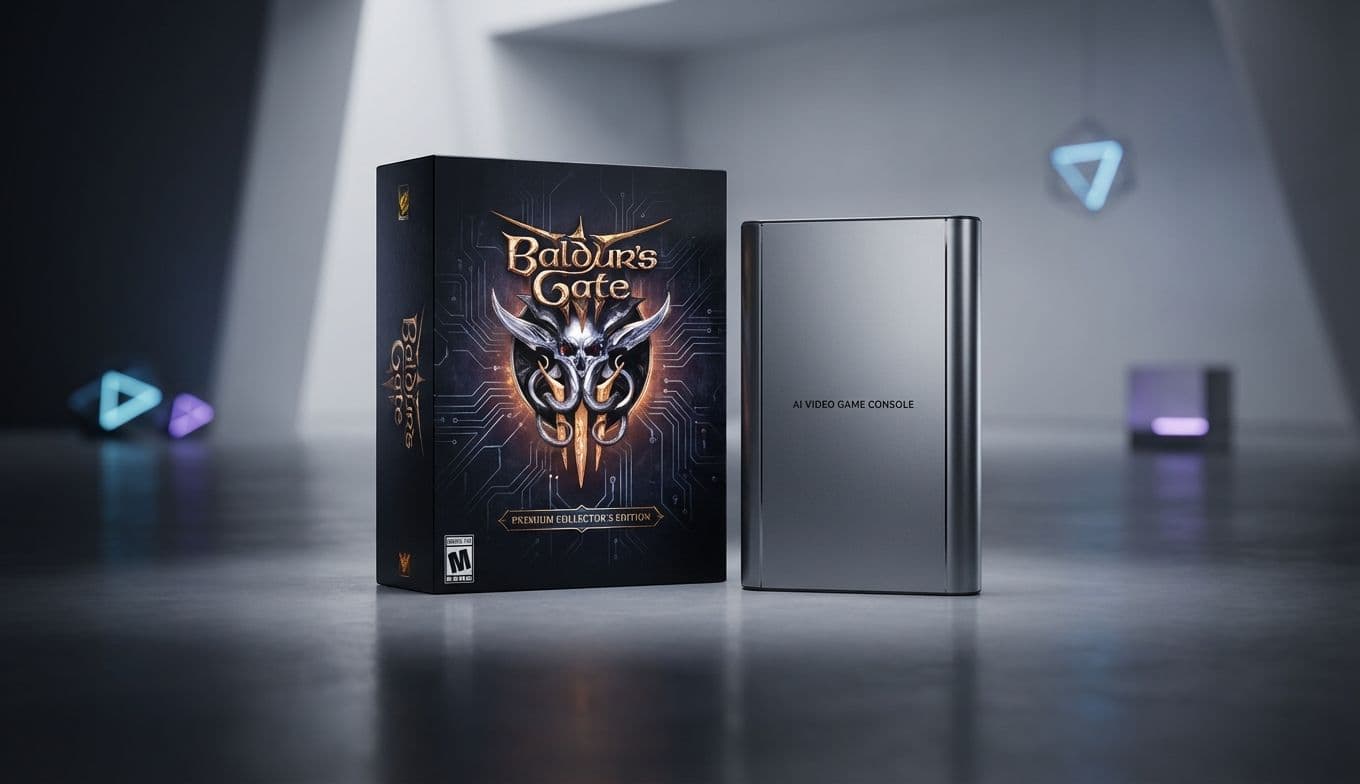
The same goes for narrative depth. In Baldur’s Gate 3, the writing is so reactive and human that it feels like the game is alive. This didn't come from a prompt; it came from years of work by hundreds of writers and actors who understood the nuances of human emotion. These are the experiences that make gaming a world-class hobby, and they are currently something no AI can touch.
THE GIMMIE AI GIFT SUMMARY: BUY THE MASTERPIECE, SKIP THE HYPE
If you want to win the holidays or a birthday, don't buy into the "AI-powered" marketing fluff. Here is the definitive guide on what to avoid and what to actually put in your cart.
WHAT TO AVOID
- Games marketed as "Infinite AI-Generated Universes" with no clear gameplay loop.
- Early-access titles that lean heavily on "AI assets" to fill out their worlds (they often feel empty and buggy).
- Low-quality "asset flip" games on digital stores that use AI-generated art to hide shallow mechanics.
WHAT TO BUY (THE HUMAN-AUTHORED GOLD STANDARD)
- For the Explorer: Elden Ring (Shadow of the Erdtree Edition). This is the pinnacle of world design. It’s a masterclass in how a hand-crafted map can feel more vast and mysterious than any infinite AI landscape.
- For the Storyteller: Baldur’s Gate 3. It offers more genuine choice and "emergent" gameplay than any AI system currently in existence. It’s a gift that offers hundreds of hours of value.
- For the Visual Purist: Alan Wake 2. If you want to see what modern technology can actually do, this is it. It uses advanced rendering (and yes, some helpful AI upscaling tools) to create a cinematic experience that feels like a playable thriller.
- For the Action Fan: Cyberpunk 2077: Ultimate Edition. After years of refinement, this game’s "Night City" stands as one of the most detailed, intentional urban environments ever built.
UPGRADING THE ENGINE: THE HARDWARE THAT MATTERS
If you really want to lean into the "tech" side of the gift, don't look for AI software—look for the hardware that makes these human-designed worlds shine. High-end gaming is moving toward a place where "AI" is a tool used for performance (like smoothing out frame rates) rather than world-building.
If the gamer you’re shopping for plays on a PC, look at the NVIDIA GeForce RTX 40-Series graphics cards. Specifically, the RTX 4070 Super is the "sweet spot" for 2026. It uses a technology called DLSS (which is powered by AI) to make games run at higher resolutions without taxing the hardware. This is the "good" kind of AI—the kind that works behind the scenes to make human artistry look better.
For those who want to take their worlds on the go, the Steam Deck OLED is the gold standard. It doesn't promise infinite AI worlds; it promises that you can play the world’s best hand-crafted games anywhere, with a stunning screen that makes every artist-drawn pixel pop.
THE FUTURE IS STILL HAND-PAINTED
It is tempting to believe that we are months away from a "Holodeck" style future where we just tell a computer "make me a game about space pirates" and it happens. But the more we look at the tech, the more we realize that AI is a paintbrush, not the painter.
AI will eventually help developers work faster—maybe it will help them animate a character's walk or generate the textures on a rock—but the magic of gaming still belongs to the creators. When you choose a gift based on the reputation of the studio and the quality of the craftsmanship, you aren't just buying a piece of software. You’re buying an entry into a world that someone cared enough to build for you.
So, this year, skip the "AI-generated" promises. Stick with the developers who are still doing the hard work of imagining new worlds from scratch. Your favorite gamer will thank you for the soul, the intent, and the unforgettable experience that only a human-led team can provide.