AI in Gaming: Navigating the GDC 2026 Hype vs. Reality

AI in Gaming: Navigating the GDC 2026 Hype vs. Reality

Team GimmieTeam Gimmie
Published on March 23, 2026

The Ghost in the Machine: Navigating the AI Hype at GDC 2026

If you walked the halls of the Game Developers Conference (GDC) this year, you would be forgiven for thinking that human game designers had been replaced by algorithms overnight. The air was thick with the promise of generative AI: tools that can build sprawling fantasy maps from a single sentence, NPCs (non-player characters) that claim to have "real" souls, and automated systems that can hunt down software bugs faster than any human tester.

Google DeepMind researchers drew massive crowds with demos of playable, AI-generated spaces, while companies like Tencent and Razer showcased tech that felt like it was plucked straight from a sci-fi novel. But as a product journalist who has sat through decades of "next big things," I couldn't help but notice a glaring omission. While the developer booths were neon-lit with AI branding, the games we actually play—the ones sitting in your Steam library or on your PlayStation—were missing the revolution.

There is a massive disconnect between the tools being sold to developers and the experiences being sold to you. As we look at the gaming landscape in 2026, it is vital to separate the genuine technical leaps from the marketing smoke and mirrors, especially if you are looking to spend your hard-earned money on a new title or a gift for the gamer in your life.

The Backstage Revolution: Why You Can't Feel the AI Yet

Let’s look at the tech that stole the headlines. Razer showcased a slick AI assistant designed to pinpoint bugs in a shooter game on the fly. From a developer's perspective, this is a godsend. It could shave months off a development cycle and save a studio millions in quality assurance. But here is the reality for the person holding the controller: you don’t "experience" a bug-tracking AI. You simply expect the game to work. If a game is polished, you don’t care if a human or a bot found the glitches.

Similarly, Tencent’s generative NPC tools promise characters that can hold unscripted conversations. It sounds revolutionary until you actually sit down to play. In many of these demos, the AI-generated dialogue feels like "word soup"—technically impressive but narratively hollow. A game’s heart comes from intentionality, and right now, these tools are mostly helping developers fill space rather than create meaning.

For now, AI is a "back-of-house" efficiency play. It’s helping studios make games cheaper and faster, but it isn't necessarily making them better. For the consumer, this means the "AI-Powered" sticker on a game box is often more about the studio's bottom line than your entertainment.

The Gold Standards: Greatness Without the Buzzwords

When we talk about what makes a game truly worth your time, we don't talk about the algorithms used to render the grass. We talk about how the world makes us feel. If you want to see what "excellent design" looks like in the modern era, you don't need to look at AI experiments. You only need to look at the current gold standards of the industry.

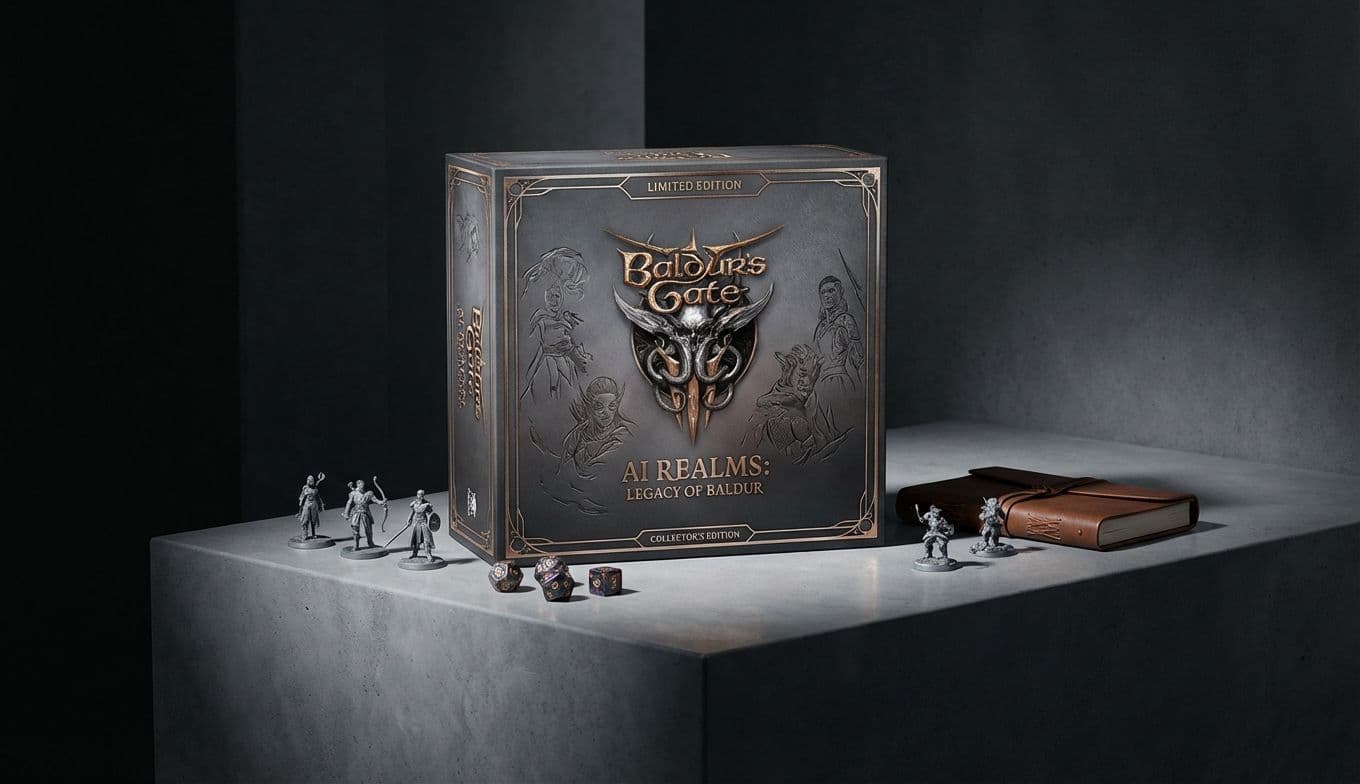
Take Baldur’s Gate 3. This game is a masterclass in reactivity and player agency. Every choice you make ripples through the story, leading to wildly different outcomes. Crucially, this wasn't achieved through a "generative story engine." It was achieved through thousands of hours of meticulous, hand-crafted writing by human beings who understood irony, tragedy, and humor.

Then there is Elden Ring. Its world feels vast and ancient not because an AI generated a billion square miles of terrain, but because every cliffside, ruin, and enemy placement was intentionally designed to evoke a sense of mystery and challenge. These games prove that "infinite content" (the big promise of AI) is nowhere near as valuable as "curated content."

A Gift-Giver’s Hype-Detector

If you are shopping for a gamer and see a title bragging about its "Advanced AI" or "Generative World Technology," take a deep breath and ask these three questions before hitting the "buy" button:

  1. Is the AI "Player-Facing" or "Developer-Facing"? If the AI is just helping the developers build the game faster, it’s not a feature; it’s a manufacturing process. Unless the AI actually changes how you interact with the game world in a fun, measurable way, ignore the tag.

  2. Does it replace Craftsmanship with Randomness? AI is great at generating "more," but "more" isn't always "better." A hand-crafted 20-hour adventure is almost always more memorable than a 200-hour "AI-generated" slog that feels repetitive and soulless after the first hour.

  3. Is the game fun without the AI label? Strip away the marketing. If the game didn't claim to have AI, would the reviews still be good? If the core gameplay mechanics (shooting, jumping, puzzle-solving) aren't solid, no amount of machine learning will save it.

What This Means for Your Next Purchase

We are currently in the "awkward teenage years" of gaming AI. The industry is obsessed with the potential, but the implementation is still clumsy. For most consumers, the best advice is to ignore the AI hype entirely for at least another year.

If you are buying a gift, stick to the fundamentals. Look for games with a proven track record of strong narrative, polished mechanics, and high user ratings. A game like the latest Legend of Zelda or a tightly-paced indie hit like Hades II will provide far more joy than a tech demo masquerading as a blockbuster.

The reality is that we might be a few years away from an NPC that can truly surprise us with a witty, context-aware remark, or a world that genuinely adapts to our psychological playstyle. Until then, we should celebrate the human developers who are using these tools to take the "busy work" out of creation, allowing them to focus on what actually matters: the art.

The Verdict: Substance Over Software

The enthusiasm at GDC was infectious, and there is no doubt that AI will eventually change how we play. It might lead to games that never end or characters that feel like old friends. But we aren't there yet.

Right now, the "AI Revolution" in gaming is happening behind closed doors in development studios. It’s making the "sausage-making" process of game design more efficient, but the "sausage" itself hasn't changed much for the person eating it.

As a buyer, don't pay a premium for the promise of the future. Invest in the excellence of the present. Look for the games that lean on human creativity, intentional design, and polished storytelling. Because at the end of the day, a game’s value isn't found in how smart its code is, but in how much fun you have playing it. For now, the most intelligent thing in the room is still the player, not the platform.