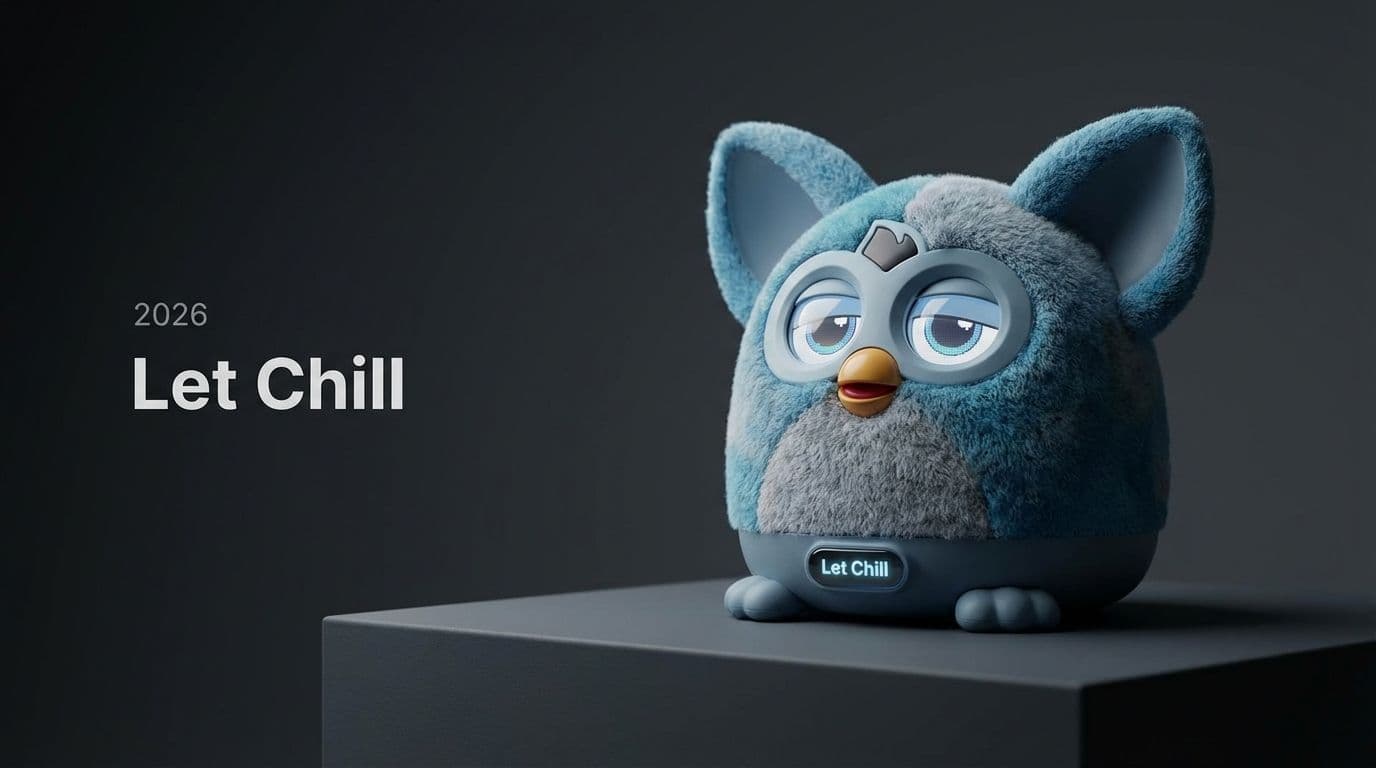
2026 Furby Review: Is the Nostalgic Toy Still Worth Buying?

2026 Furby Review: Is the Nostalgic Toy Still Worth Buying?

Team GimmieTeam Gimmie
Published on March 9, 2026

It is 3:00 AM. The house is silent until a muffled, mechanical giggle erupts from the bottom of a toy bin. Then, a high-pitched voice chirps into the darkness: Kah-may-may u-nye? Translation: Where are you?

For anyone who grew up in the late nineties, this scenario is less of a childhood memory and more of a shared psychological scar. The Furby was never just a toy. It was an unblinking, fuzzy enigma that seemed to watch you as much as you played with it. While other fads of the era—think Tamagotchis or Beanie Babies—stayed firmly in their lane as digital pets or collectibles, the Furby crossed a line. It felt sentient. It felt unpredictable. It felt, to use the modern vernacular, a little bit cursed.

Yet, here we are in 2026, and the Furby is not only alive but thriving. As we navigate an age of hyper-advanced AI and screen-saturated childhoods, this peculiar creature has managed to maintain its grip on our collective imagination. But is the current 2026 iteration a must-have gift, or is it just a nostalgic relic trying too hard to stay relevant?

THE LEGEND OF THE 1998 OUTLAW

To understand why your kids are asking for a Furby today, you have to understand the sheer chaos of the 1998 launch. When Tiger Electronics first released these animatronic owls, they didn’t just sell out; they caused actual security concerns.

The original Furby was famously banned from the National Security Agency (NSA) headquarters. Intelligence officials were convinced the toys were secret recording devices that could "learn" and repeat classified information. In reality, Furbies didn’t learn a thing. They were programmed to gradually unlock English words over time, creating the illusion of intelligence. It was a masterclass in human-computer interaction—we were so desperate to believe something was alive that we projected a soul onto a series of plastic gears and basic sensors.

This "learning" myth, combined with the fact that they had no "off" switch (a design choice that felt intentional by the time the third night of Furbish chanting rolled around), cemented the Furby's legacy. It became a piece of folklore. By the time the internet got its hands on the legacy, we saw the rise of the Long Furby—a DIY meme culture where enthusiasts would sew six-foot-long bodies onto Furby heads. It was weird, it was uncanny, and it proved that Furby’s appeal lies in its refusal to be normal.

THE 2026 EVOLUTION: THE AURORA SERIES AND BEYOND

Fast forward to 2026. The current flagship model, often referred to as the Furby Aurora or the Glow-Ear Edition, is a far cry from the clunky motor-whirring gremlin of 1998. It is softer, sleeker, and significantly more interactive.

The standout feature of the 2026 model is the Voice Command system. By saying, Hey Furby, users can trigger five distinct modes: Dance Party, Copycat, Tell My Fortune, Let’s Chill, and Light Show. The ears now pulse with multi-color LED patterns that synchronize with the Furby’s "mood" or the music in the room.

Crucially, Hasbro made a pivot that many 2026 parents will appreciate: the current Furby does not connect to the internet. While previous mid-2010s iterations experimented with Bluetooth and app-connectivity, the modern version has stripped that away. There is no app to update, no data being harvested, and no risk of a stranger hacking into your child’s fuzzy companion. It is a self-contained ecosystem of weirdness, which is exactly what made the original so captivating.

CRITIQUING THE INTERACTIVITY

The Tell My Fortune mode is a particular hit with the target demographic. You ask a question, rub its belly, and it delivers a cryptic, Furbish-inflected prediction. Is it advanced AI? Absolutely not. It is a randomized response generator wrapped in purple faux-fur. But for a seven-year-old, it feels like magic.

The Let’s Chill mode is another 2026 addition that reflects our times. It guides children through breathing exercises and positive affirmations. It is a bizarre juxtaposition—the toy that once gave parents nightmares is now trying to teach their children mindfulness. Whether a robotic owl is the best delivery system for mental health tools is debatable, but it shows a genuine attempt to make the toy more than just a noisy distraction.

THE CURSED APPEAL: WHY GEN Z AND ALPHA STILL CARE

We cannot talk about Furby in 2026 without acknowledging the meme-ification of the brand. For Gen Z and the older edge of Gen Alpha, the Furby isn’t just a toy; it is an aesthetic. It represents a kind of "feral" nostalgia.

The 2026 model leans into this by being unapologetically loud and colorful. It doesn’t try to be a realistic pet. It is a creature from another dimension that wants to have a rave in your living room. This "oddness" is its greatest strength. In a world of sleek, minimalist iPads and hyper-realistic video games, the Furby is a tactile, weird, and physically present object that demands your attention.

BUY IT IF / SKIP IT IF: THE 2026 GIFT GUIDE

If you are staring at a Furby on a shelf (or in your digital cart) and wondering if it is worth the investment, here is the breakdown.

BUY IT IF:

  • You want a screen-free interactive experience. Since it doesn’t require a tablet or a phone to work, it is a great way to engage a child’s imagination without another glowing rectangle.
  • You have a child who loves "nurturing" play. The response to touch and sound makes it feel like a responsive pet.
  • You appreciate the lore. If you want to share a piece of 90s history with a modern twist, the 2026 model hits that nostalgic sweet spot perfectly.
  • You don’t mind a little noise. The newer models are loud, proud, and very chatty.

SKIP IT IF:

  • You value silence. While you can finally put the 2026 Furby to sleep (it has a proper power-down sequence now!), it is still a noisy toy when active.
  • You are looking for high-tech AI. If the child is expecting a conversation like they have with a sophisticated LLM, they will be disappointed. Furby is about charm, not logic.
  • The child is easily spooked. Let’s be honest, the eyes still follow you. Some kids find it adorable; others find it unsettling.

THE VERDICT: A CHAOTIC COMPANION FOR A DIGITAL AGE

The Furby remains one of the most successful examples of human-computer interaction because it plays on our emotions rather than our need for utility. It doesn’t do your homework, it doesn’t tell you the weather, and it certainly doesn't help you stay organized. It just... exists.

In 2026, the Furby serves as a reminder that toys should be allowed to be strange. It is a bridge between the physical and the digital, a "cursed" little ball of fur that forces us to interact with the world in a way that isn't mediated by a touchscreen. Whether you’re buying it for the nostalgia, the mindfulness modes, or just because your kid wants a fuzzy friend who speaks nonsense, the Furby remains a top-tier gift.

Just remember: keep it away from your sensitive work documents. You never know if the NSA was onto something.