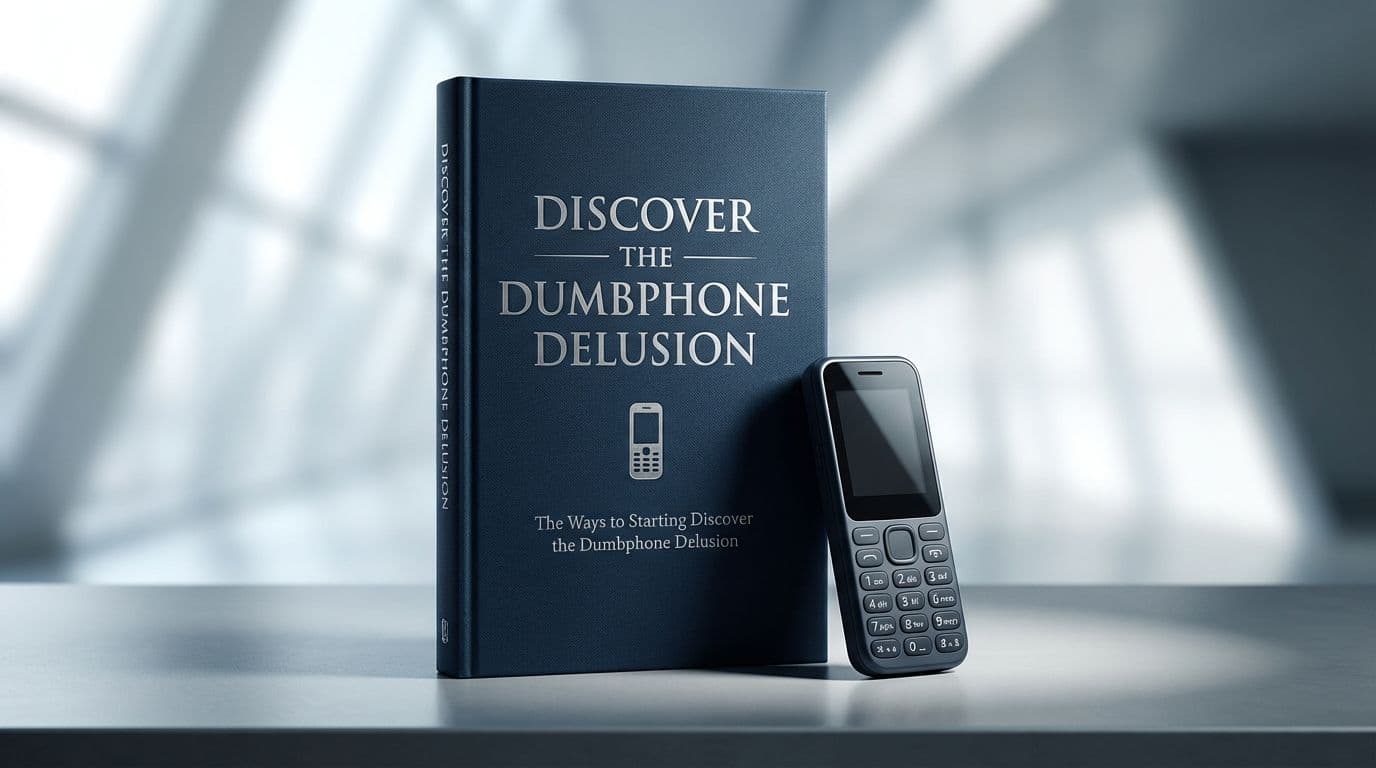
The Dumbphone Delusion: Why Switching is a Logistical Nightmare
Team Gimmie
1/20/2026

THE DUMBPHONE DELUSION: WHY YOUR DIGITAL DETOX IS A LOGISTICAL NIGHTMARE
The image is everywhere on social media, ironically enough. A grainy, film-style photo of a vintage Nokia 3310 sitting next to a half-drunk oat milk latte and a stack of Hemingway novels. The caption usually says something about finding presence or escaping the matrix. It is a beautiful aesthetic, a romanticized callback to a simpler time when our pockets didn’t buzz with the collective anxiety of the entire world.
We get it. The urge to hurl your thousand-dollar glass rectangle into the nearest body of water is a rational response to the modern internet. Our brains are currently being pickled in a brine of short-form video loops, targeted ads, and political outrage. But before you go on eBay and spend eighty dollars on a piece of plastic from 2004, we need to have a serious conversation.
The dream of the dumbphone is a lifestyle lie. In 2026, opting out of the smartphone ecosystem isn’t just a personal choice; it is a logistical suicide mission. Unless you are a billionaire with a personal assistant to handle your life, or a hermit living in the woods, the dumbphone isn't a tool for freedom. It is a fast track to becoming an unintentional burden on everyone around you.
THE INFRASTRUCTURE TRAP
We no longer live in a world where a phone is just for calls and texts. In the last decade, our physical infrastructure has been systematically rebuilt around the assumption that every citizen has a high-functioning computer in their pocket. This is the digital infrastructure dependency, and it is a wall that no amount of 90s nostalgia can climb over.
Consider the simple act of banking. In 2026, Two-Factor Authentication (2FA) is not an option; it is a requirement. If you want to move money, pay a bill, or verify an unusual purchase, your bank expects you to open an app or receive a push notification. The old-school SMS codes are being phased out because they are insecure. If your phone can't run the authentication app, you are effectively locked out of your own capital.
Then there is the city itself. Try ordering a meal at a trendy downtown restaurant without a QR code. Try paying for street parking in a zone that only accepts a specific digital wallet. Try catching a train when the transit system has moved entirely to digital passes stored in Apple or Google wallets. When you show up with a flip phone, you aren’t being a minimalist; you are the person holding up a line of fifty people while you try to find a physical kiosk that probably hasn’t been serviced since 2019. The dumbphone is a luxury for people who don’t have places to be.

THE HIDDEN SOCIAL TAX
Beyond the logistical friction, there is the social tax. We like to think that true friends will reach out regardless of the platform, but humans are creatures of convenience. In 2026, social life happens in the group chat. It happens on Slack, it happens on Discord, and yes, it still happens in those green-and-blue bubble iMessage threads.
When you switch to a device that can't handle group threading or high-res media, you are effectively resigning from the digital town square. You become the person who ruins the group chat for everyone else by breaking the thread. You become the person who has to be texted individually because you can’t see the shared photo album or the pinned location for the party.
Eventually, people stop including you. Not because they don't like you, but because the friction of communicating with you has become a chore. This isn't just about FOMO (fear of missing out). It is about the genuine isolation that comes from being the only person in your peer group who can’t participate in the shared digital language of the era. If your goal was to be more present with people, you may find that you’ve actually made yourself much harder to reach.
THE ILLUSION OF THE SIMPLE CURE
The biggest problem with the dumbphone movement is that it treats a complex psychological problem—digital addiction—with a blunt-force hardware solution. It assumes that if we remove the screen, the underlying compulsion to distract ourselves will simply vanish.
The reality is that we are often addicted to the escape, not the device. People who switch to flip phones often find themselves hovering over their laptops for four hours a night to compensate, or worse, they find themselves staring into space with the same sense of fragmentation, just without the convenience of a map or a weather app.
Total digital abandonment is a reactionary response. It is the diet version of a hunger strike. It might feel virtuous for a week, but it isn't sustainable for a lifetime. What most people actually need isn't a dumber phone; they need a more intentional relationship with their technology. They need a device that serves them, rather than a device that harvests them.
SURGICAL MINIMALISM: THE MIDDLE GROUND
This is where we pivot from the rant to the solution. You don’t need to go back to 2004 to find peace. You need what we call Surgical Minimalism—tech that removes the junk but keeps the vitals. There is a new category of devices designed specifically for this 2026 reality. They offer the calm of a dumbphone without the chaos of being totally disconnected.
If you are looking for a gift for yourself or a loved one who is drowning in notifications, consider these alternatives:
-
THE LIGHT PHONE III This is the gold standard for intentional living. Unlike its predecessor, the Light Phone III includes a camera and an OLED screen, but it still lacks a web browser, social media, and an infinite newsfeed. It has the vitals: NFC for payments, a music player, a podcast tool, and navigation. It keeps you functional in a digital world without inviting the doomscroll.
-
THE BOOX PALMA Technically an E-ink mobile e-reader, the Palma is shaped like a phone but feels like a Kindle. It runs Android, which means you can install your essential banking and transit apps, but the E-ink screen makes it physically impossible to enjoy TikTok or Instagram. It is a device built for reading and utility, not for dopamine loops. It’s the perfect secondary device for a weekend detox.
-
THE SOFTWARE SHIFT If you don't want to buy new hardware, look into minimalist launchers like Olauncher or Before Launcher. These apps strip your smartphone down to a text-only interface. No icons, no bright colors, no notification badges. It turns your thousand-dollar distraction machine into a boring utility tool. It’s the cheapest and most effective way to see if you can actually handle a minimalist life.
FINDING THE CALM WITHOUT THE CHAOS
The goal of digital minimalism shouldn't be to prove how much of the modern world you can reject. The goal should be to reclaim your time while remaining a functional member of society.
Throwing away your smartphone in 2026 is a performance, not a plan. It creates a vacuum of convenience that someone else—your spouse, your coworkers, the person behind you at the airport—inevitably has to fill. Instead of retreating into the past, look for the tools that allow you to exist in the present.
Seek out the tech that does the three things you actually need and ignores the thousand things you don't. That is true surgical minimalism. It isn't about having a phone that is dumb; it is about being a user who is smart enough to know where the line is drawn. You don't have to lose your mind to find your peace. You just have to change the way you carry it.