Robotaxi Senate Hearing: Safety Risks, Privacy & Consumer Impact

Team Gimmie

Team Gimmie

2/5/2026

Robotaxi Senate Hearing: Safety Risks, Privacy & Consumer Impact

The Robotaxi Reality Check: What the Senate Grilling Means for Your Next Car and Your Gift List

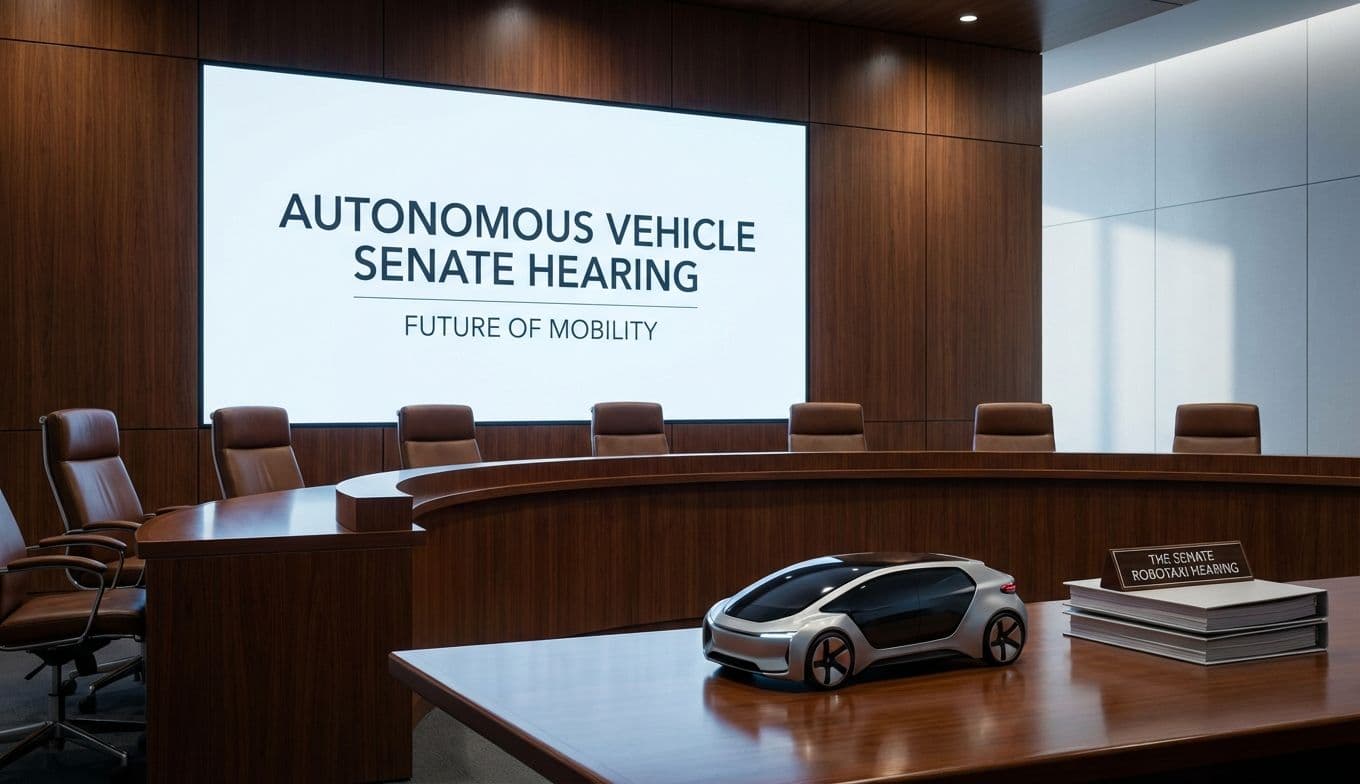
If you were hoping to ditch your steering wheel by the end of the year, the latest session on Capitol Hill likely gave you a cold shower. Last week, executives from Waymo and Tesla spent two hours in a Senate hearing that felt less like a brainstorming session for the future and more like a high-stakes interrogation. While these companies are eager to push legislation that fast-tracks autonomous vehicles, lawmakers are clearly not ready to hand over the keys.

For those of us watching from the consumer side, the hearing was a necessary reality check. We often get caught up in the hype of sleek, driverless pods, but the gap between a tech demo and a car you can trust with your life remains significant. This isn’t just about policy; it’s about the technology we choose to bring into our lives and the gifts we give to those we care about.

The Trust Deficit and the Safety Standard

The most striking moments of the hearing centered on simple, everyday safety. Senators pointed to specific incidents where Waymo vehicles failed to stop for school buses. It sounds like a niche technical glitch until you realize that stopping for a school bus is one of the most fundamental rules of the road. When the hardware fails at that level, public trust evaporates.

There is also the thorny issue of liability. If a robotaxi clips a cyclist, who is at fault? Is it the software engineer in Silicon Valley, the remote operator monitoring the fleet from a call center, or the manufacturer? Currently, there is no federal framework to answer this. For the average person looking to buy into this future, that lack of clarity is a massive red flag. Until the legal responsibility is as clear as a standard insurance policy, fully autonomous driving remains a "someday" technology, not a "today" utility.

The China Connection: Privacy and Longevity

One of the more surprising pivots in the hearing was the intense focus on manufacturing, specifically Waymo’s decision to use Chinese-made Zeekr vehicles for its next-generation fleet. On the surface, this looks like a trade issue, but for consumers, it’s a privacy and support issue.

When you buy a piece of high-tech hardware, you aren't just buying metal and rubber; you are buying a long-term software relationship. If a vehicle's core architecture is tied to Chinese manufacturing, it raises two major questions for the owner. First, there is data privacy. Modern autonomous cars are essentially rolling data centers that track your location, your habits, and even your biometrics. Where that data is stored and who has access to it is a legitimate concern.

Second, there is the question of long-term software support. In a shifting geopolitical landscape, can you be sure that a vehicle built on a specific foreign platform will receive the necessary security patches and updates five or ten years from now? For a purchase as significant as a car, that uncertainty is a dealbreaker.

Real-World Autonomy You Can Buy Right Now

While the dream of a full robotaxi is stalled in committee, the technology behind it has already filtered down into vehicles you can actually park in your garage. If you want the safety and convenience of autonomous tech without the regulatory headaches, you should be looking at Advanced Driver-Assistance Systems (ADAS).

If you are in the market for a new vehicle—or looking to upgrade a family member’s ride for better peace of mind—certain models stand out for their "future-lite" capabilities. The Genesis GV80 is a prime example. Its Highway Driving Assist II is frequently praised for its smooth lane-centering and intuitive adaptive cruise control. It doesn't replace the driver, but it significantly reduces the cognitive load of a long commute.

Similarly, Volvo’s Pilot Assist, available in models like the XC90, remains a benchmark for safety-first automation. It feels less like the car is fighting you for control and more like a digital co-pilot that has your back. These systems provide tangible, real-world value today, focusing on keeping you in your lane and maintaining safe distances, rather than making empty promises about sleeping in the backseat.

Gifting the Tech Without the Risk

If you have a tech enthusiast on your gift list who is obsessed with the future of mobility, you don’t have to wait for Waymo to launch in your city to give them a taste of the experience. You can bring that high-level engineering into the home through sophisticated simulators and high-end RC tech.

For the aspiring racer or the person who loves the "feel" of high-end engineering, a simulator setup is the gold standard. The Logitech G923 is a fantastic starting point, offering "Trueforce" feedback that mimics the vibrations and physics of a real car. If you want to go even deeper, look at Fanatec CSL DD setups. These use direct-drive motors to provide a level of realism that actually helps train real-world driving reflexes. It’s a way to engage with autonomous-level physics in a controlled, safe environment.

If you’re looking for something more hands-on and mobile, the world of high-end RC cars has been quietly adopting "AI-lite" features for years. Brands like Traxxas offer models equipped with TSM (Traxxas Stability Management). This is essentially a micro-version of the stability control found in a Tesla. It makes split-second corrections to the steering to prevent spin-outs on slippery surfaces, allowing the driver to harness massive power without losing control. A Traxxas Slash or Rustler with TSM is a perfect gift that demonstrates how software can make hardware safer and more fun to use.

The Bottom Line: Ground Your Expectations

The Senate hearing proved that the road to a driverless future is longer and more winding than the tech giants would like to admit. Between the safety concerns involving school buses and the complex privacy implications of global manufacturing, we are still in the "early days" of this revolution.

As a consumer, your best move is to be a skeptical optimist. Enjoy the innovation, but don't buy into the timelines. If you want the benefits of self-driving tech today, look toward proven ADAS systems in established brands like Genesis or Volvo. And when it comes to gifting, stick to the high-end simulators and stabilized RC tech that deliver a premium experience without the regulatory baggage.

The future of driving is coming, but for now, it's still best enjoyed with your hands firmly on the wheel.

#robotaxi safety concerns#Waymo Zeekr privacy#ADAS vs autonomous vehicles#self-driving car liability#Logitech G923 simulator